
基于机器学习的鼻息肉慢性鼻窦炎中失巢凋亡相关基因分类模式识别及免疫浸润特征分析
Identification of anoikis-related genes classification patterns and immune infiltration characterization in chronic rhinosinusitis with nasal polyps based on machine learning.
作者信息
Chen Ziqi, Qu Lingmei, Hao Qing, Teng Shuang, Liu Shuo, Wu Qin, Yi Hongtian, Shen Xianji, Li Liang, Xu Zhaonan, Sun Yanan
机构信息
Department of Otolaryngology, Head and Neck Surgery, The Second Affiliated Hospital of Harbin Medical University, Harbin, China.
Department of Otolaryngology, Head and Neck Surgery, The Fifth Affiliated Hospital of Harbin Medical University, Daqing, China.
出版信息
Front Mol Biosci. 2025 Aug 15;12:1624300. doi: 10.3389/fmolb.2025.1624300. eCollection 2025.
INTRODUCTION
Chronic rhinosinusitis with nasal polyps (CRSwNP) is characterized by stromal edema, albumin deposition, and pseudocyst formation. Anoikis, a process in which cells detach from the correct extracellular matrix, disrupts integrin junctions, thereby inhibiting improperly proliferating cells from growing or adhering to an inappropriate matrix. Although anoikis is implicated in immune regulation and CRSwNP pathogenesis, its specific mechanistic role remains poorly defined.
METHODS
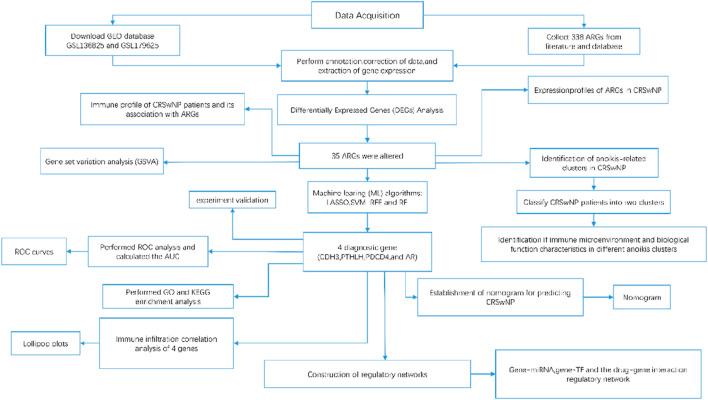
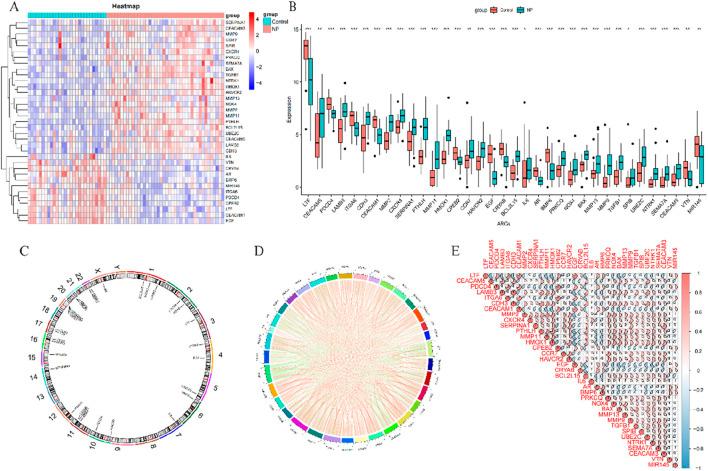
The GSE136825 and GSE179625 datasets were obtained from the GEO database and 338 anoikis-related genes (ARGs) were extracted from the literature and databases. Immune cell infiltration was analysed using the CIBERSORT algorithm. CRSwNP samples were classified via consensus clustering. Key ARGs were identified through machine learning. The diagnostic performance of candidate genes was evaluated using Receiver Operating Characteristic (ROC) analysis. Functional annotation was performed based on Gene Ontology (GO) terms, and pathway enrichment analysis was conducted using the Kyoto Encyclopedia of Genes and Genomes (KEGG) database. Regulatory networks were visualized using NetworkAnalyst and Cytoscape. Experimental validation included quantitative real-time reverse-transcription PCR (qRT-PCR), immunohistochemistry (IHC), and immunofluorescence (IF) in human tissues.
RESULTS
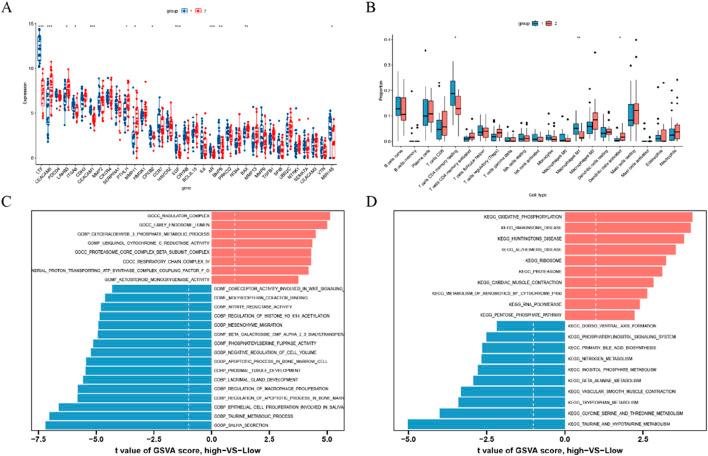
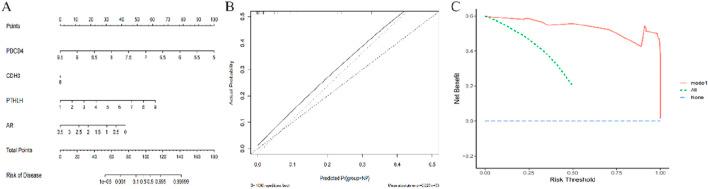
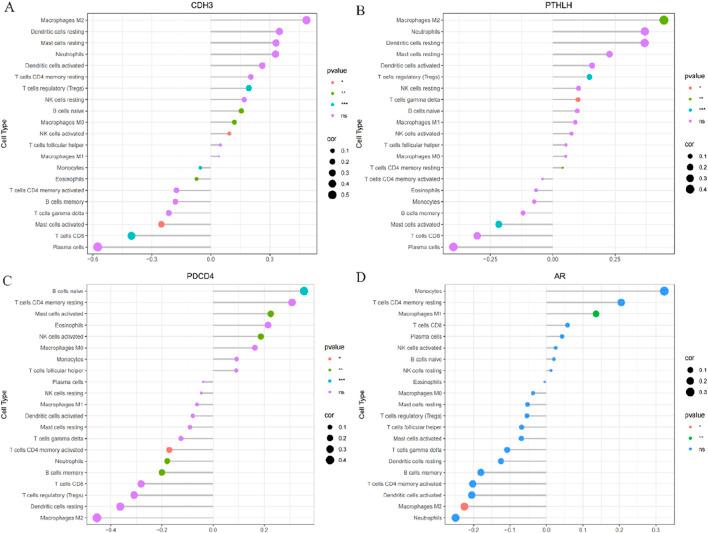
Consensus clustering stratified CRSwNP patients into two distinct anoikis-related clusters. Machine learning identified four key genes: CDH3, PTHLH, PDCD4, and androgen receptor (AR). The nomogram model demonstrated high diagnostic accuracy, with an area under the receiver operating characteristic curve (AUC) >0.90. Immune infiltration analysis revealed differential immune microenvironments between clusters, with AR overexpressed in cluster 1 and PTHLH in cluster 2. Network analysis identified 862 drugs or compounds targeting AR. Experimental validation confirmed consistency between bioinformatics predictions and tissue-level expression patterns.
CONCLUSION
This study delineates two anoikis-related molecular subtypes of CRSwNP and identifies AR and PTHLH as cluster-specific biomarkers. These findings provide novel insights for personalized therapy, drug screening, and immunomodulatory strategies in CRSwNP.
引言
伴鼻息肉的慢性鼻-鼻窦炎(CRSwNP)的特征是基质水肿、白蛋白沉积和假囊肿形成。失巢凋亡是一种细胞从正确的细胞外基质脱离的过程,它会破坏整合素连接,从而抑制异常增殖的细胞生长或附着于不适当的基质。尽管失巢凋亡与免疫调节和CRSwNP发病机制有关,但其具体的机制作用仍不清楚。
方法
从基因表达综合数据库(GEO)中获取GSE136825和GSE179625数据集,并从文献和数据库中提取338个失巢凋亡相关基因(ARG)。使用CIBERSORT算法分析免疫细胞浸润情况。通过一致性聚类对CRSwNP样本进行分类。通过机器学习确定关键ARG。使用受试者工作特征(ROC)分析评估候选基因的诊断性能。基于基因本体(GO)术语进行功能注释,并使用京都基因与基因组百科全书(KEGG)数据库进行通路富集分析。使用NetworkAnalyst和Cytoscape可视化调控网络。实验验证包括在人体组织中进行定量实时逆转录PCR(qRT-PCR)、免疫组织化学(IHC)和免疫荧光(IF)。
结果
一致性聚类将CRSwNP患者分为两个不同的失巢凋亡相关簇。机器学习确定了四个关键基因:CDH3、PTHLH、PDCD4和雄激素受体(AR)。列线图模型显示出较高的诊断准确性,受试者工作特征曲线下面积(AUC)>0.90。免疫浸润分析揭示了簇间不同的免疫微环境,AR在簇1中过表达,PTHLH在簇2中过表达。网络分析确定了862种靶向AR的药物或化合物。实验验证证实了生物信息学预测与组织水平表达模式之间的一致性。
结论
本研究描绘了CRSwNP的两种失巢凋亡相关分子亚型,并确定AR和PTHLH为簇特异性生物标志物。这些发现为CRSwNP的个性化治疗、药物筛选和免疫调节策略提供了新的见解。






 Zotero 插件