Cunha E Rocha Karina, Tan Breanna, Kempf Julia, Medina Cristina, Beldona Varsha, Qian Chengjia, Duan Ying, Xiang Qian, Yoo Ahjin, Du Xiaomi, Majithia Amit R, Ying Wei
Department of Medicine, Division of Endocrinology & Metabolism, University of California San Diego, La Jolla, California, USA.
Division of Biological Sciences, University of California, San Diego, La Jolla, California, USA.
Mol Metab. 2025 Nov;101:102246. doi: 10.1016/j.molmet.2025.102246. Epub 2025 Sep 3.
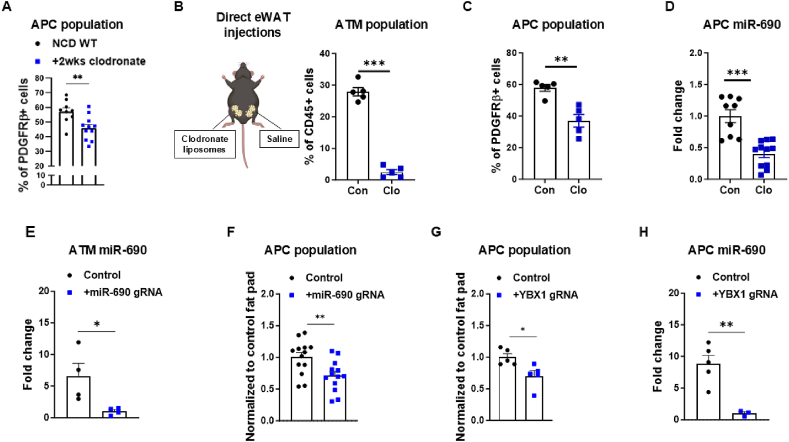
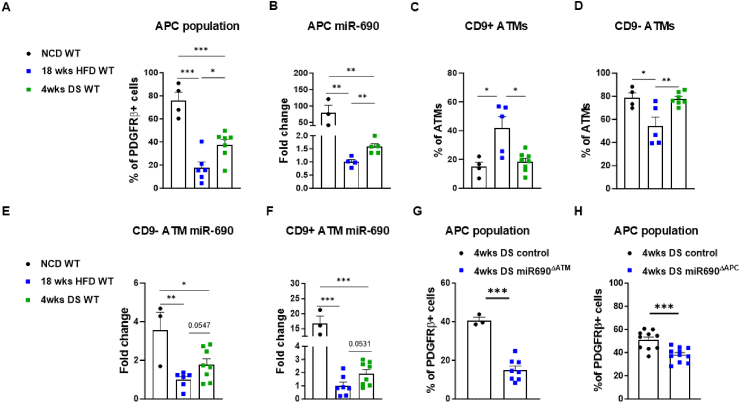
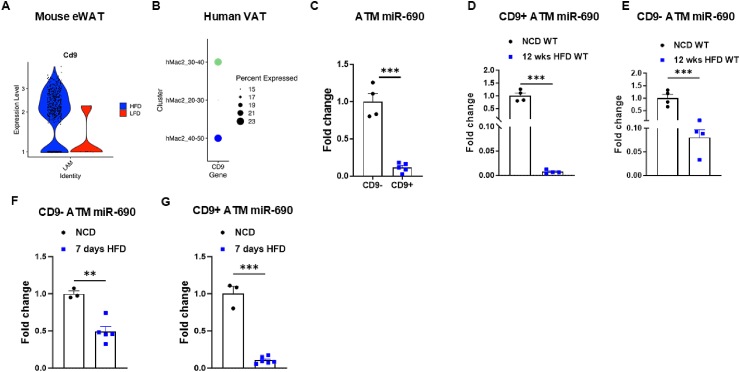
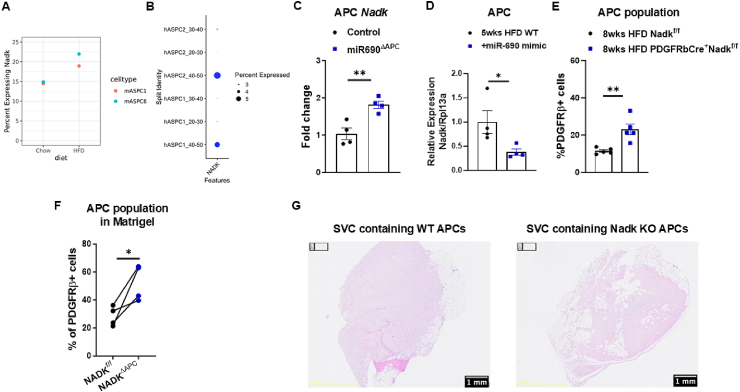
Obesity is intricately linked to various metabolic diseases; however, some individuals maintain metabolic health despite being classified as obese. A critical factor underlying this paradox is the expansion of white adipose tissue (WAT), which can occur through two mechanisms: hypertrophy (the enlargement of existing fat cells) and hyperplasia (the formation of new fat cells from adipocyte precursor cells, or APCs). Hyperplasia is regarded as a healthier mode of WAT expansion, as it tends to reduce inflammation and protect against insulin resistance. Thus, interventions that promote hyperplasia over hypertrophy could improve metabolic health in obese individuals. In this study, we investigate the role of microRNA-690 (miR-690), an anti-inflammatory and insulin-sensitizing molecule, in maintaining the APC population and facilitating the healthy expansion of epididymal WAT (eWAT). Our findings indicate that in lean mice, macrophages support the APC population by transferring miR-690 to APCs. However, during obesity, the recruitment of pro-inflammatory lipid-associated macrophages (LAMs) to eWAT diminishes miR-690 delivery to APCs, impairing adipogenesis and leading to unhealthy WAT expansion. We demonstrate that strategies aimed at increasing the availability of miR-690 to APCs or mimicking its effects can restore APC functionality. Additionally, mutations in Nadk, the target of miR-690, were shown to mitigate the adverse effects of obesity on APC maintenance in eWAT. These findings suggest that targeting the miR-690-Nadk axis in APCs may provide novel therapeutic strategies to promote healthy adipose tissue expansion and protect against obesity-related metabolic diseases.
肥胖与多种代谢性疾病密切相关;然而,一些人尽管被归类为肥胖,但仍能维持代谢健康。这一矛盾背后的一个关键因素是白色脂肪组织(WAT)的扩张,其可通过两种机制发生:肥大(现有脂肪细胞的增大)和增生(由脂肪细胞前体细胞或APCs形成新的脂肪细胞)。增生被认为是WAT扩张的一种更健康模式,因为它往往会减少炎症并预防胰岛素抵抗。因此,促进增生而非肥大的干预措施可能会改善肥胖个体的代谢健康。在本研究中,我们研究了抗炎和胰岛素增敏分子微小RNA-690(miR-690)在维持APCs群体和促进附睾WAT(eWAT)健康扩张中的作用。我们的研究结果表明,在瘦小鼠中,巨噬细胞通过将miR-690转移至APCs来支持APCs群体。然而,在肥胖期间,促炎脂质相关巨噬细胞(LAMs)募集至eWAT会减少miR-690向APCs的传递,损害脂肪生成并导致不健康的WAT扩张。我们证明,旨在增加APCs对miR-690的可及性或模拟其作用的策略可恢复APCs功能。此外,miR-690的靶标Nadk中的突变被证明可减轻肥胖对eWAT中APCs维持的不利影响。这些发现表明,靶向APCs中的miR-690-Nadk轴可能提供新的治疗策略,以促进健康的脂肪组织扩张并预防肥胖相关的代谢性疾病。