Magaña Angel J, Phan Kimberly, Lopez Jesse, Ramirez Maria S, Tolmasky Marcelo E
California State University Fullerton.
Res Sq. 2025 Sep 3:rs.3.rs-7390173. doi: 10.21203/rs.3.rs-7390173/v1.
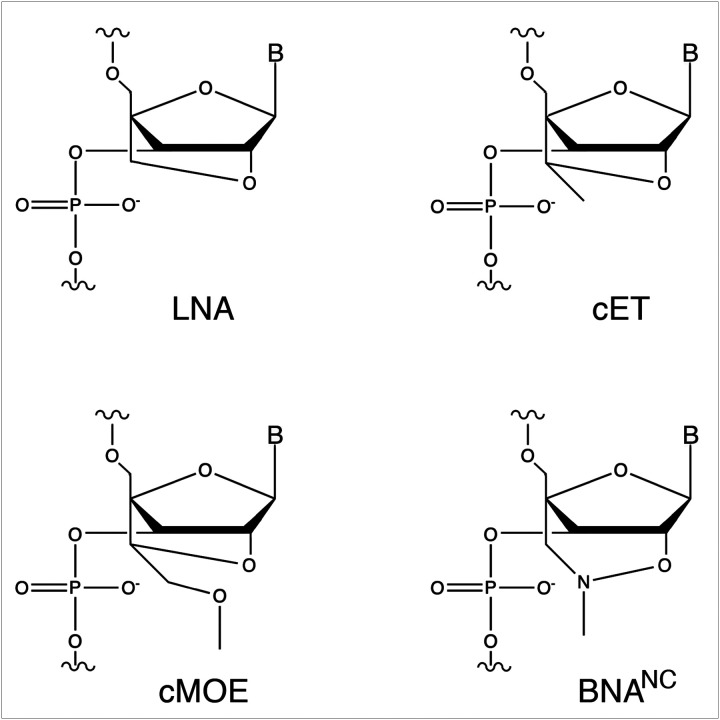
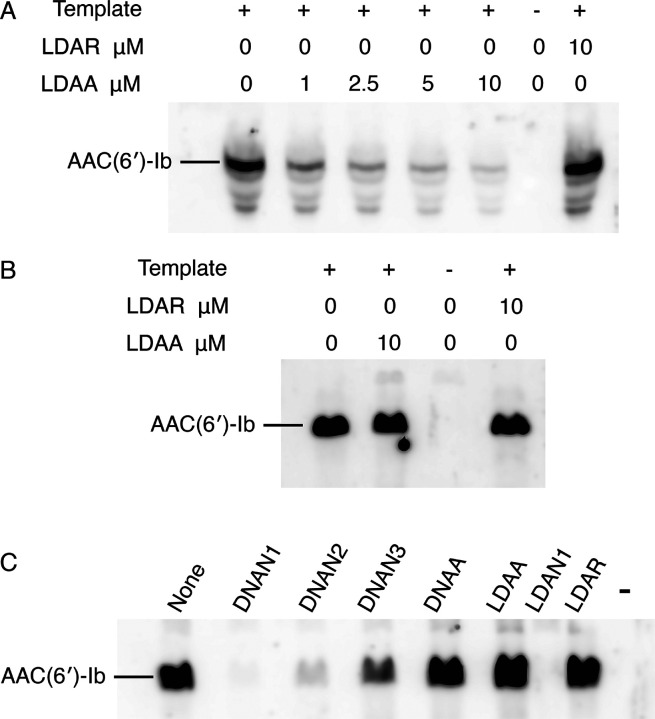
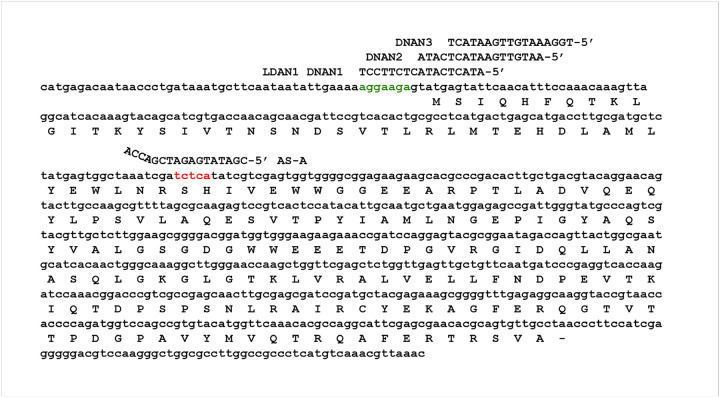
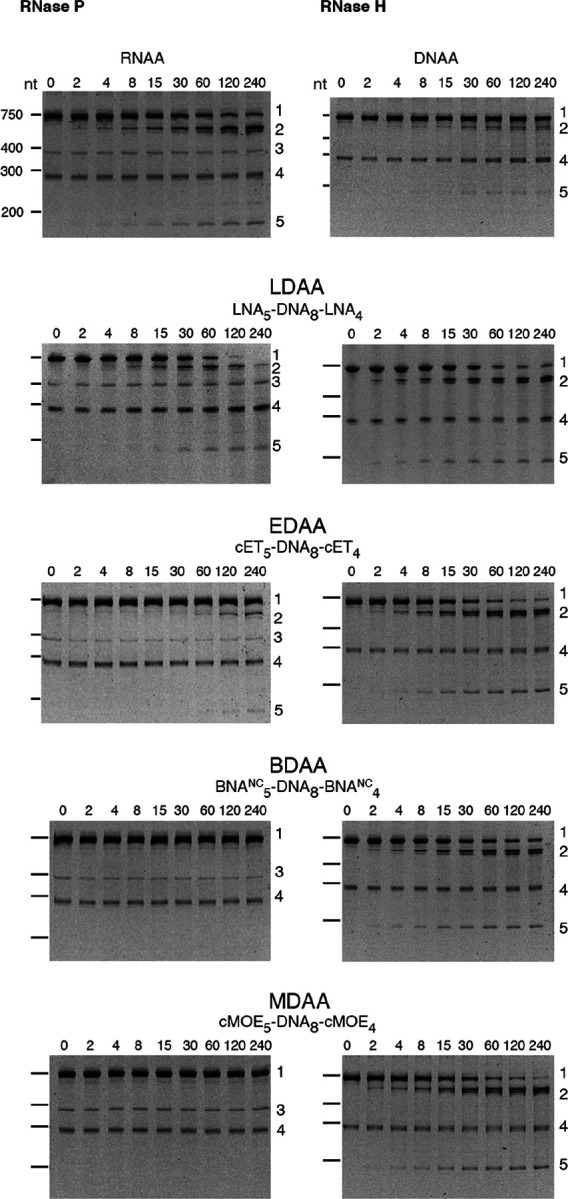
Antisense interference with gene expression is usually achieved using nuclease-resistant oligonucleotide analogs that act by mRNA degradation, recruiting endogenous RNase H or RNase P, or steric hindrance of translation. Bridge nucleic acids (BNAs) are promising nucleotide analogs, and their chemical structure allows the development of new variants. Building on previous research, we evaluated gapmers composed of a short oligodeoxynucleotide flanked by BNA residues in a BNA-DNA-BNA configuration, using available BNA variants: the original locked nucleic acid (LNA; 2'-O-4'-methylene locked nucleic acid), cET (2'-O,4'-ethyl bridge), cMOE (2'-O,4'-methoxyethyl bridge), and BNA (2'-O,4'-aminomethylene bridge). These gapmers were tested in vitro for their ability to direct cleavage of the mRNA, which would restore susceptibility to clinically important aminoglycosides. The assays were carried out using gapmers that target a region of the mRNA previously identified as suitable for interaction with antisense oligomers. While all gapmers showed variable RNase H-mediated activity, only the LNA-containing gapmer (LDAA) elicited RNase P-dependent degradation, demonstrating ability to mimic both RNA and DNA. Coupled in vitro transcription-translation reactions using a cell lysate or a reconstituted system confirmed inhibition of expression and ruled out steric hindrance as mechanism of action. Gapmers with the LDAA structure can act as external guide sequences (EGSs), molecules that elicit RNAse P cleavage, and as antisense compounds that work via RNase H degradation. In contrast, gapmers targeting the ribosome binding site failed to recruit endogenous RNases but strongly inhibited expression by steric hindrance. Taken together, the results show that LNA-containing gapmers with the tested configuration can act through multiple mechanisms. A single molecule can elicit both RNase H- and RNase P-mediated degradation, and, when directed to other regions such as the ribosome binding site, inhibit expression through steric hindrance, supporting the potential for synergistic inhibition of gene expression when used in combination.
基因表达的反义干扰通常使用抗核酸酶的寡核苷酸类似物来实现,这些类似物通过mRNA降解、招募内源性RNase H或RNase P或翻译的空间位阻起作用。桥连核酸(BNA)是很有前景的核苷酸类似物,其化学结构允许开发新的变体。基于先前的研究,我们使用可用的BNA变体评估了由BNA-DNA-BNA构型中两侧带有BNA残基的短寡脱氧核苷酸组成的缺口嵌合体:原始的锁核酸(LNA;2'-O-4'-亚甲基锁核酸)、cET(2'-O,4'-乙基桥)、cMOE(2'-O,4'-甲氧基乙基桥)和BNA(2'-O,4'-氨基亚甲基桥)。这些缺口嵌合体在体外测试了其指导mRNA切割的能力,这将恢复对临床上重要的氨基糖苷类药物的敏感性。使用靶向先前确定适合与反义寡聚体相互作用的mRNA区域的缺口嵌合体进行测定。虽然所有缺口嵌合体都显示出可变的RNase H介导的活性,但只有含LNA的缺口嵌合体(LDAA)引发了RNase P依赖性降解,证明了模拟RNA和DNA的能力。使用细胞裂解物或重组系统进行的体外转录-翻译偶联反应证实了表达的抑制,并排除了空间位阻作为作用机制。具有LDAA结构的缺口嵌合体可以作为外部引导序列(EGS),即引发RNAse P切割的分子,以及作为通过RNase H降解起作用的反义化合物。相比之下,靶向核糖体结合位点的缺口嵌合体未能招募内源性RNases,但通过空间位阻强烈抑制表达。综上所述,结果表明具有测试构型的含LNA的缺口嵌合体可以通过多种机制起作用。单个分子可以引发RNase H和RNase P介导的降解,并且当靶向其他区域如核糖体结合位点时,通过空间位阻抑制表达,支持联合使用时对基因表达进行协同抑制的潜力。