García-Martín Victoria, de Hoyos-Alonso MCanto, Martín-Fernández Jesús, Del Cura-González Isabel
Epidemiology and Public Health at Universidad Rey Juan Carlos (Rey Juan Carlos University), Madrid, Spain.
Preventive Medicine and Public Health Service, Infanta Leonor-Virgen de La Torre University Hospital, Madrid, Spain.
BMC Geriatr. 2025 Sep 24;25(1):701. doi: 10.1186/s12877-025-06339-0.
Neuropsychiatric symptoms (NPSs) are common in people with dementia (PWD), but their associations with the risk of institutionalization and mortality are controversial. The objective of this study was to estimate the incidence of institutionalization and death among PWD treated in primary care (PC) and to analyse the associations between NPSs and these events.
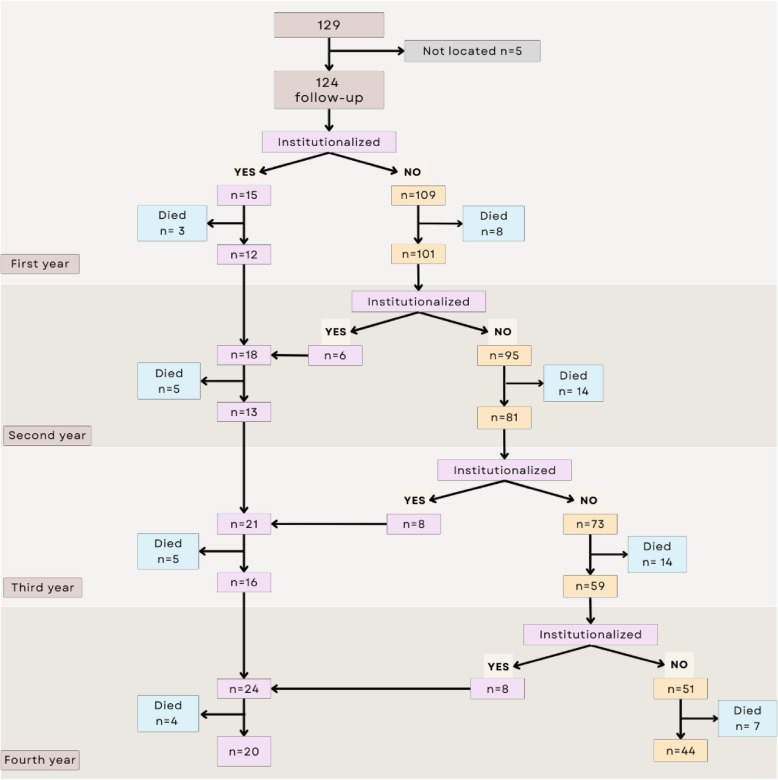
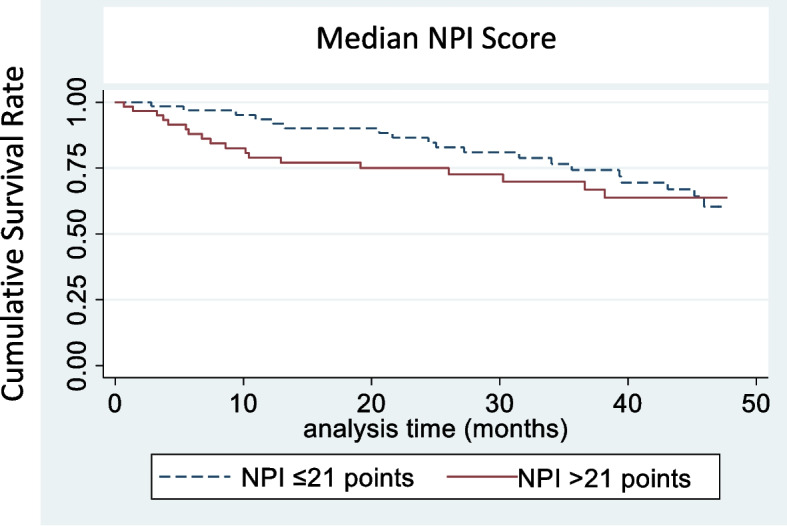
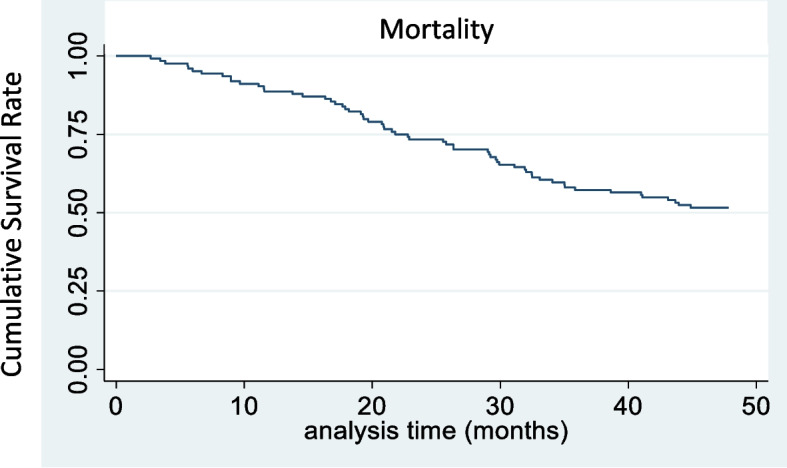
This was a longitudinal analytical observational study of PWD in PC with a 4-year follow-up. Data on sociodemographic, clinical and functional characteristics and prescribed treatments for dementia were collected. NPSs were examined with the Neuropsychiatric Inventory (NPI) scale and according to the presence of clinically relevant neuropsychiatric subsyndromes. The incidence of institutionalization and cumulative mortality were calculated annually and at four years. Survival analysis with Kaplan‒Meier curves and Cox regression was performed to analyse the influence of NPSs on institutionalization and mortality.
A total of 124 patients with a mean age of 82.5 (8.0) years were included, and 69.4% were women. At four years, the institutionalization rate in a nursing home was 29.8% (95% CI 22.0; 38.7), with a median time to institutionalization of 13.2 months (IQR: 6.8-31.5). The mortality rate was 48.4% (95% CI 39.3; 57.5), with a median survival time of 21.7 months (IQR: 14.2-32.0). The NPI score was associated with institutionalization (HR 1.27, 95% CI 1.12, 1.45) and mortality (HR 1.47, 95% CI 1.40, 1.54). Among the subsyndromes, the presence of clinically relevant apathy was associated with institutionalization (HR 2.23, 95% CI 1.29, 3.88) and mortality (HR 1.56, 95% CI 1.34, 1.81).
In PWD who were followed up in the community for four years, one-third of the patients were institutionalized, and half died. The intensity of the NPSs influences both institutionalization and mortality, with subsyndrome apathy (formed by the symptoms of apathy and appetite alterations) being the one that most influences both outcomes.
神经精神症状(NPSs)在痴呆症患者(PWD)中很常见,但其与机构收容风险和死亡率之间的关联存在争议。本研究的目的是估计在初级保健(PC)中接受治疗的PWD的机构收容率和死亡率,并分析NPSs与这些事件之间的关联。
这是一项对PC中的PWD进行的纵向分析观察性研究,随访4年。收集了社会人口统计学、临床和功能特征以及痴呆症规定治疗的数据。使用神经精神量表(NPI)并根据临床相关神经精神亚综合征的存在情况对NPSs进行检查。每年和四年计算机构收容率和累积死亡率。采用Kaplan-Meier曲线和Cox回归进行生存分析,以分析NPSs对机构收容和死亡率的影响。
共纳入124例患者,平均年龄82.5(8.0)岁,69.4%为女性。四年时,养老院的机构收容率为29.8%(95%CI 22.0;38.7),机构收容的中位时间为13.2个月(IQR:6.8 - 31.5)。死亡率为48.4%(95%CI 39.3;57.5),中位生存时间为21.7个月(IQR:14.2 - 32.0)。NPI评分与机构收容(HR 1.27,95%CI 1.12,1.45)和死亡率(HR 1.47,95%CI 1.40,1.54)相关。在亚综合征中,临床相关的冷漠症状与机构收容(HR 2.23,95%CI 1.29,3.88)和死亡率(HR 1.56,95%CI 1.34,1.81)相关。
在社区随访四年的PWD中,三分之一的患者被机构收容,一半患者死亡。NPSs的严重程度影响机构收容和死亡率,其中由冷漠和食欲改变症状组成的亚综合征冷漠对这两个结局的影响最大。