
互补能源系统中基于应变传感器的水轮机调速器伺服电机疲劳预测
Strain Sensor-Based Fatigue Prediction for Hydraulic Turbine Governor Servomotor in Complementary Energy Systems.
作者信息
Hua Hong, Zhang Zhizhong, Liu Xiaobing, Deng Wanquan
机构信息
Key Laboratory of Fluid and Power Machinery, Ministry of Education, Xihua University, Chengdu 610039, China.
CHN Energy Dadu River Zhentouba Power Generation Co., Ltd., Leshan 614900, China.
出版信息
Sensors (Basel). 2025 Sep 19;25(18):5860. doi: 10.3390/s25185860.
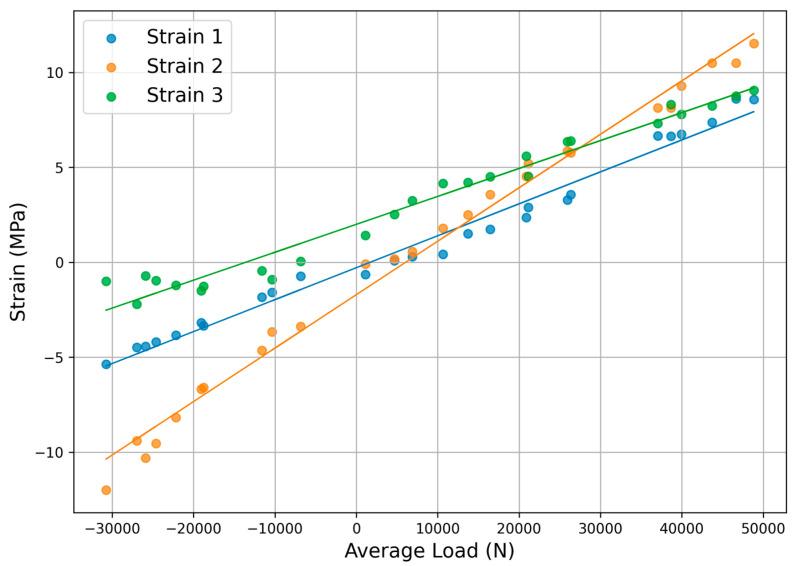
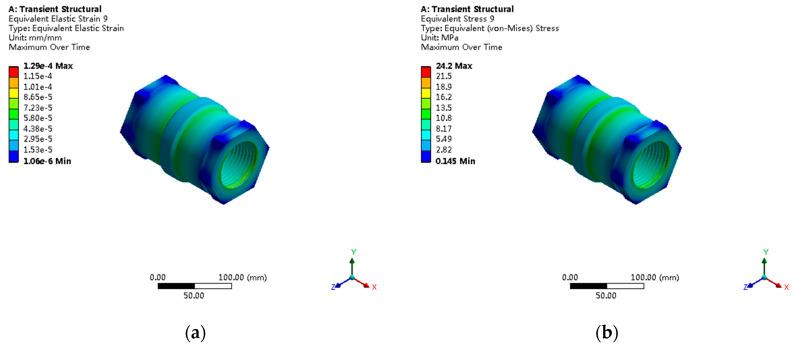
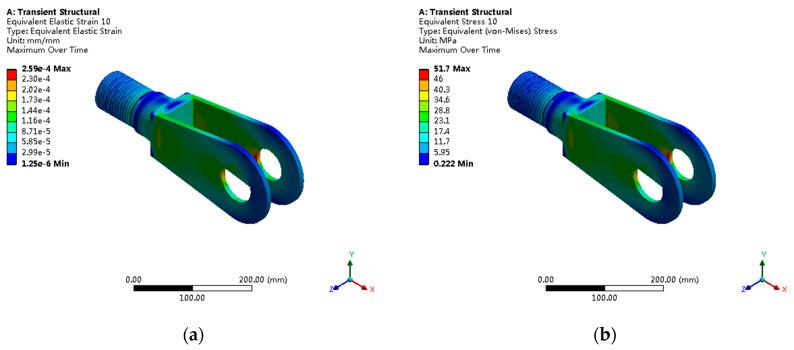
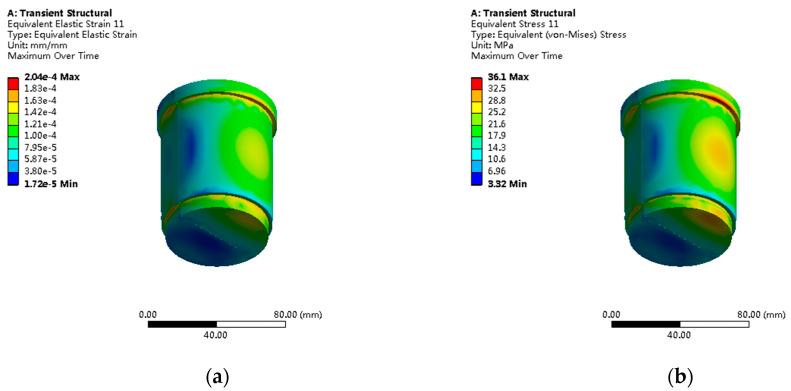
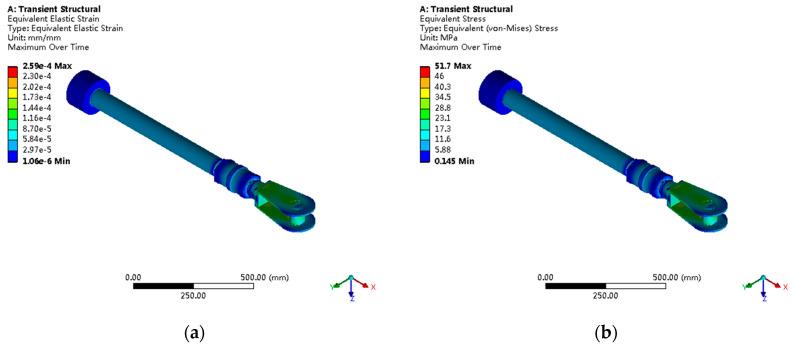
Hydraulic turbine governor servomotors in wind solar hydro complementary energy systems face significant fatigue failure challenges due to high-frequency regulation. This study develops an intelligent fatigue monitoring and prediction system based on strain sensors, specifically designed for the frequent regulation requirements of complementary systems. A multi-point monitoring network was constructed using resistive strain sensors, integrated with temperature and vibration sensors for multimodal data fusion. Field validation was conducted at an 18.56 MW hydroelectric unit, covering guide vane opening ranges from 13% to 63%, with system response time <1 ms and a signal-to-noise ratio of 65 dB. A simulation model combining sensor measurements with finite element simulation was established through fine-mesh modeling to identify critical fatigue locations. The finite element analysis results show excellent agreement with experimental measurements (error < 8%), validating the simulation model approach. The fork head was identified as the critical component with a stress concentration factor of 3.4, maximum stress of 51.7 MPa, and predicted fatigue life of 1.2 × 10 cycles (12-16 years). The cylindrical pin shows a maximum shear stress of 36.1 MPa, with fatigue life of 3.8 × 10 cycles (16-20 years). Monte Carlo reliability analysis indicates a system reliability of 51.2% over 20 years. This work provides an effective technical solution for the predictive maintenance and digital operation of wind solar hydro complementary systems.
风力-太阳能-水力互补能源系统中的水轮机调速器伺服电机由于高频调节而面临重大的疲劳失效挑战。本研究基于应变传感器开发了一种智能疲劳监测与预测系统,专门针对互补系统的频繁调节需求设计。使用电阻应变传感器构建了多点监测网络,并与温度和振动传感器集成以进行多模态数据融合。在一台18.56兆瓦的水电机组上进行了现场验证,导叶开度范围为13%至63%,系统响应时间<1毫秒,信噪比为65分贝。通过精细网格建模建立了将传感器测量与有限元模拟相结合的仿真模型,以识别关键疲劳位置。有限元分析结果与实验测量结果显示出极好的一致性(误差<8%),验证了仿真模型方法。叉头被确定为关键部件,应力集中系数为3.4,最大应力为51.7兆帕,预测疲劳寿命为1.2×10⁶次循环(12 - 16年)。圆柱销的最大剪应力为36.1兆帕,疲劳寿命为3.8×10⁶次循环(16 - 20年)。蒙特卡洛可靠性分析表明,系统在20年内的可靠性为51.2%。这项工作为风力-太阳能-水力互补系统的预测性维护和数字化运行提供了有效的技术解决方案。






 Zotero 插件