Muhammad Yasin Ali
Department of Biology, Georgia State University, Atlanta, GA, United States.
Front Endocrinol (Lausanne). 2025 Sep 12;16:1658592. doi: 10.3389/fendo.2025.1658592. eCollection 2025.
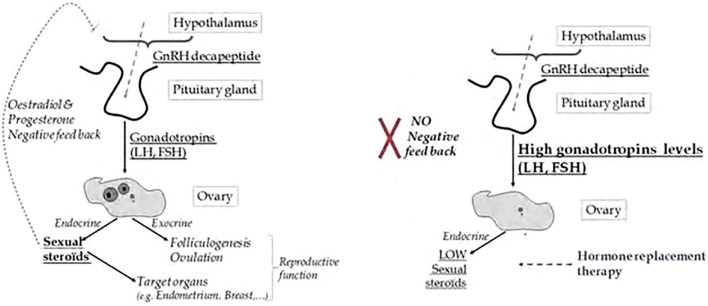
Reproductive aging is a dynamic, systemic process that encompasses more than the decline in ovarian function. It involves coordinated changes across neuroendocrine, immune, metabolic, and mitochondrial systems. Central to this transition is the depletion of ovarian follicles, leading to reduced estradiol and progesterone production and subsequent disruption of the hypothalamic-pituitary-gonadal (HPG) axis. This hormonal shift remodels hypothalamic signaling networks - particularly those involving kisspeptin, neurokinin B (NKB), and GABA - driving alterations in gonadotropin-releasing hormone (GnRH) pulsatility, vasomotor symptoms (VMS), and loss of reproductive cycling. Simultaneously, chronic inflammation, oxidative stress, and mitochondrial dysfunction further accelerate both ovarian and neural aging. Estrogen receptor subtypes (ERα and ERβ) play critical and region-specific roles in mediating tissue responses to hormonal withdrawal, contributing to variability in symptom expression and therapeutic outcomes. Genetic, cultural, and environmental factors - such as diet, endocrine disruptors, and APOE genotype - further influence the trajectory and severity of menopause-related changes. Emerging treatments, including neurokinin receptor antagonists and ERβ-selective modulators, offer targeted alternatives to conventional hormone therapy. This review frames menopause not as a singular endocrine endpoint but as a neuroimmune transition, highlighting the need for mechanistic insight and personalized therapeutic approaches to improve health outcomes during reproductive aging.
生殖衰老 是一个动态的全身性过程,其涵盖的内容不仅仅是卵巢功能的衰退。它涉及神经内分泌、免疫、代谢和线粒体系统的协同变化。这一转变的核心是卵巢卵泡的耗竭,导致雌二醇和孕酮分泌减少,进而破坏下丘脑 - 垂体 - 性腺(HPG)轴。这种激素变化重塑下丘脑信号网络,尤其是那些涉及 kisspeptin、神经激肽 B(NKB)和 γ-氨基丁酸(GABA)的网络,从而驱动促性腺激素释放激素(GnRH)脉冲性、血管舒缩症状(VMS)以及生殖周期丧失的改变。同时,慢性炎症、氧化应激和线粒体功能障碍进一步加速卵巢和神经衰老。雌激素受体亚型(ERα 和 ERβ)在介导组织对激素撤减的反应中发挥关键且具有区域特异性的作用,这导致症状表现和治疗结果的变异性。遗传、文化和环境因素,如饮食、内分泌干扰物和 APOE 基因型,进一步影响绝经相关变化的进程和严重程度。新兴的治疗方法,包括神经激肽受体拮抗剂和 ERβ 选择性调节剂,为传统激素疗法提供了有针对性的替代方案。本综述将绝经并非视为单一的内分泌终点,而是作为一种神经免疫转变,强调了深入了解机制和采用个性化治疗方法以改善生殖衰老期间健康结果的必要性。