Natali P G, Tan E M
J Clin Invest. 1972 Feb;51(2):345-55. doi: 10.1172/JCI106820.
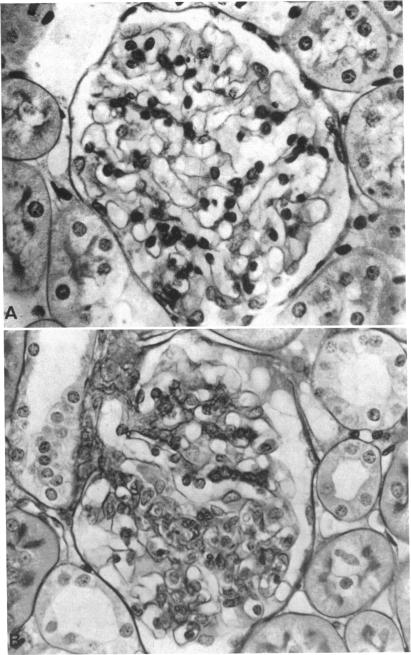
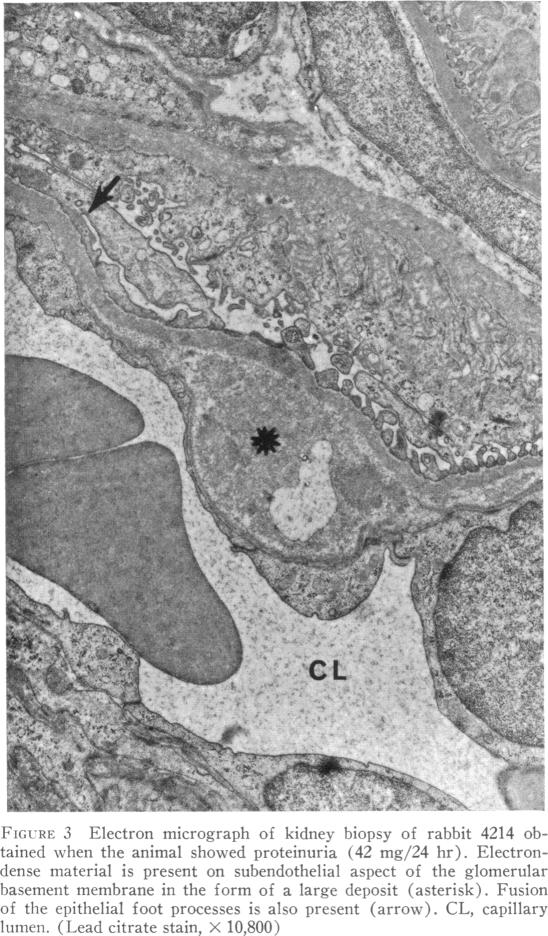
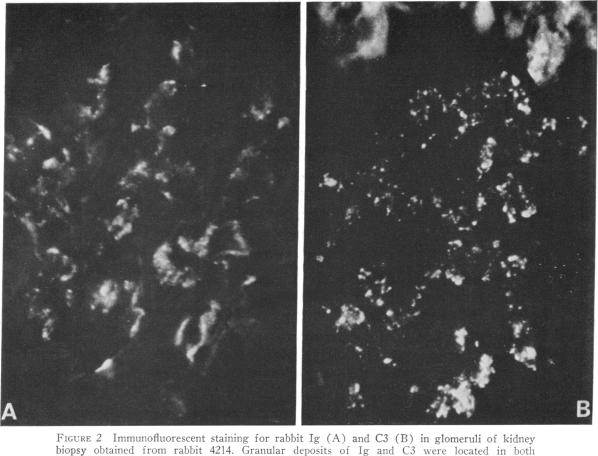
Rabbits immunized with ultraviolet-irradiated DNA (UV-DNA) produced high titers of serum antibody. This experimental model was studied to determine if injection of antigen (UV-DNA) intravenously into immunized animals would induce glomerulonephritis and proteinuria. Proteinuria was observed several days after the start of daily intravenous injections into immunized animals and was sustained as long as injections were continued, but fell to normal values after stopping antigen administration. The kidneys showed glomerulitis sometimes associated with focal proliferative lesions, and immunofluorescence showed rabbit Ig and C3 in glomeruli. By electron microscopy, electron-dense subendothelial deposits were seen. Sucrose density gradient analyses of sera immediately after antigen injections suggested the presence of immune complexes of DNA and antibody since both heavy sedimenting and 7S Ig were detected. After digestion with deoxyribonuclease rabbit Ig could be found only in the 7S sedimenting fractions. Intravenous injection of UV-DNA into normal, nonimmune animals did not produce heavy sedimenting Ig or abnormal sedimentation patterns. These studies with an experimental model might provide insight into pathogenetic mechanisms operating in systemic lupus erythematosus where the importance of DNA-anti-DNA immune complexes have been documented. The studies suggested that gradual accumulation of DNA immune complexes in glomeruli might be one mechanism causing renal functional abnormalities.
用紫外线照射的DNA(UV-DNA)免疫的兔子产生了高滴度的血清抗体。对该实验模型进行了研究,以确定向免疫动物静脉内注射抗原(UV-DNA)是否会诱发肾小球肾炎和蛋白尿。在开始对免疫动物进行每日静脉注射几天后观察到蛋白尿,只要继续注射蛋白尿就会持续存在,但在停止抗原给药后降至正常值。肾脏显示出肾小球炎,有时伴有局灶性增生性病变,免疫荧光显示肾小球中有兔Ig和C3。通过电子显微镜检查,可见电子致密的内皮下沉积物。抗原注射后立即对血清进行蔗糖密度梯度分析表明存在DNA和抗体的免疫复合物,因为检测到了重沉降物和7S Ig。用脱氧核糖核酸酶消化后,仅在7S沉降部分中发现兔Ig。向正常的非免疫动物静脉内注射UV-DNA不会产生重沉降Ig或异常沉降模式。这些实验模型研究可能有助于深入了解系统性红斑狼疮的发病机制,其中DNA-抗DNA免疫复合物的重要性已得到证实。研究表明,肾小球中DNA免疫复合物的逐渐积累可能是导致肾功能异常的一种机制。