DiBona D R, Chen L C, Sharp G W
J Clin Invest. 1974 May;53(5):1300-7. doi: 10.1172/JCI107677.
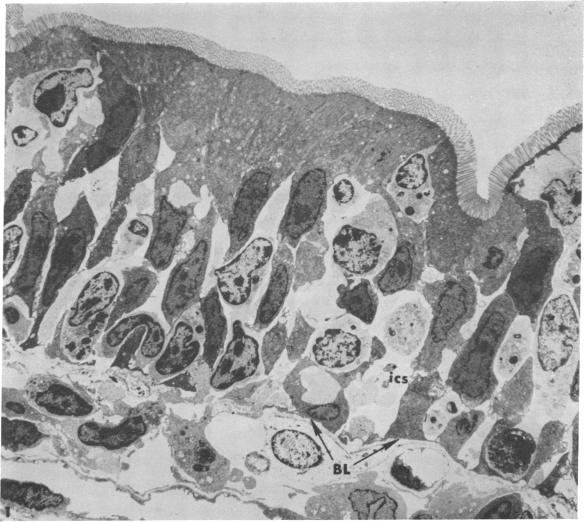
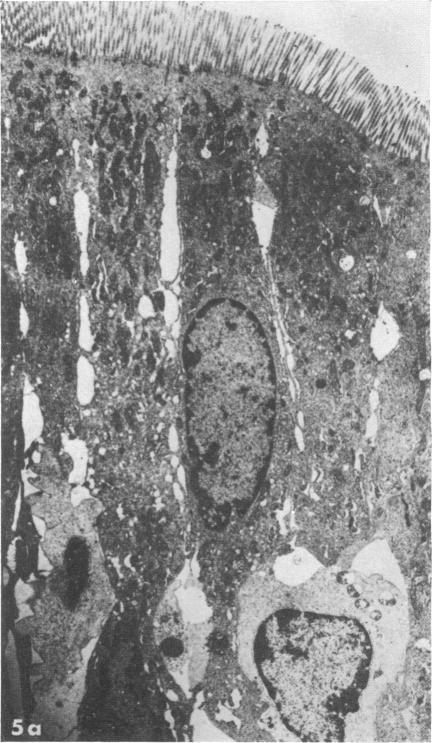
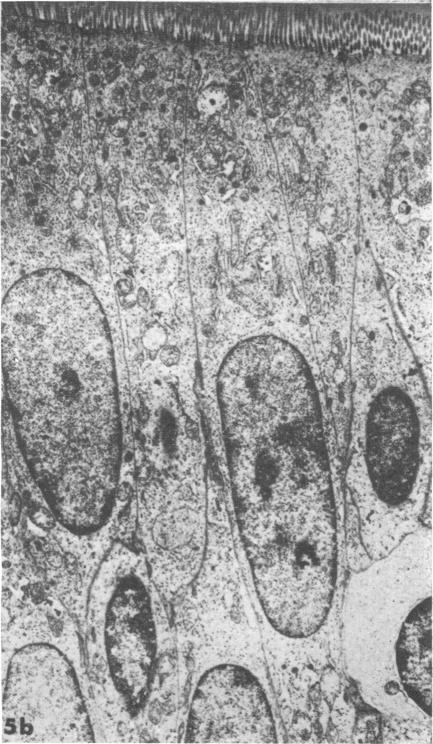
The effects of acute volume expansion and of intraluminal administration of cholera toxin have been examined in rabbit jejunum. Acute volume expansion was shown to reverse the normal reabsorptive flux of water and cause significant fluid secretion. Phase and electronmicroscopic examination of the jejunal epithelium showed that marked distension of the intercellular spaces had occurred. Examination of the jejunal epithelium after treatment with cholera toxin showed that, in association with high rates of fluid secretion, the intercellular spaces were extremely small and lateral membranes of adjacent cells were in close apposition to one another. Thus the mechanisms of fluid secretion in these two situations would appear to be quite different. The secretion associated with volume expansion, and accompanied by a rise in venous pressure and bullous deformations of terminal junctions, could well be due to hydrostatic pressure applied through intercellular channels. The secretion of cholera appears to be unrelated to hydrostatic pressure and is more likely due to body-to-lumen active ion transport.
已在兔空肠中研究了急性容量扩张和腔内给予霍乱毒素的影响。急性容量扩张显示可逆转正常的水重吸收通量并导致显著的液体分泌。对空肠上皮进行的相位和电子显微镜检查表明,细胞间隙出现了明显扩张。用霍乱毒素处理后的空肠上皮检查显示,在高液体分泌率的情况下,细胞间隙极小,相邻细胞的侧膜彼此紧密贴合。因此,这两种情况下的液体分泌机制似乎有很大不同。与容量扩张相关且伴有静脉压升高和终末连接大疱样变形的分泌,很可能是由于通过细胞间通道施加的静水压力所致。霍乱的分泌似乎与静水压力无关,更可能是由于从机体到肠腔的主动离子转运所致。