Mason E E, Printen K J, Barron P, Lewis J W, Kealey G P, Blommers T J
Ann Surg. 1979 Aug;190(2):158-65. doi: 10.1097/00000658-197908000-00006.
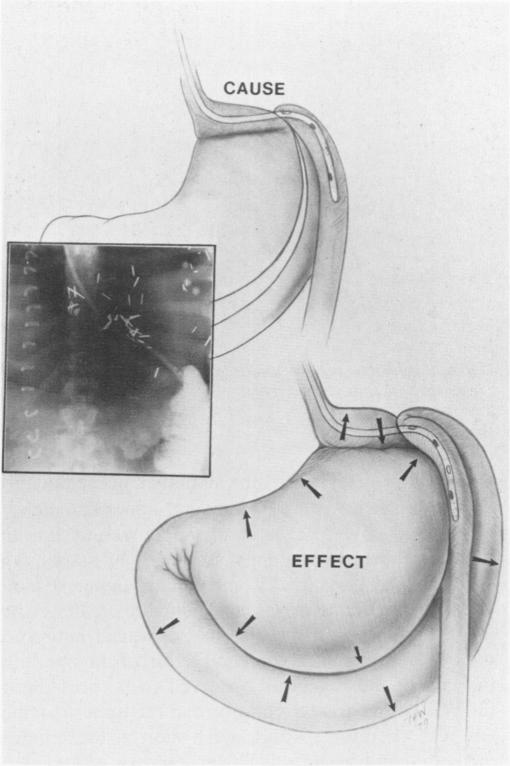
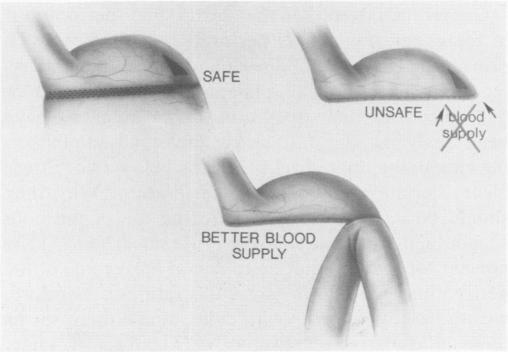
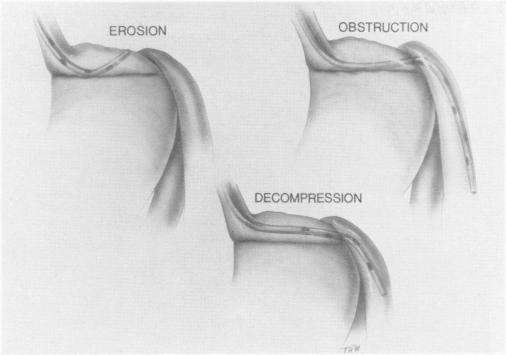
Although nearly devoid of late complications, gastric operations for obesity have resulted in 4.7% early postoperative perforations. For patients over 39 years of age who perforated, the first 11 patients died and the last 9 survived. Perforations are equally common in upper stomach, anastomosis, and lower stomach. They have become more frequent with the 50 ml upper stomach volume and 12 mm stoma that are required to assure optimum weight control. Perforation is as common with gastroplasty as with gastric bypass. If it occurs, it is normally within the first ten postoperative days. Acute dilatation and rupture of the stomach can happen if all the nasogastric tube holes are in the jejunum after gastric bypass. Erosion of the stomach by the hard end of the nasogastric tube has occurred when the tube was positioned in the upper stomach. This paper is dedicated to the prevention of death by early recognition and aggressive management of perforation and by prevention of perforations through careful attention to the details of these operations and early postoperative care.
尽管肥胖症的胃部手术几乎没有晚期并发症,但术后早期穿孔率达4.7%。对于39岁以上发生穿孔的患者,前11例死亡,后9例存活。上腹部、吻合口和下腹部的穿孔发生率相同。随着为确保最佳体重控制所需的50毫升上腹部容积和12毫米吻合口的出现,穿孔变得更加频繁。胃成形术和胃旁路术的穿孔发生率相同。如果发生穿孔,通常在术后前十天内。胃旁路术后若鼻胃管所有孔都在空肠内,可能会发生胃急性扩张和破裂。当鼻胃管置于上腹部时,其硬端会对胃造成侵蚀。本文致力于通过早期识别和积极处理穿孔以及通过在这些手术细节和术后早期护理中密切关注来预防穿孔,从而预防死亡。