• 文献检索
  • 文档翻译
  • 深度研究
  • 学术资讯
  • Suppr Zotero 插件Zotero 插件
  • 邀请有礼
  • 套餐&价格
  • 历史记录
应用&插件
Suppr Zotero 插件Zotero 插件浏览器插件Mac 客户端Windows 客户端微信小程序
定价
高级版会员购买积分包购买API积分包
服务
文献检索文档翻译深度研究API 文档MCP 服务
关于我们
关于 Suppr公司介绍联系我们用户协议隐私条款
关注我们

Suppr 超能文献

核心技术专利:CN118964589B侵权必究
粤ICP备2023148730 号-1Suppr @ 2026

文献检索

告别复杂PubMed语法,用中文像聊天一样搜索,搜遍4000万医学文献。AI智能推荐,让科研检索更轻松。

立即免费搜索

文件翻译

保留排版,准确专业,支持PDF/Word/PPT等文件格式,支持 12+语言互译。

免费翻译文档

深度研究

AI帮你快速写综述,25分钟生成高质量综述,智能提取关键信息,辅助科研写作。

立即免费体验

在同种免疫中起作用的肾脏抗原。I. 抗原多样性。

Kidney antigens active in isoimmunization. I. The antigenic diversity.

作者信息

Shulman S, Wypych J

出版信息

Immunology. 1969 Nov;17(5):641-52.

PMID:4982822
原文链接:https://pmc.ncbi.nlm.nih.gov/articles/PMC1455910/
Abstract

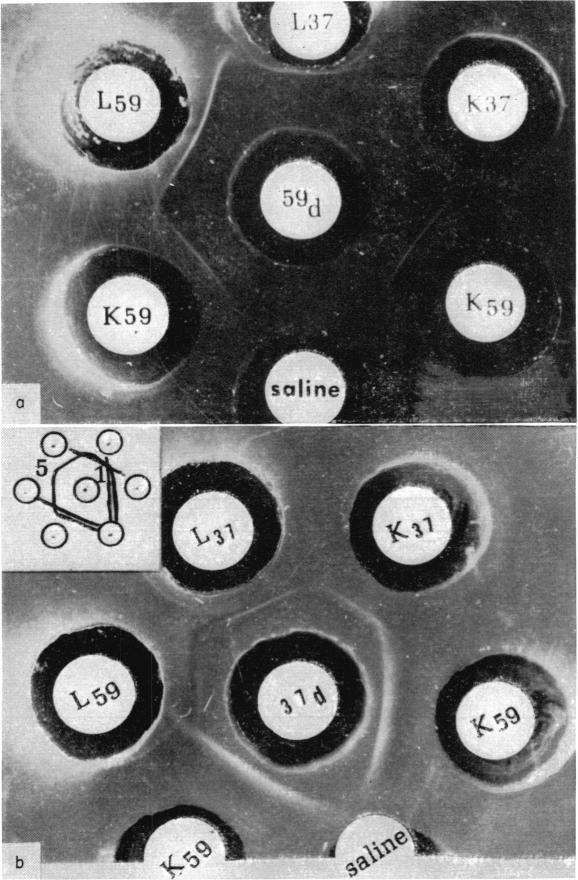
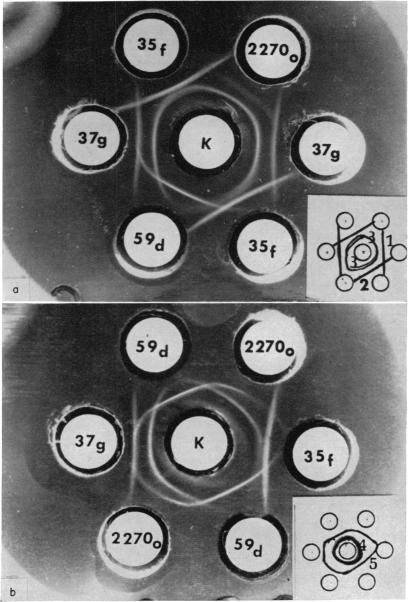
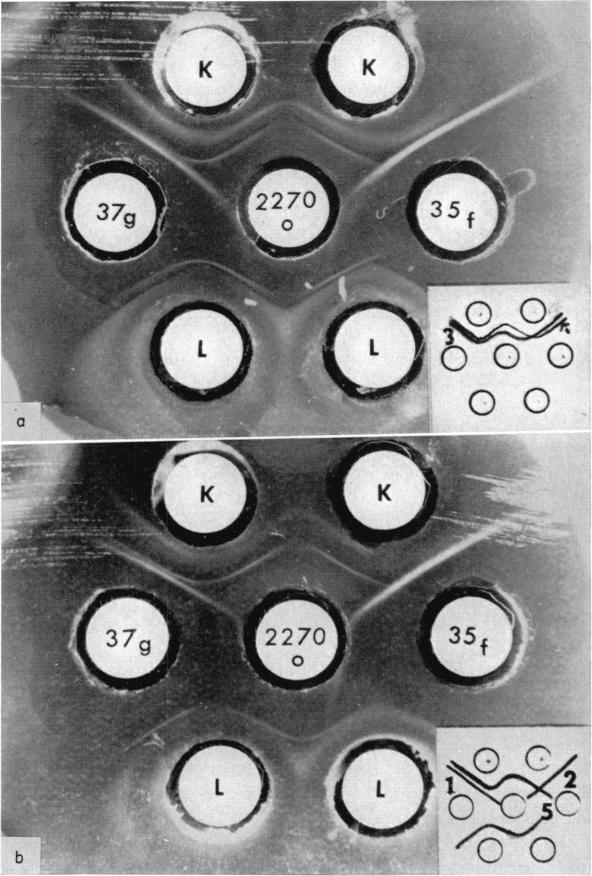
Isoimmunization of rabbits with kidney extracts and Freund's adjuvant leads to the development of responses to a multiplicity of autoantigens. If a large number of kidneys is pooled, there is increased probability that responses directed toward isoantigens can also be detected. Such immunization thus results largely in antisera that possess multiple specificities, but the amount of antibody directed toward each specific antigen varies from one antiserum to another. Advantage can be taken of these uneven responses by different animals, to enumerate the variety of responses to uniquely separable sets of determinants, by carefully selecting the antisera. In immunodiffusion studies, lines for such separable antigens can be sorted in an unambiguous manner. A total of five such antigens has now been found in kidney, three of which are kidney-specific and two of which are shared with liver. A sixth antigen, separable from liver, may be only a minor constituent of kidney, and was not directly detected in kidney extracts. It is important that fresh concentrated extracts of kidney homogenates be used. The detection of isoantigens requires concentrated extracts prepared from individual kidneys.

摘要

用肾脏提取物和弗氏佐剂对兔子进行同种免疫会导致对多种自身抗原产生反应。如果汇集大量肾脏,那么检测到针对同种抗原的反应的可能性就会增加。因此,这种免疫主要产生具有多种特异性的抗血清,但针对每种特定抗原的抗体量在不同抗血清之间有所不同。通过仔细选择抗血清,可以利用不同动物的这些不均匀反应来列举对独特可分离的决定簇集的反应种类。在免疫扩散研究中,可以以明确的方式对这些可分离抗原的条带进行分类。现已在肾脏中发现了总共五种这样的抗原,其中三种是肾脏特异性的,两种与肝脏共有。一种可与肝脏分离的第六种抗原可能只是肾脏的次要成分,在肾脏提取物中未直接检测到。使用新鲜浓缩的肾脏匀浆提取物很重要。同种抗原的检测需要从单个肾脏制备的浓缩提取物。

https://cdn.ncbi.nlm.nih.gov/pmc/blobs/ac57/1455910/f9f7d7d72420/immunology00382-0011-a.jpg
https://cdn.ncbi.nlm.nih.gov/pmc/blobs/ac57/1455910/bbd70bf63b18/immunology00382-0006-a.jpg
https://cdn.ncbi.nlm.nih.gov/pmc/blobs/ac57/1455910/ef17a44c03b9/immunology00382-0007-a.jpg
https://cdn.ncbi.nlm.nih.gov/pmc/blobs/ac57/1455910/6b2ba3f34c80/immunology00382-0008-a.jpg
https://cdn.ncbi.nlm.nih.gov/pmc/blobs/ac57/1455910/58827f206933/immunology00382-0009-a.jpg
https://cdn.ncbi.nlm.nih.gov/pmc/blobs/ac57/1455910/f9f7d7d72420/immunology00382-0011-a.jpg
https://cdn.ncbi.nlm.nih.gov/pmc/blobs/ac57/1455910/bbd70bf63b18/immunology00382-0006-a.jpg
https://cdn.ncbi.nlm.nih.gov/pmc/blobs/ac57/1455910/ef17a44c03b9/immunology00382-0007-a.jpg
https://cdn.ncbi.nlm.nih.gov/pmc/blobs/ac57/1455910/6b2ba3f34c80/immunology00382-0008-a.jpg
https://cdn.ncbi.nlm.nih.gov/pmc/blobs/ac57/1455910/58827f206933/immunology00382-0009-a.jpg
https://cdn.ncbi.nlm.nih.gov/pmc/blobs/ac57/1455910/f9f7d7d72420/immunology00382-0011-a.jpg

相似文献

1
Kidney antigens active in isoimmunization. I. The antigenic diversity.在同种免疫中起作用的肾脏抗原。I. 抗原多样性。
Immunology. 1969 Nov;17(5):641-52.
2
Nonglomerular renal disease produced in rabbits by immunization with homologous kidney.通过用同种肾免疫在兔中产生的非肾小球性肾病。
Am J Pathol. 1971 May;63(2):333-58.
3
FERTILITY OF FEMALE RABBITS AFTER ISOIMMUNIZATION WITH SEMINAL PLASMA.用精浆同种免疫后雌性兔的生育力
Fertil Steril. 1965 May-Jun;16:356-60. doi: 10.1016/s0015-0282(16)35589-3.
4
STUDIES ON IMMUNIZATION WITH ORGAN-SPECIFIC HAPTENS.器官特异性半抗原免疫接种的研究
Proc Soc Exp Biol Med. 1964 Jan;115:165-9. doi: 10.3181/00379727-115-28859.
5
Availability of isoantigens to circulating antibodies.循环抗体对同种抗原的可及性。
J Immunol. 1968 Aug;101(2):217-23.
6
Studies of human kidney antigens.
Acta Pathol Microbiol Scand B Microbiol Immunol. 1974 Jun;82(3):409-21. doi: 10.1111/j.1699-0463.1974.tb02345.x.
7
Suppression of primary immunization to the rabbit red cell alloantigen HgA by passively administered anti-HgA.通过被动给予抗-HgA抑制对兔红细胞同种抗原HgA的初次免疫。
Immunology. 1974 May;26(5):885-92.
8
[On obtaining antibodies to kidney tissue antigens].
Zh Mikrobiol Epidemiol Immunobiol. 1967 Jun;44(6):119-23.
9
Studies in cryo-immunology. II. Tissue and species specificity of the autoantibody response and comparison with iso-immunization.低温免疫学研究。II. 自身抗体反应的组织和物种特异性以及与同种免疫的比较。
Immunology. 1968 Feb;14(2):149-58.
10
Immunologic studies on aspirin. I. Antibodies to aspiryl-protein conjugates.阿司匹林的免疫学研究。I. 针对阿司匹林 - 蛋白质缀合物的抗体。
J Immunol. 1968 Aug;101(2):342-8.

引用本文的文献

1
Nonglomerular renal disease produced in rabbits by immunization with homologous kidney.通过用同种肾免疫在兔中产生的非肾小球性肾病。
Am J Pathol. 1971 May;63(2):333-58.
2
Physicochemical characterization and isolation of rabbit kidney-specific autoantigens.兔肾特异性自身抗原的物理化学特性鉴定与分离
Immunology. 1973 May;24(5):911-24.
3
Studies of the antigens involved in an immunologic renal tubular lesion in rabbits.兔免疫性肾小管损伤相关抗原的研究。

本文引用的文献

1
IMMUNOLOGICAL STUDIES ON ADRENAL GLANDS. VI. THE MULTIPLE NATURE OF THE RABBIT ADRENAL AUTOANTIGENS.肾上腺的免疫学研究。VI. 兔肾上腺自身抗原的多重性质。
Immunology. 1965 Feb;8(2):160-9.
2
AUTOANTIBODIES RESULTING FROM IMMUNIZATION WITH KIDNEY.因肾脏免疫接种产生的自身抗体。
Proc Soc Exp Biol Med. 1964 Aug-Sep;116:1009-13. doi: 10.3181/00379727-116-29434.
3
Studies on organ specificity. XI. Isoantigens of rabbit pancreas.器官特异性研究。十一、兔胰腺的同种抗原
Am J Pathol. 1977 Jul;88(1):135-44.
J Immunol. 1960 Dec;85:575-87.
4
Studies on organ specificity. XVII. Autoantigens of rabbit kidney.器官特异性研究。第十七部分。兔肾自身抗原。
J Immunol. 1966 Mar;96(3):530-6.
5
Autologous immune complex nephritis induced with renal tubular antigen. I. Identification and isolation of the pathogenetic antigen.肾小管抗原诱导的自体免疫复合物肾炎。I. 致病抗原的鉴定与分离
J Exp Med. 1968 Mar 1;127(3):555-72. doi: 10.1084/jem.127.3.555.
6
Autologous immune complex nephritis induced with renal tubular antigen. II. The pathogenetic mechanism.用肾小管抗原诱导的自体免疫复合物性肾炎。II. 发病机制。
J Exp Med. 1968 Mar 1;127(3):573-88. doi: 10.1084/jem.127.3.573.