Tytgat G N, Rubin C E, Saunders D R
J Clin Invest. 1971 Oct;50(10):2065-78. doi: 10.1172/JCI106700.
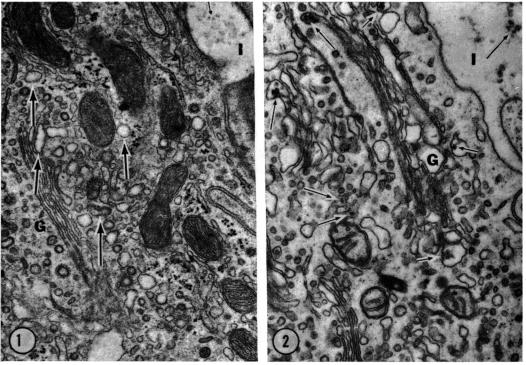
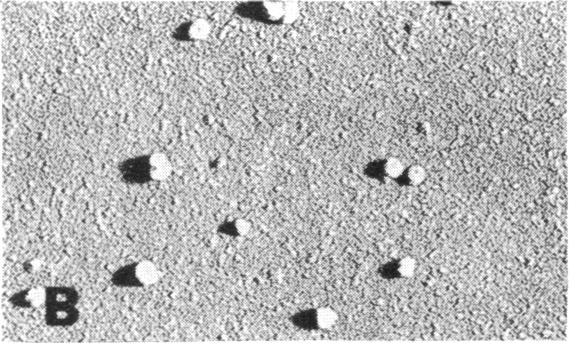
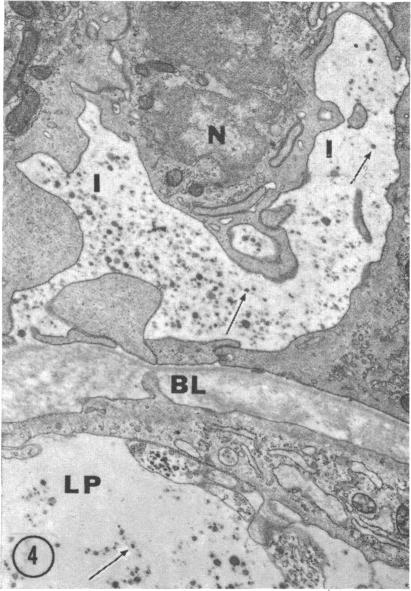
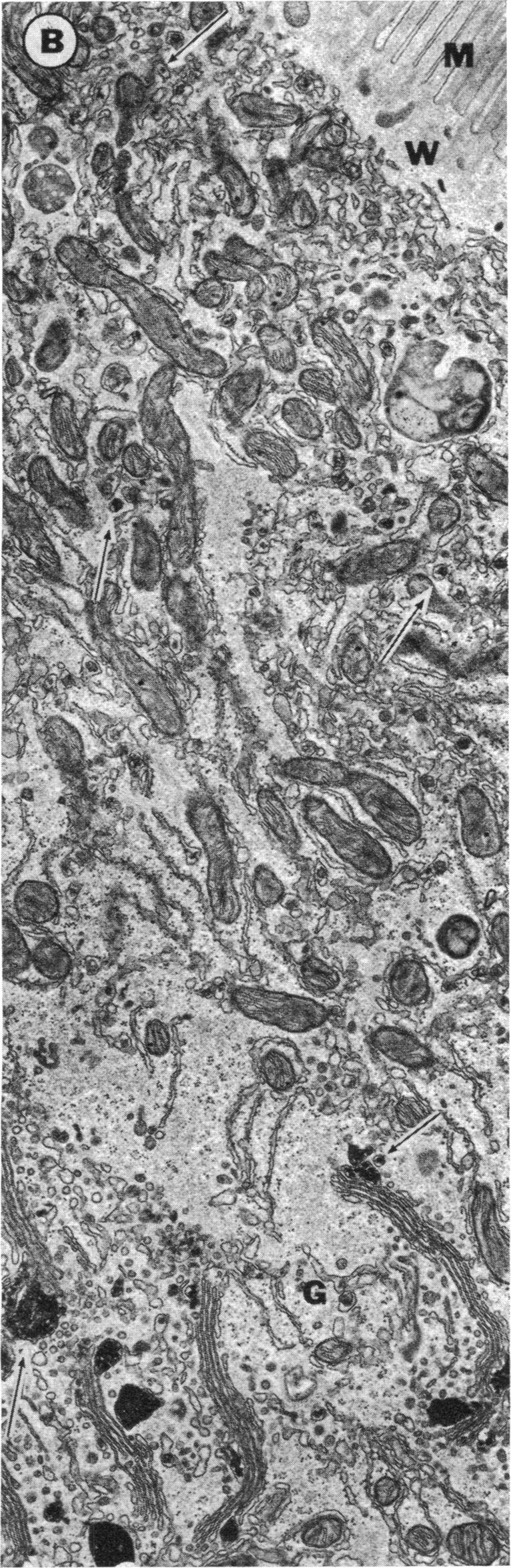
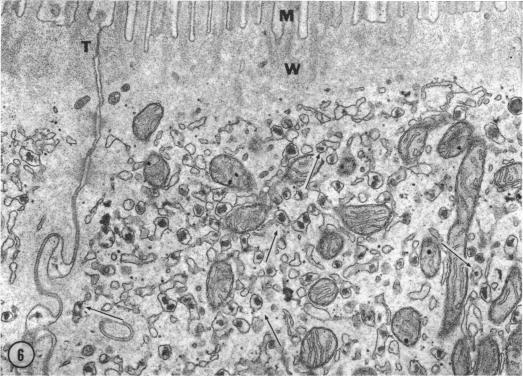
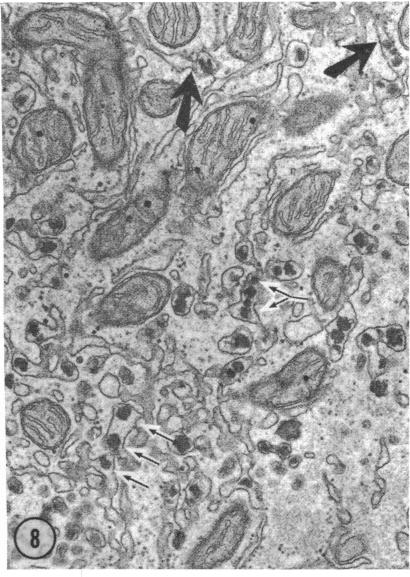
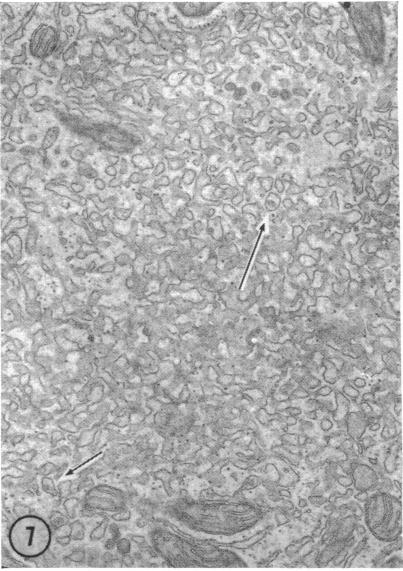
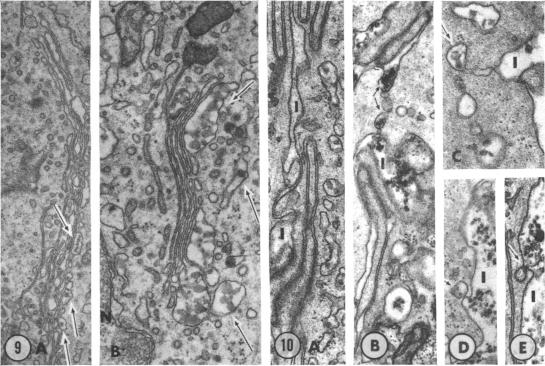
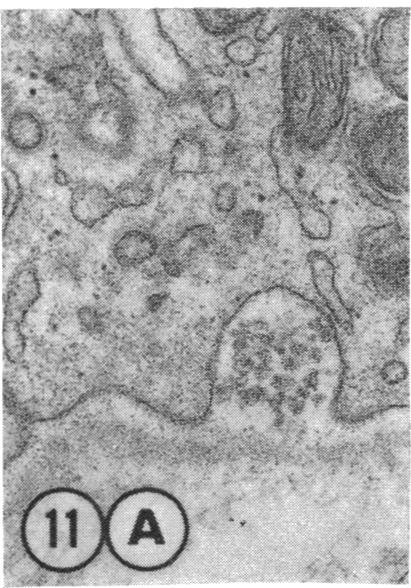
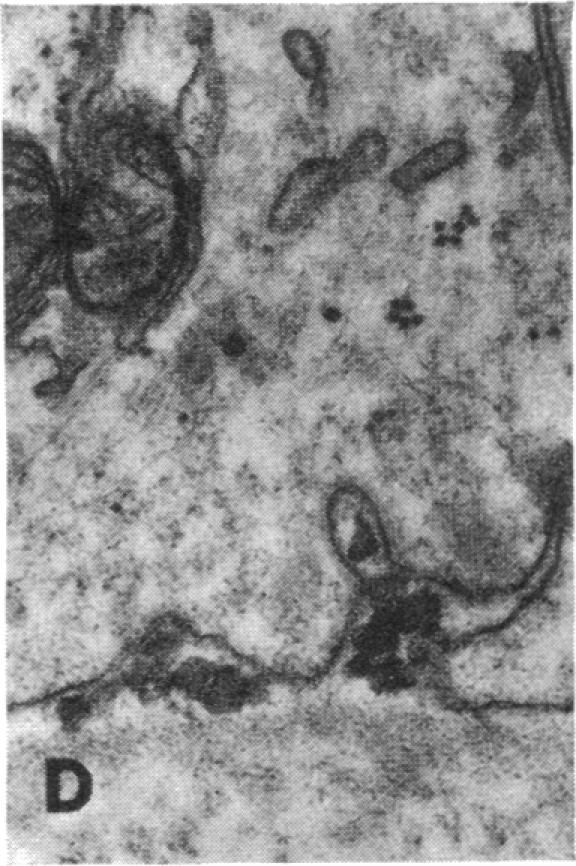
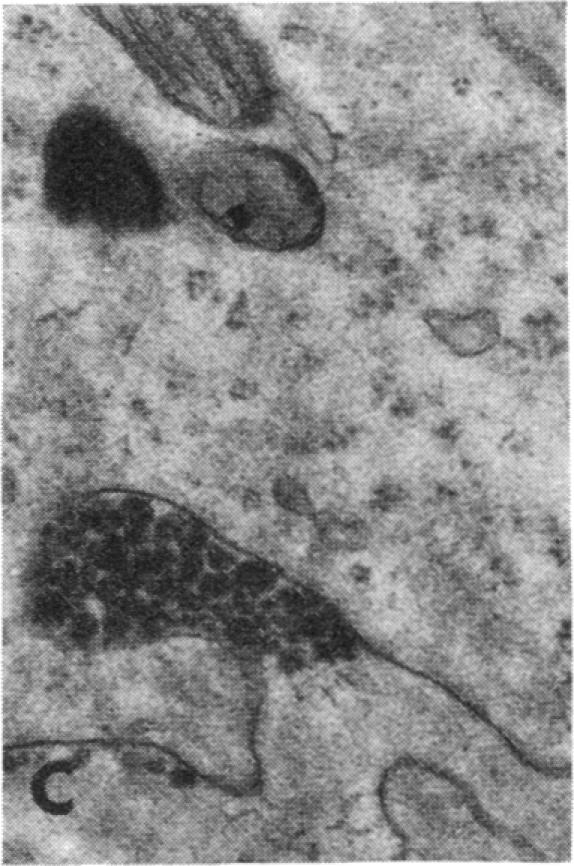
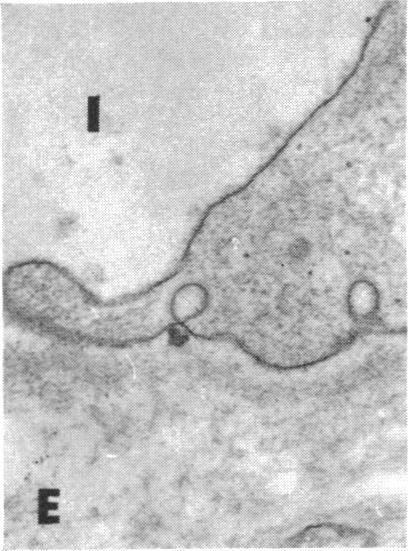
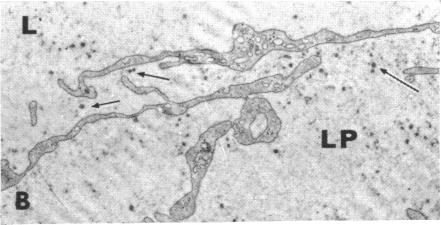
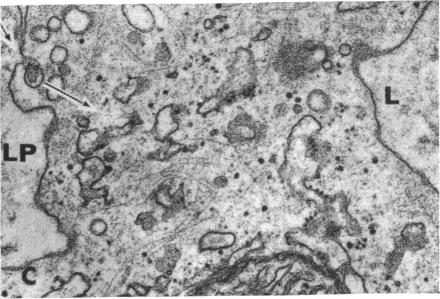
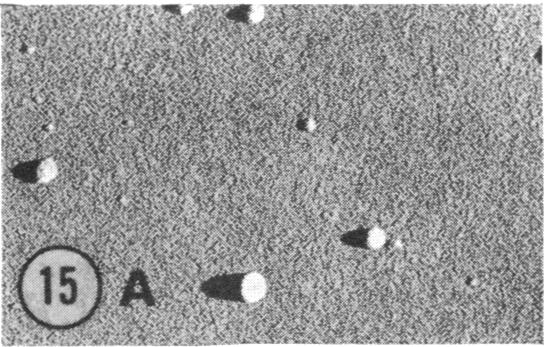
The site of synthesis and some new details of lipoprotein particle transport have been demonstrated within the jejunal mucosa of man. In normal fasting volunteers, lipoprotein particles (88%, 150-650 A diameter) were visualized within the smooth endoplasmic reticulum and Golgi cisternae of absorptive cells covering the tips of jejunal villi. Electron microscopic observations suggested that these particles exited through the sides and bases of absorptive cells by reverse pinocytosis and then passed through the extracellular matrix of the lamina propria to enter lacteal lumina. When these lipid particles were isolated from fasting intestinal biopsies by preparative ultracentrifugation, their size distribution was similar to that of very low density (S(f) 20-400) lipoprotein (VLDL) particles in plasma. After a fatty meal, jejunal absorptive cells and extracts of their homogenates contained lipid particles of VLDL-size as well as chylomicrons of various sizes. The percentage of triglyceride in isolated intestinal lipid particles increased during fat absorption. Our interpretation of these data is that chylomicrons are probably derived from intestinal lipoprotein particles by addition of triglyceride.
脂蛋白颗粒的合成部位以及脂蛋白颗粒转运的一些新细节已在人类空肠黏膜中得到证实。在正常空腹志愿者中,在覆盖空肠绒毛尖端的吸收细胞的滑面内质网和高尔基池中可见脂蛋白颗粒(直径88%,150 - 650埃)。电子显微镜观察表明,这些颗粒通过反向胞饮作用从吸收细胞的侧面和基部排出,然后穿过固有层的细胞外基质进入乳糜管腔。当通过制备性超速离心从空腹肠道活检组织中分离出这些脂质颗粒时,它们的大小分布与血浆中极低密度(S(f) 20 - 400)脂蛋白(VLDL)颗粒相似。进食脂肪餐后,空肠吸收细胞及其匀浆提取物中含有VLDL大小的脂质颗粒以及各种大小的乳糜微粒。在脂肪吸收过程中,分离出的肠道脂质颗粒中甘油三酯的百分比增加。我们对这些数据的解释是,乳糜微粒可能是通过添加甘油三酯从肠道脂蛋白颗粒衍生而来的。