Cooper R A, Dawson P J, Rambo O N
Calif Med. 1967 Mar;106(3):170-5.
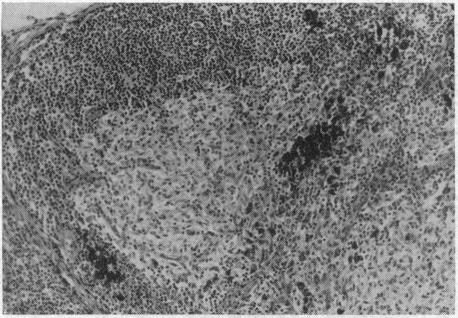
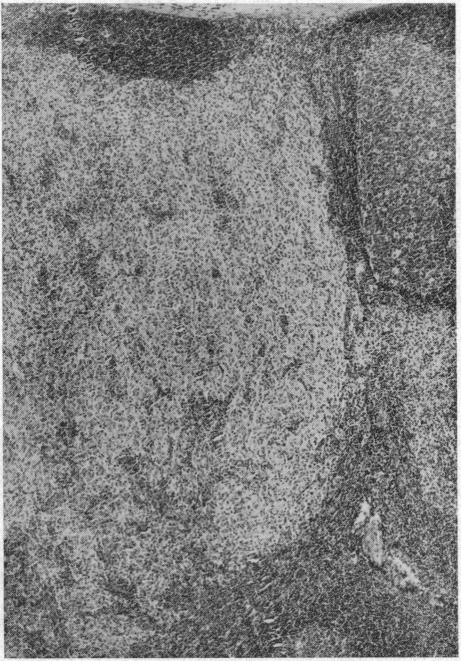
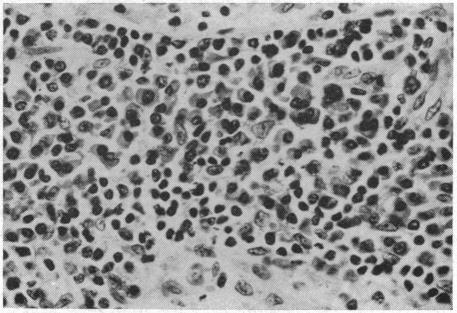
Forty cases of dermatopathic lymphadenopathy were found in a series of 906 consecutive lymph node biopsies (4.8 per cent). The histologic development and progression of the disease was correlated with the clinical state of the patient. In 35 of 40 cases the patients had active skin disease at the time of the biopsy; one of the remaining five patients had Hodgkin's disease, one had multiple myeloma and one had secondary syphilis. In the other two, no organic cause was found. In nine cases (22.5 per cent), the histological pattern typical of dermatopathic lymphadenopathy was associated with malignant lymphoma. Except for two biopsies, which showed coexisting malignant lymphoma and dermatopathic lymphadenopathy, no histologic features were found which distinguished patients with malignant lymphoma from the remainder. While the pathogenesis of the lymph node changes remains obscure, the histologic features suggest that it is at least in part an immune response, although the nature of the responsible antigen is unknown.
在连续906例淋巴结活检中发现40例皮肤性淋巴结病(占4.8%)。该疾病的组织学发展和进程与患者的临床状态相关。40例患者中有35例在活检时患有活动性皮肤病;其余5例患者中,1例患有霍奇金病,1例患有多发性骨髓瘤,1例患有二期梅毒。另外2例未发现器质性病因。9例(22.5%)具有皮肤性淋巴结病典型组织学模式的患者合并恶性淋巴瘤。除2例活检显示同时存在恶性淋巴瘤和皮肤性淋巴结病外,未发现能将恶性淋巴瘤患者与其余患者区分开来的组织学特征。虽然淋巴结变化的发病机制尚不清楚,但组织学特征表明其至少部分是一种免疫反应,尽管相关抗原的性质尚不清楚。