el-Gendi M A
Gut. 1979 Mar;20(3):177-85. doi: 10.1136/gut.20.3.177.
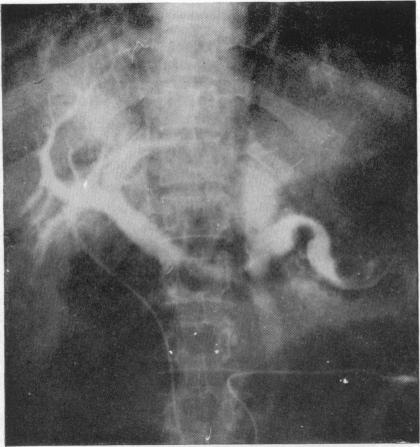
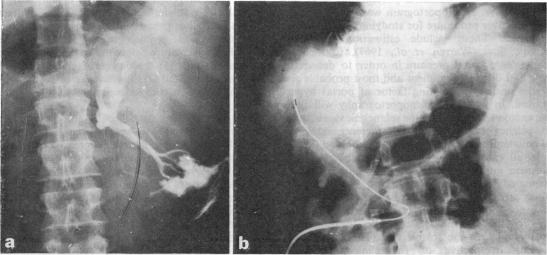
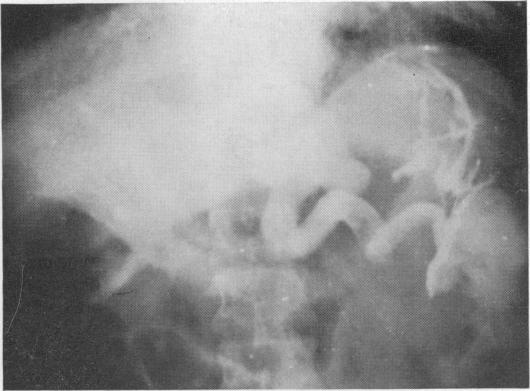
Twenty-eight patients with hepatosplenic schistosomiasis and portal hypertension were studied. The transumbilical portal pressure, transsplenic portal pressure, and thoracic duct occluded pressure were measured simultaneously and thoracic duct lymph flow estimated. Changes in the splanchnic vasculature were studied radiologically barium swallow, splenoportography, and umbilical portography. The transumbilical-transsplenic portal pressure gradient was found to be of particular value. The gradient was considered to be positive when the transumbilical portal pressure was higher than the transsplenic portal pressure, in such cases the primary generating factor of portal hypertension and/or ascites was most probably of hepatic origin. The gradient was considered to be negative when the transumbilical portal pressure was lower than the transsplenic portal pressure; in such cases the primary generating factor of portal hypertension and/or ascites was most probably of splenic or prehepatic origin. A correlation was found between the type of gradient and the radiographic pattern met with. For instance, in cases with positive gradient the hepatic blood flows, as estimated from the splenoportography, were mostly stage I or II, and showed no retrograde portal vein flow on umbilical portography. While, in cases with negative gradients, the hepatic blood flows were mostly stage III or IV, and showed retrograde portal vein flow on umbilical portography. The type of gradient, the clinicopathological stage, and the radiographic changes in the splanchnic vasculature were taken into account in selecting the surgical procedure to be used in each individual case.
对28例肝脾型血吸虫病合并门静脉高压患者进行了研究。同时测量经脐门静脉压力、经脾门静脉压力和胸导管闭塞压力,并估算胸导管淋巴流量。通过钡餐造影、脾门静脉造影和脐门静脉造影对内脏血管系统的变化进行了影像学研究。发现经脐-经脾门静脉压力梯度具有特殊价值。当经脐门静脉压力高于经脾门静脉压力时,该梯度被认为是正向的,在这种情况下,门静脉高压和/或腹水的主要产生因素很可能起源于肝脏。当经脐门静脉压力低于经脾门静脉压力时,该梯度被认为是负向的;在这种情况下,门静脉高压和/或腹水的主要产生因素很可能起源于脾脏或肝前。发现梯度类型与所遇到的放射学模式之间存在相关性。例如,在梯度为正向的病例中,根据脾门静脉造影估算的肝血流大多为I期或II期,脐门静脉造影未见门静脉逆流。而在梯度为负向的病例中,肝血流大多为III期或IV期,脐门静脉造影可见门静脉逆流。在为每个病例选择手术方式时,考虑了梯度类型、临床病理分期和内脏血管系统的放射学变化。