Goodwin A B, Cumming G R
Can Med Assoc J. 1966 Aug 27;95(9):402-6.
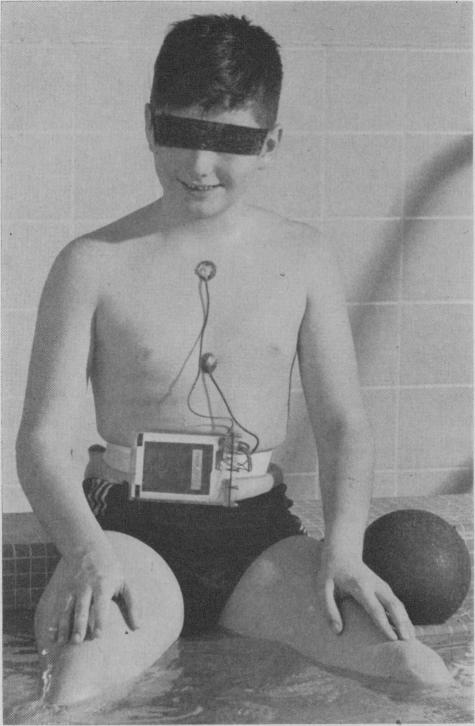
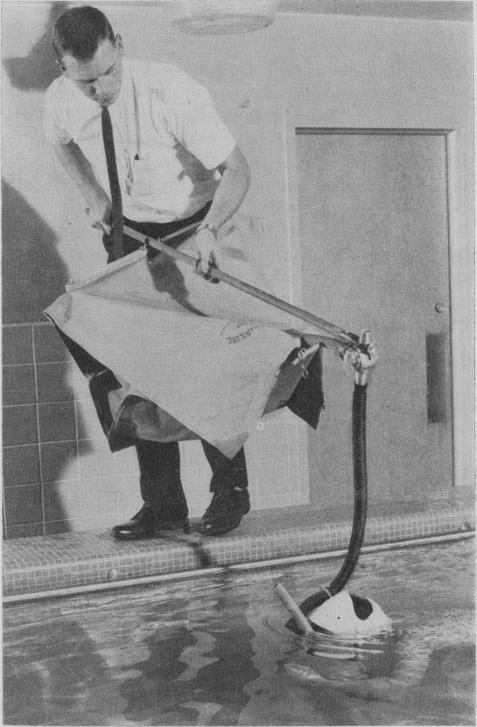
During competitive water polo, heart rate in six subjects was monitored by cupped plastic and silver electrodes glued to the skin. Minimum rates during the game averaged 156 beats/min.; maximum rates averaged 186 beats/min. Mean maximum rate with bicycle exercise was 188 beats/min. Maximum oxygen (VO(2) max.) with bicycle exercise of 14 water-polo players was 53.3 ml./kg. Physical working capacity (PWC 170) was 1310 kilopond metres per square metre (k.p.m./sq.m.). PWC 170 correlated well with VO(2) max. in this small group (r = 0.77).Oxygen uptake was measured at three speeds of swimming and four levels of work on a bicycle ergometer. VO(2) max. of swimming was 88% of that obtained on bicycle exercise. The slope of the oxygen uptake vs. pulse rate curves was less for the swimming than for cycling, so that for a given oxygen uptake below the maximal, pulse rate was less in the swimmers. At near-maximal swimming, respiratory quotient was 0.95 compared with 1.27 for cycling, suggesting that the swimmers were underbreathing.
在竞技水球比赛期间,通过粘贴在皮肤上的杯状塑料电极和银电极对6名受试者的心率进行监测。比赛期间的最低心率平均为156次/分钟;最高心率平均为186次/分钟。自行车运动时的平均最高心率为188次/分钟。14名水球运动员进行自行车运动时的最大摄氧量(VO₂max.)为53.3毫升/千克。体力工作能力(PWC 170)为1310千克力·米/平方米(k.p.m./sq.m.)。在这个小群体中,PWC 170与VO₂max. 相关性良好(r = 0.77)。在三种游泳速度和自行车测力计上的四个工作水平下测量了摄氧量。游泳的VO₂max. 是自行车运动时VO₂max. 的88%。游泳时摄氧量与脉搏率曲线的斜率小于骑自行车时,因此在低于最大值的给定摄氧量下,游泳者的脉搏率较低。在接近最大强度游泳时,呼吸商为0.95,而骑自行车时为1.27,这表明游泳者呼吸不足。