Jay J M
Appl Microbiol. 1966 Jul;14(4):492-6. doi: 10.1128/am.14.4.492-496.1966.
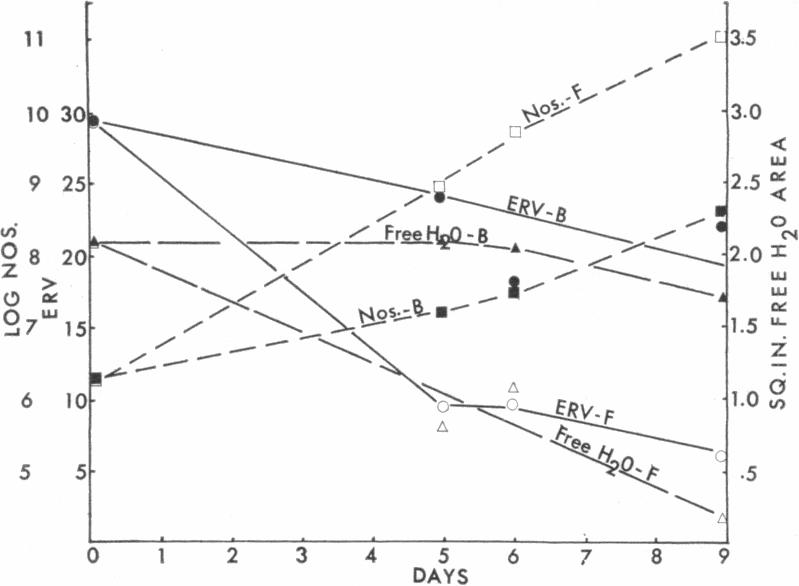
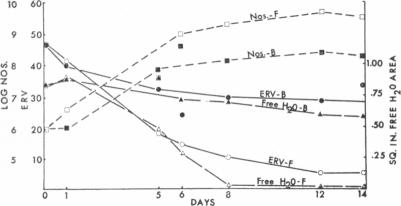
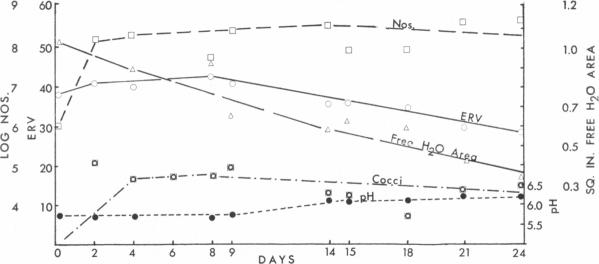
The aging of ground beef was effected by storing in gas-impermeable, sterile plastic bags with incubation at 7 and 15 C. Control meat from the same preparations was wrapped in aluminum foil and stored at the same temperature. In three experiments where control meat was tested, aged meat did not attain a log bacterial number of ca. 8.4 per gram until an average of 6 days after this level was reached in control meats. This degree of difference was shown in values for both extract-release volume (ERV) and water-holding capacity. The previously reported ERV value of around 25, which was found to correspond to an average log bacterial number of ca. 8.5 per gram for ground beef allowed to spoil in aluminum foil and freezer paper, was approximated for aged meats, which required an average of 9.7 days to attain this number compared with 4.1 days for unaged meats. Plate count methods indicated the predominant flora of aged beef to be gram-negative, facultatively psychrophilic rods.
通过将碎牛肉储存在不透气的无菌塑料袋中,并在7℃和15℃下培养来实现碎牛肉的陈化。来自相同制剂的对照肉用铝箔包裹并在相同温度下储存。在三项测试对照肉的实验中,陈化肉直到对照肉达到每克约8.4的对数细菌数平均6天后才达到该水平。这种差异程度在提取物释放量(ERV)和持水能力的值中都有体现。先前报道的ERV值约为25,发现该值对应于在铝箔和冷冻纸中变质的碎牛肉每克约8.5的平均对数细菌数,陈化肉接近该值,达到这个数字平均需要9.7天,而未陈化的肉需要4.1天。平板计数法表明,陈化牛肉的主要菌群是革兰氏阴性兼性嗜冷杆菌。