Gonias S L, Einarsson M, Pizzo S V
J Clin Invest. 1982 Aug;70(2):412-23. doi: 10.1172/jci110631.
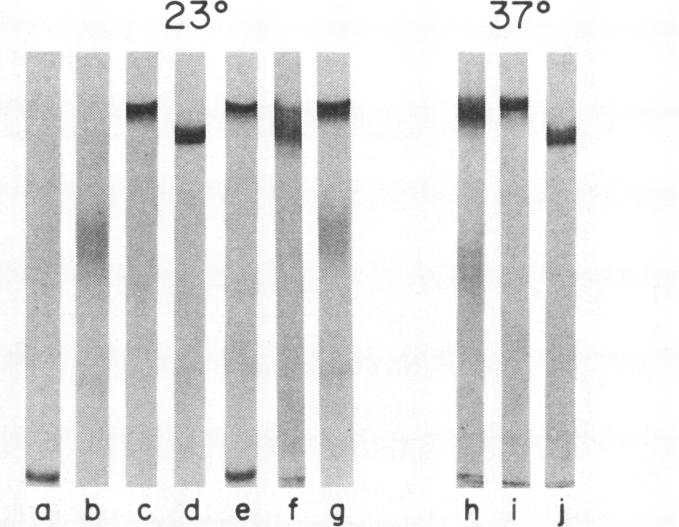
The catabolic pathways of streptokinase, plasmin, and activator complex prepared with human plasminogen were studied in mice. (125)I-streptokinase clearance occurred in the liver and was 50% complete in 15 min. Incubation with mouse plasma had no effect on the streptokinase clearance rate. Complexes of plasmin and alpha(2)-plasmin inhibitor were eliminated from the plasma by a specific and saturable pathway. Competition experiments demonstrated that this pathway is responsible for the clearance of injected plasmin. Streptokinase-plasminogen activator complex formed with either (125)I-plasminogen or (125)I-streptokinase cleared in the liver at a significantly faster rate than either of the uncomplexed proteins (50% clearance in <3 min). Streptokinase incubated with human plasma also demonstrated this accelerated clearance. p-Nitrophenyl-p'-guanidinobenzoate-HCl or pancreatic trypsin inhibitor-treated complex cleared slowly compared with untreated complex independent of which protein was radiolabeled. Significant competition for clearance was demonstrated between alpha(2)-macroglobulin-trypsin and activator complex only when the plasmin(ogen) was the radiolabeled moiety. Large molar excesses of alpha(2)-plasmin inhibitor-plasmin failed to retard the clearance of activator complex. Hepatic binding of streptokinase-plasmin, in liver perfusion experiments, was dependent upon prior incubation with plasma (8-10% uptake compared to a background of approximately 2.5%). Substitution of human alpha(2)-macroglobulin for plasma also resulted in binding when the incubation was performed for 10 min at 37 degrees C (7.5%). Electrophoresis experiments confirmed the transfer of 0.8 mol plasmin/mol alpha(2)-macroglobulin when activator complex was incubated at 37 degrees C with alpha(2)-macroglobulin for 40 min. Streptokinase transfer from activator complex to alpha(2)-macroglobulin was negligible. The in vivo clearance of activator complex is proposed to involve active attack of the complex on the alpha(2)-macroglobulin "bait region," resulting in facilitated plasmin transfer. Dissociated streptokinase is rapidly bound and cleared by sites in the liver.
在小鼠中研究了链激酶、纤溶酶以及用人纤溶酶原制备的激活剂复合物的分解代谢途径。(125)I标记的链激酶在肝脏中被清除,15分钟内清除50%。与小鼠血浆孵育对链激酶的清除率没有影响。纤溶酶与α2-纤溶酶抑制剂的复合物通过一条特异性且可饱和的途径从血浆中清除。竞争实验表明,该途径负责清除注入的纤溶酶。用(125)I-纤溶酶原或(125)I-链激酶形成的链激酶-纤溶酶原激活剂复合物在肝脏中的清除速度明显快于任何一种未复合的蛋白质(在<3分钟内清除50%)。与人类血浆孵育的链激酶也表现出这种加速清除。与未处理的复合物相比,对硝基苯基-对'-胍基苯甲酸盐酸盐或胰蛋白酶抑制剂处理的复合物清除缓慢,与哪种蛋白质被放射性标记无关。仅当纤溶酶(原)是放射性标记部分时,才证明α2-巨球蛋白-胰蛋白酶与激活剂复合物之间存在明显的清除竞争。大量摩尔过量的α2-纤溶酶抑制剂-纤溶酶未能延缓激活剂复合物的清除。在肝脏灌注实验中,链激酶-纤溶酶在肝脏中的结合取决于预先与血浆孵育(摄取率为8 - 10%,而背景摄取率约为2.5%)。当在37℃孵育10分钟时,用人α2-巨球蛋白替代血浆也会导致结合(摄取率为7.5%)。电泳实验证实,当激活剂复合物在37℃与α2-巨球蛋白孵育40分钟时,每摩尔α2-巨球蛋白转移0.8摩尔纤溶酶。链激酶从激活剂复合物向α2-巨球蛋白的转移可忽略不计。激活剂复合物的体内清除被认为涉及复合物对α2-巨球蛋白“诱饵区域”的主动攻击,从而促进纤溶酶的转移。解离的链激酶迅速被肝脏中的位点结合并清除。