Myers B D, Okarma T B, Friedman S, Bridges C, Ross J, Asseff S, Deen W M
J Clin Invest. 1982 Oct;70(4):732-46. doi: 10.1172/jci110669.
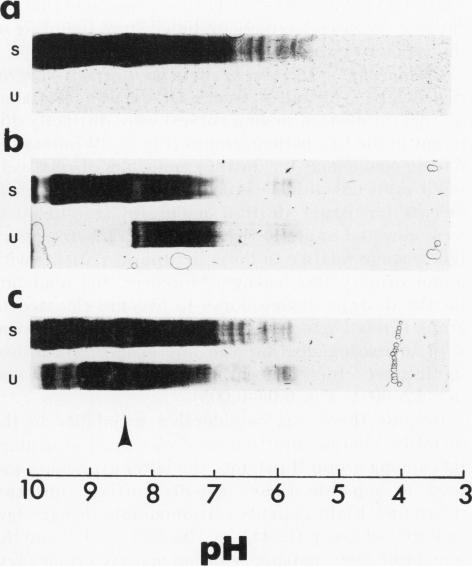
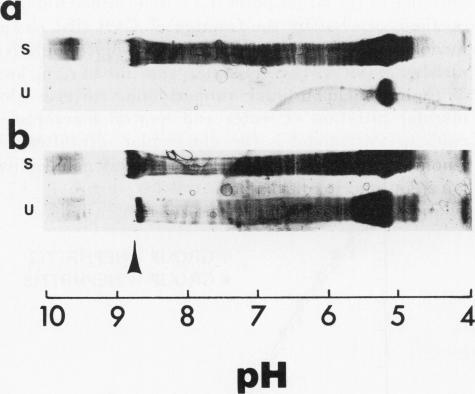
We evaluated glomerular barrier function in 28 patients with glomerulonephritis. Neutral dextrans of graded size were used to characterize the size-selective properties of the barrier. Charge selectivity was characterized by electrofocusing excreted urinary proteins. A fractional IgG clearance (relative to freely permeable inulin), smaller or greater than 100 x 10(-5) was used to distinguish patients with minor (group I, n = 13) and major (group II, n = 15) urinary IgG leakage, respectively. Fractional clearances of smaller dextrans (radii 20-50 A) were similar, but those of larger dextrans (radii 52-60 A) were elevated in group II relative to group I patients. A model of solute transport through a bimodal pore size distribution revealed the values for pore radius in the lower mode to approximate 51-55 A in both group I and group II patients. Pore radius in the upper mode, by contrast, was much larger in group II than in group I patients, approximating 87-97 vs. 72-77 A, respectively. Electrofocusing of urinary protein from group I patients revealed mostly albumin (isoelectric point 5.2). In group II patients, however, immunoglobulin excretion was copious. Moreover, the distribution of anionic, neutral, and cationic species (isoelectric points 5.5-8.5) in urinary and plasma eluates of IgG2 and IgG4 was similar. We conclude that when glomerulonephritis is associated with selective albuminuria, as in group I,, there is an isolated reduction of electrostatic retardation of relatively small anionic proteins. Major urinary IgG leakage (group II), however, appears to result from the development in the glomerular membrane of a subpopulation of enlarged pores that are highly permeable towards proteins of large size and varying charge.
我们评估了28例肾小球肾炎患者的肾小球屏障功能。使用分级大小的中性葡聚糖来表征屏障的大小选择性特性。电荷选择性通过对排泄的尿蛋白进行电聚焦来表征。采用分数IgG清除率(相对于自由通透的菊粉),小于或大于100×10⁻⁵分别用于区分轻度(I组,n = 13)和重度(II组,n = 15)尿IgG泄漏患者。较小葡聚糖(半径20 - 50 Å)的分数清除率相似,但II组中较大葡聚糖(半径52 - 60 Å)的分数清除率相对于I组患者升高。通过双峰孔径分布的溶质转运模型显示,I组和II组患者较低模式下的孔径半径值约为51 - 55 Å。相比之下,II组患者较高模式下的孔径半径比I组患者大得多,分别约为87 - 97 Å和72 - 77 Å。I组患者尿蛋白的电聚焦显示主要为白蛋白(等电点5.2)。然而,II组患者免疫球蛋白排泄丰富。此外,IgG2和IgG4的尿和血浆洗脱液中阴离子、中性和阳离子物种(等电点5.5 - 8.5)的分布相似。我们得出结论,当肾小球肾炎与选择性蛋白尿相关时,如在I组中,相对较小的阴离子蛋白的静电阻滞作用单独降低。然而,重度尿IgG泄漏(II组)似乎是由于肾小球膜中出现了一群扩大的孔,这些孔对大尺寸和不同电荷的蛋白质具有高度通透性。