Dandolo L, Blangy D, Kamen R
J Virol. 1983 Jul;47(1):55-64. doi: 10.1128/JVI.47.1.55-64.1983.
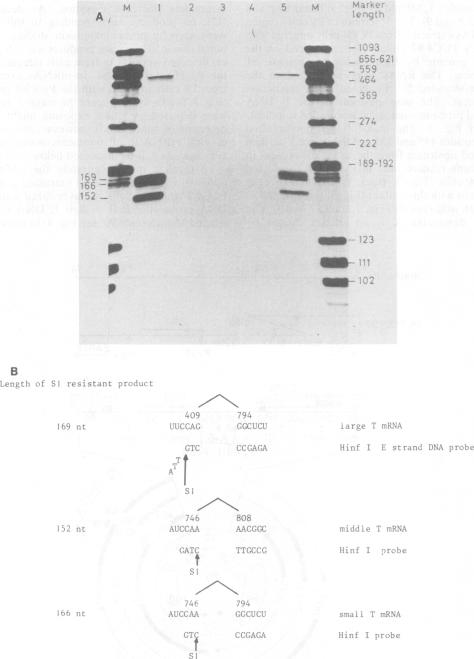
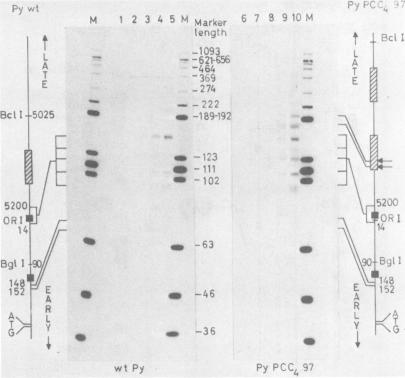
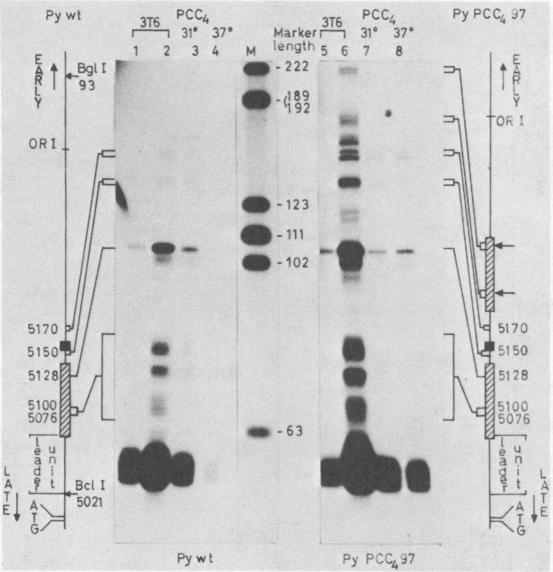
Undifferentiated murine embryonal carcinoma (EC) cells are resistant to infection with wild-type polyoma virus. The block appears to be located at the transcriptional level. Polyoma host range mutants capable of expressing early and late functions in EC cells have been isolated. The modifications responsible for the phenotype of these mutants are localized in the noncoding region of polyoma DNA genome, containing regulatory sequences for replication and transcription. We compared the 5' termini of early and late mRNAs of wild-type polyoma and mutant viruses in EC cells and in permissive cells. Our results show that wild-type mRNA is normally spliced in EC cells but present at a very low level. The sequence modifications of the mutant viruses lead to a 100-fold increase in the production of mRNA in these cells, but the major 5' termini of early and late mRNAs are identical to those in wild-type-infected 3T6 cells.
未分化的小鼠胚胎癌细胞对野生型多瘤病毒感染具有抗性。这种阻断似乎位于转录水平。已经分离出能够在胚胎癌细胞中表达早期和晚期功能的多瘤宿主范围突变体。导致这些突变体表型的修饰位于多瘤DNA基因组的非编码区,该区域包含复制和转录的调控序列。我们比较了野生型多瘤病毒和突变病毒在胚胎癌细胞和允许细胞中早期和晚期mRNA的5'末端。我们的结果表明,野生型mRNA在胚胎癌细胞中正常剪接,但水平非常低。突变病毒的序列修饰导致这些细胞中mRNA的产生增加了100倍,但早期和晚期mRNA的主要5'末端与野生型感染的3T6细胞中的相同。