Flensburg J, Sköld O
J Bacteriol. 1984 Jul;159(1):184-90. doi: 10.1128/jb.159.1.184-190.1984.
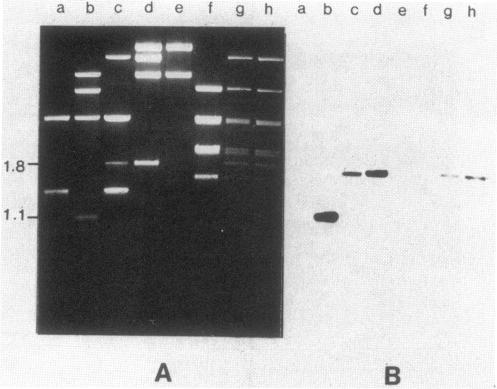
High resistance to trimethoprim mediated by the several hundredfold overproduction of the drug target enzyme, dihyrofolate reductase, in a clinically isolated Escherichia coli strain, 1810, was cloned onto several vector plasmids and seemed to be comprised of a single dihydrofolate reductase gene, which by DNA-DNA hybridization and restriction enzyme digestion mapping was very similar to the corresponding gene of E. coli K-12. Determination of mRNA formation in the originally isolated resistant strain and strains with cloned trimethoprim resistance determinant demonstrated an about 15-fold increase in production of dihydrofolate reductase mRNA compared with that in E. coli K-12. This was explained by the occurrence of a promoter up mutation in the resistant isolate accompanied by changes in the restriction enzyme digestion pattern found by comparison with the corresponding pattern from E. coli K-12.
在临床分离的大肠杆菌菌株1810中,药物靶标酶二氢叶酸还原酶的产量数百倍增加,介导了对甲氧苄啶的高度抗性。该抗性基因被克隆到几种载体质粒上,似乎由单个二氢叶酸还原酶基因组成,通过DNA-DNA杂交和限制性内切酶消化图谱分析,该基因与大肠杆菌K-12的相应基因非常相似。对最初分离的抗性菌株和克隆了甲氧苄啶抗性决定簇的菌株中mRNA形成的测定表明,与大肠杆菌K-12相比,二氢叶酸还原酶mRNA的产量增加了约15倍。这可以通过抗性分离株中启动子上的突变以及与大肠杆菌K-12相应图谱相比发现的限制性内切酶消化图谱的变化来解释。