Charlton K M, Casey G A, Campbell J B
Can J Comp Med. 1983 Jul;47(3):363-9.
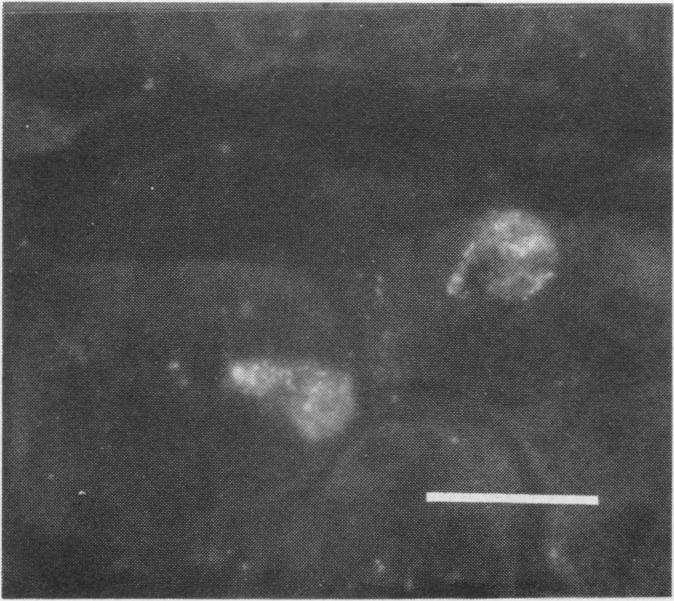
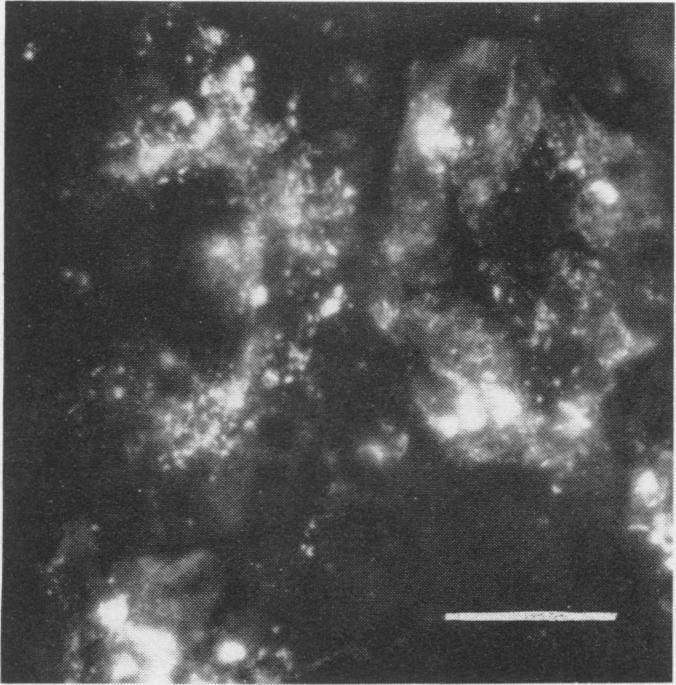
Striped skunks (Mephitis mephitis) were inoculated into the right submandibular salivary gland with street rabies virus. They were killed at various times after inoculation and several tissues were examined by immunofluorescence and light microscopy. Right and left superior cervical, nodose and trigeminal ganglia, medulla oblongata and at least three regions of right and left submandibular salivary glands were examined by the fluorescent antibody technique. Intracerebral titrations of salivary gland suspensions were made in weanling white Swiss mice. Immunofluorescent material (inoculum) was detected in septa and connective tissue surrounding secretory units of the right submandibular gland immediately after inoculation, but otherwise antigen was not detected in either right or left submandibular glands without coincident antigen in the medulla oblongata. This occurred first on day 12 in areas of the gland remote from the inoculation site. Titers of virus were low at this time. Serum neutralizing antibodies occurred by day 7 in a few skunks. The time of development and distribution of antigen strongly suggest that, even after direct inoculation, neural networks are necessary for development of widespread infection of the salivary gland. The early occurrence of serum neutralizing antibodies in some of the skunks suggests that the immune response was activated by virus in the inoculum since immunofluorescence was not detected in any tissue at this time.
将街毒株狂犬病病毒接种到条纹臭鼬(Mephitis mephitis)的右侧下颌下唾液腺中。在接种后的不同时间将它们处死,并通过免疫荧光和光学显微镜检查多个组织。通过荧光抗体技术检查右侧和左侧颈上神经节、结状神经节和三叉神经节、延髓以及右侧和左侧下颌下唾液腺的至少三个区域。对唾液腺悬液进行脑内滴定,接种于断奶的瑞士小白鼠。接种后立即在右侧下颌下腺分泌单位周围的间隔和结缔组织中检测到免疫荧光物质(接种物),但在延髓无相应抗原的情况下,右侧或左侧下颌下腺中均未检测到抗原。这最早发生在接种后第12天,出现在腺体远离接种部位的区域。此时病毒滴度较低。少数臭鼬在第7天出现血清中和抗体。抗原出现的时间和分布强烈表明,即使直接接种后,神经网络对于唾液腺广泛感染的发展也是必需的。一些臭鼬血清中和抗体的早期出现表明,免疫反应是由接种物中的病毒激活的,因为此时在任何组织中均未检测到免疫荧光。