Traub F, Keller B, Kuhn A, Maeder M
J Virol. 1984 Mar;49(3):902-8. doi: 10.1128/JVI.49.3.902-908.1984.
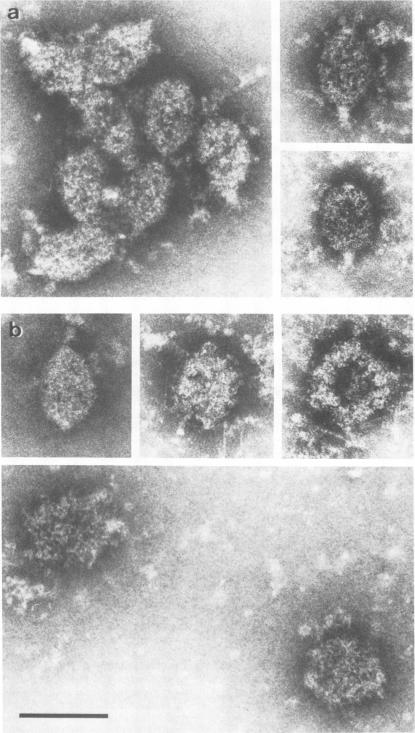
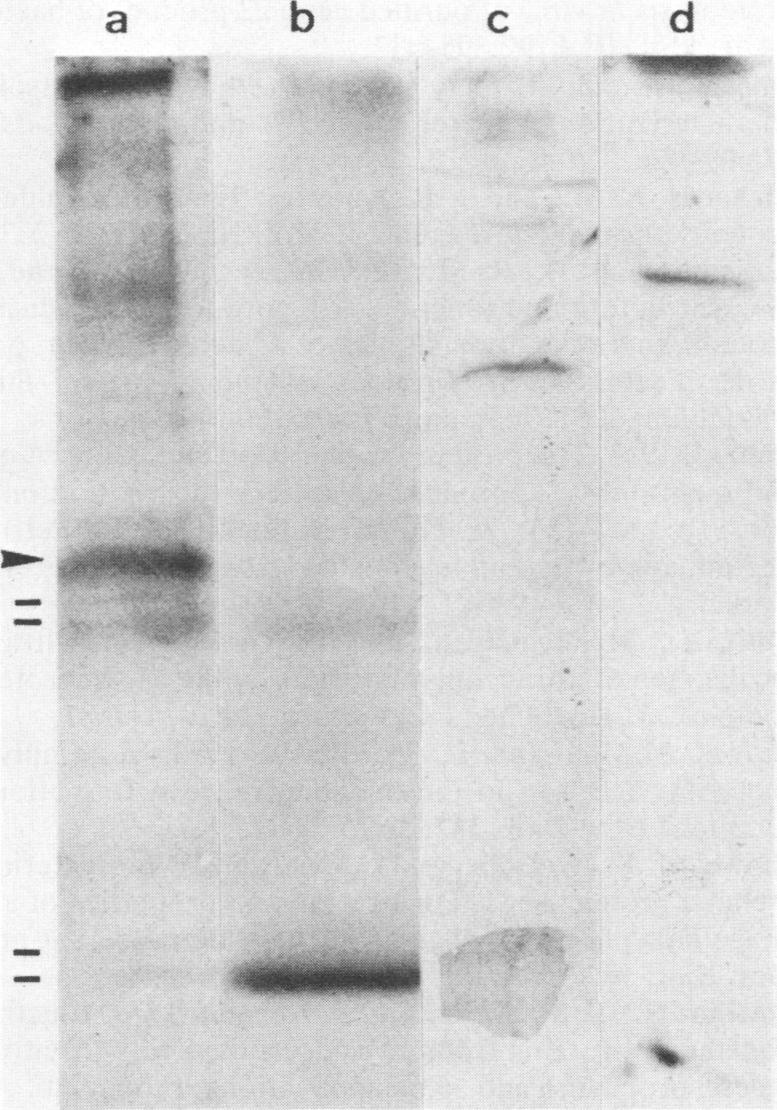
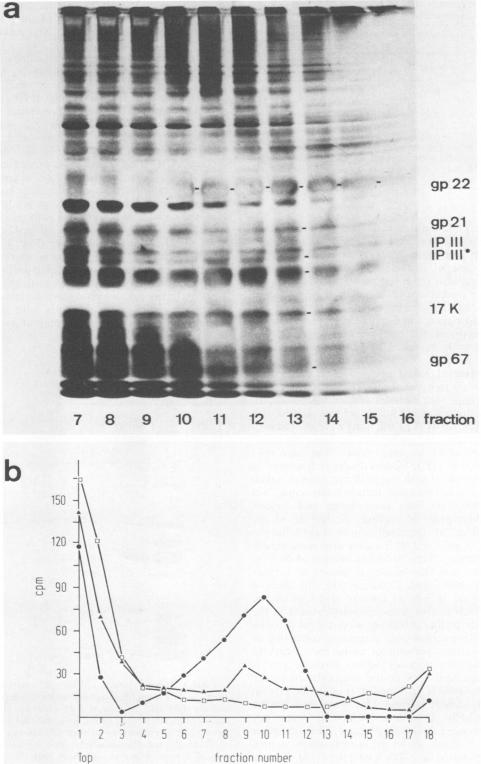
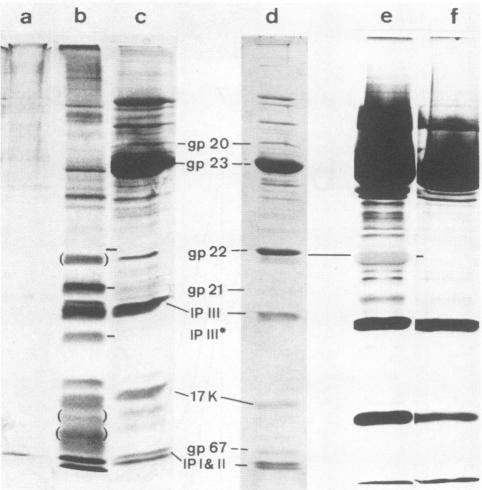
The naked core of bacteriophage T4 was isolated ex vivo after cross-linking with either glutaraldehyde or dithiobis(succinimidyl propionate). The isolated particles appeared to be morphologically identical to the cores found in thin sections, to those demonstrated in in situ lysis preparations, and to core structures assembled in vitro. Treatment with glutaraldehyde provided core particles which were morphologically well preserved, whereas dithiobis(succinimidyl propionate)-induced cross-linking was reversible and allowed analysis of the protein composition of the isolated particles. The identity of the reversibly cross-linked particles with those obtained after irreversible cross-linking was suggested by their morphology and their similar sedimentation behavior. Immunolabeling confirmed the structural presence of the main core protein in both structures. Gel electrophoresis of reversibly cross-linked cores revealed the essential head proteins gp22, gp67, and gp21, the three internal proteins IPI, IPII, and IPIII, and a 17K protein.
用戊二醛或二硫代双(琥珀酰亚胺丙酸酯)交联后,在体外分离出噬菌体T4的裸露核心。分离出的颗粒在形态上似乎与在超薄切片中发现的核心、原位裂解制剂中展示的核心以及体外组装的核心结构相同。用戊二醛处理得到的核心颗粒在形态上保存良好,而二硫代双(琥珀酰亚胺丙酸酯)诱导的交联是可逆的,这使得对分离颗粒的蛋白质组成进行分析成为可能。通过形态和相似的沉降行为表明,可逆交联颗粒与不可逆交联后获得的颗粒具有一致性。免疫标记证实了两种结构中主要核心蛋白的结构存在。对可逆交联核心进行凝胶电泳,揭示了必需的头部蛋白gp22、gp67和gp21、三种内部蛋白IPI、IPII和IPIII以及一种17K蛋白。