• 文献检索
  • 文档翻译
  • 深度研究
  • 学术资讯
  • Suppr Zotero 插件Zotero 插件
  • 邀请有礼
  • 套餐&价格
  • 历史记录
应用&插件
Suppr Zotero 插件Zotero 插件浏览器插件Mac 客户端Windows 客户端微信小程序
定价
高级版会员购买积分包购买API积分包
服务
文献检索文档翻译深度研究API 文档MCP 服务
关于我们
关于 Suppr公司介绍联系我们用户协议隐私条款
关注我们

Suppr 超能文献

核心技术专利:CN118964589B侵权必究
粤ICP备2023148730 号-1Suppr @ 2026

文献检索

告别复杂PubMed语法,用中文像聊天一样搜索,搜遍4000万医学文献。AI智能推荐,让科研检索更轻松。

立即免费搜索

文件翻译

保留排版,准确专业,支持PDF/Word/PPT等文件格式,支持 12+语言互译。

免费翻译文档

深度研究

AI帮你快速写综述,25分钟生成高质量综述,智能提取关键信息,辅助科研写作。

立即免费体验

通过计算机断层扫描预测蛛网膜下腔出血后迟发性脑缺血

Prediction of delayed cerebral ischaemia after subarachnoid haemorrhage by computed tomography.

作者信息

Mohsen F, Pomonis S, Illingworth R

出版信息

J Neurol Neurosurg Psychiatry. 1984 Nov;47(11):1197-202. doi: 10.1136/jnnp.47.11.1197.

DOI:10.1136/jnnp.47.11.1197
PMID:6502177
原文链接:https://pmc.ncbi.nlm.nih.gov/articles/PMC1028086/
Abstract

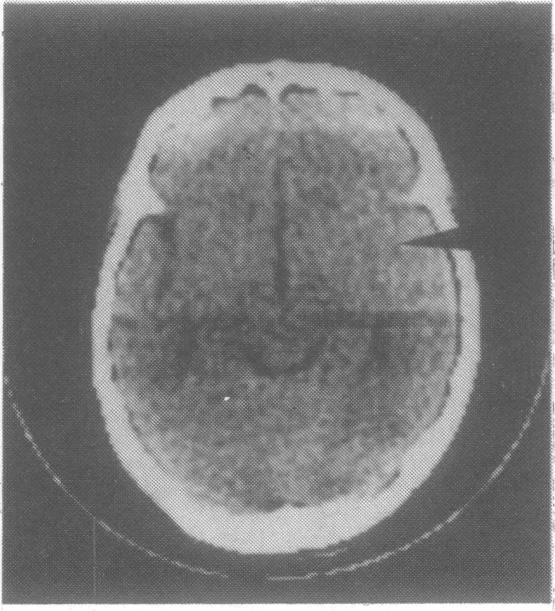
Computed tomography was performed in 100 patients within 4 days of aneurysmal subarachnoid haemorrhage. The CT appearances have been divided into five grades by the thickness and extent of the subarachnoid blood. Delayed cerebral ischaemia occurred in 62.5% of patients with most blood on CT, in 33.3% of those in the next grade and in none of the other grades with less amounts of blood. The outcome from delayed ischaemia was worse in those with most CT blood.

摘要

对100例动脉瘤性蛛网膜下腔出血患者在发病4天内进行了计算机断层扫描。根据蛛网膜下腔出血的厚度和范围,CT表现分为五个等级。CT显示出血最多的患者中62.5%发生了迟发性脑缺血,次一级的患者中33.3%发生了迟发性脑缺血,而出血量较少的其他等级患者均未发生。CT显示出血最多的患者迟发性缺血的预后较差。

https://cdn.ncbi.nlm.nih.gov/pmc/blobs/b98f/1028086/e035a483f049/jnnpsyc00127-0047-b.jpg
https://cdn.ncbi.nlm.nih.gov/pmc/blobs/b98f/1028086/54e636db16bc/jnnpsyc00127-0046-a.jpg
https://cdn.ncbi.nlm.nih.gov/pmc/blobs/b98f/1028086/07ea474f5bc8/jnnpsyc00127-0046-b.jpg
https://cdn.ncbi.nlm.nih.gov/pmc/blobs/b98f/1028086/ad072c70ef0a/jnnpsyc00127-0046-c.jpg
https://cdn.ncbi.nlm.nih.gov/pmc/blobs/b98f/1028086/807b7aef80a4/jnnpsyc00127-0046-d.jpg
https://cdn.ncbi.nlm.nih.gov/pmc/blobs/b98f/1028086/6c6df58e176e/jnnpsyc00127-0046-e.jpg
https://cdn.ncbi.nlm.nih.gov/pmc/blobs/b98f/1028086/9a0a5002a2d3/jnnpsyc00127-0047-a.jpg
https://cdn.ncbi.nlm.nih.gov/pmc/blobs/b98f/1028086/e035a483f049/jnnpsyc00127-0047-b.jpg
https://cdn.ncbi.nlm.nih.gov/pmc/blobs/b98f/1028086/54e636db16bc/jnnpsyc00127-0046-a.jpg
https://cdn.ncbi.nlm.nih.gov/pmc/blobs/b98f/1028086/07ea474f5bc8/jnnpsyc00127-0046-b.jpg
https://cdn.ncbi.nlm.nih.gov/pmc/blobs/b98f/1028086/ad072c70ef0a/jnnpsyc00127-0046-c.jpg
https://cdn.ncbi.nlm.nih.gov/pmc/blobs/b98f/1028086/807b7aef80a4/jnnpsyc00127-0046-d.jpg
https://cdn.ncbi.nlm.nih.gov/pmc/blobs/b98f/1028086/6c6df58e176e/jnnpsyc00127-0046-e.jpg
https://cdn.ncbi.nlm.nih.gov/pmc/blobs/b98f/1028086/9a0a5002a2d3/jnnpsyc00127-0047-a.jpg
https://cdn.ncbi.nlm.nih.gov/pmc/blobs/b98f/1028086/e035a483f049/jnnpsyc00127-0047-b.jpg

相似文献

1
Prediction of delayed cerebral ischaemia after subarachnoid haemorrhage by computed tomography.通过计算机断层扫描预测蛛网膜下腔出血后迟发性脑缺血
J Neurol Neurosurg Psychiatry. 1984 Nov;47(11):1197-202. doi: 10.1136/jnnp.47.11.1197.
2
Incidence of delayed cerebral ischaemia following subarachnoid haemorrhage of unknown cause.不明原因蛛网膜下腔出血后迟发性脑缺血的发生率。
J Neurol Neurosurg Psychiatry. 1985 Feb;48(2):132-6. doi: 10.1136/jnnp.48.2.132.
3
Temporal and Spatial Changes in Cerebral Blood Flow during Management for Preventing Delayed Cerebral Ischemia after Aneurysmal Subarachnoid Hemorrhage: Serial Semiquantitative Analysis.动脉瘤性蛛网膜下腔出血后预防迟发性脑缺血治疗期间脑血流的时空变化:系列半定量分析
J Stroke Cerebrovasc Dis. 2017 Sep;26(9):2027-2037. doi: 10.1016/j.jstrokecerebrovasdis.2017.06.006. Epub 2017 Jun 29.
4
Delayed ischaemia after subarachnoid haemorrhage: a role for small vessel changes.蛛网膜下腔出血后的迟发性缺血:小血管改变的作用。
J Neurol Neurosurg Psychiatry. 1995 Oct;59(4):451-2. doi: 10.1136/jnnp.59.4.451.
5
Diagnostic threshold values of cerebral perfusion measured with computed tomography for delayed cerebral ischemia after aneurysmal subarachnoid hemorrhage.用计算机断层扫描测量的脑灌注对颅内动脉瘤性蛛网膜下腔出血后迟发性脑缺血的诊断阈值。
Stroke. 2010 Sep;41(9):1927-32. doi: 10.1161/STROKEAHA.109.574392. Epub 2010 Aug 5.
6
Prevention of delayed cerebral ischaemia after subarachnoid haemorrhage.蛛网膜下腔出血后迟发性脑缺血的预防。
J Neurol Neurosurg Psychiatry. 2006 Dec;77(12):1300-1. doi: 10.1136/jnnp.2006.100958.
7
Early prediction of delayed cerebral ischemia after subarachnoid hemorrhage: development and validation of a practical risk chart.蛛网膜下腔出血后迟发性脑缺血的早期预测:实用风险图表的制定和验证。
Stroke. 2013 May;44(5):1288-94. doi: 10.1161/STROKEAHA.113.001125. Epub 2013 Mar 19.
8
Early perfusion computerized tomography imaging as a radiographic surrogate for delayed cerebral ischemia and functional outcome after subarachnoid hemorrhage.早期灌注计算机断层成像作为蛛网膜下腔出血后迟发性脑缺血和功能结局的影像学替代指标。
Stroke. 2013 May;44(5):1260-6. doi: 10.1161/STROKEAHA.111.675975. Epub 2013 Mar 28.
9
HIMALAIA (Hypertension Induction in the Management of AneurysmaL subArachnoid haemorrhage with secondary IschaemiA): a randomized single-blind controlled trial of induced hypertension vs. no induced hypertension in the treatment of delayed cerebral ischemia after subarachnoid hemorrhage.希马拉雅(蛛网膜下腔出血继发缺血性脑动脉瘤治疗中的高血压诱导):一项关于蛛网膜下腔出血后迟发性脑缺血治疗中诱导高血压与非诱导高血压的随机单盲对照试验。
Int J Stroke. 2014 Apr;9(3):375-80. doi: 10.1111/ijs.12055. Epub 2013 May 22.
10
Computed Tomography Perfusion Deficits during the Baseline Period in Aneurysmal Subarachnoid Hemorrhage Are Predictive of Delayed Cerebral Ischemia.动脉瘤性蛛网膜下腔出血基线期的计算机断层扫描灌注缺损可预测迟发性脑缺血。
J Stroke Cerebrovasc Dis. 2017 Jan;26(1):162-168. doi: 10.1016/j.jstrokecerebrovasdis.2016.09.004. Epub 2016 Oct 21.

引用本文的文献

1
Clinical Outcomes of Primary Subarachnoid Hemorrhage: An Exploratory Cohort Study from Sudan.原发性蛛网膜下腔出血的临床结局:一项来自苏丹的探索性队列研究。
Neurohospitalist. 2022 Apr;12(2):249-263. doi: 10.1177/19418744211068289. Epub 2022 Feb 18.
2
Retrospective analysis of predictors of cerebral vasospasm after ruptured cerebral aneurysm surgery: influence of the location of subarachnoid blood.回顾性分析破裂性脑动脉瘤手术后脑血管痉挛的预测因素:蛛网膜下腔血液位置的影响。
J Anesth. 2010 Feb;24(1):1-6. doi: 10.1007/s00540-009-0836-2. Epub 2009 Dec 29.
3
Timing of computed tomography and prediction of vasospasm after aneurysmal subarachnoid hemorrhage.

本文引用的文献

1
Relation of cerebral vasospasm to subarachnoid hemorrhage visualized by computerized tomographic scanning.通过计算机断层扫描观察脑动脉痉挛与蛛网膜下腔出血的关系。
Neurosurgery. 1980 Jan;6(1):1-9. doi: 10.1227/00006123-198001000-00001.
2
Anti-fibrinolytic treatment in the pre-operative management of subarachnoid haemorrhage caused by ruptured intracranial aneurysm.颅内动脉瘤破裂所致蛛网膜下腔出血术前管理中的抗纤维蛋白溶解治疗
J Neurol Neurosurg Psychiatry. 1981 Mar;44(3):220-6. doi: 10.1136/jnnp.44.3.220.
3
Computed tomography in aneurysmal subarachnoid haemorrhage.
动脉瘤性蛛网膜下腔出血后计算机断层扫描的时机与血管痉挛的预测
Neurocrit Care. 2009;11(1):71-5. doi: 10.1007/s12028-009-9227-7. Epub 2009 May 16.
4
Outcome of patients with aneurysmal and presumed aneurysmal bleeding. A hospital study based on 100 consecutive cases in a neurological clinic.动脉瘤性及疑似动脉瘤性出血患者的结局。一项基于神经科连续100例病例的医院研究。
Neurosurg Rev. 1993;16(1):15-25. doi: 10.1007/BF00308606.
5
Prediction of delayed neurological deficit after subarachnoid haemorrhage: a CT blood load and Doppler velocity approach.蛛网膜下腔出血后延迟性神经功能缺损的预测:CT 血液负荷与多普勒速度法
Neuroradiology. 1994 Aug;36(6):418-21. doi: 10.1007/BF00593673.
6
The use of computed tomography in the prediction of delayed cerebral infarction following acute aneurysm surgery for subarachnoid haemorrhage.计算机断层扫描在预测蛛网膜下腔出血急性动脉瘤手术后迟发性脑梗死中的应用。
Acta Neurochir (Wien). 1995;132(1-3):9-13. doi: 10.1007/BF01404841.
7
Embolisation of recently ruptured intracranial aneurysms.近期破裂颅内动脉瘤的栓塞治疗
J Neurol Neurosurg Psychiatry. 1995 Dec;59(6):616-20. doi: 10.1136/jnnp.59.6.616.
8
Effect of oral nimodipine on cerebral infarction and outcome after subarachnoid haemorrhage: British aneurysm nimodipine trial.口服尼莫地平对蛛网膜下腔出血后脑梗死及预后的影响:英国动脉瘤尼莫地平试验
BMJ. 1989 Mar 11;298(6674):636-42. doi: 10.1136/bmj.298.6674.636.
9
Cerebral vasospasm in elderly patients treated by early operation for ruptured intracranial aneurysms.
Acta Neurochir (Wien). 1992;115(3-4):79-85. doi: 10.1007/BF01406362.
10
Subarachnoid haemorrhage of unknown aetiology.病因不明的蛛网膜下腔出血。
Acta Neurochir (Wien). 1992;119(1-4):29-34. doi: 10.1007/BF01541778.
动脉瘤性蛛网膜下腔出血的计算机断层扫描
J Neurol Neurosurg Psychiatry. 1980 Jun;43(6):522-4. doi: 10.1136/jnnp.43.6.522.
4
Ruptured intracranial aneurysms: has the incidence of early rebleeding been over-estimated?颅内动脉瘤破裂:早期再出血的发生率是否被高估了?
J Neurol Neurosurg Psychiatry. 1982 Sep;45(9):774-9. doi: 10.1136/jnnp.45.9.774.
5
Report on the cooperative study of intracranial aneurysms and subarachnoid hemorrhage. Section VII. I. Evaluation of the conservative management of ruptured intracranial aneurysms.颅内动脉瘤与蛛网膜下腔出血合作研究报告。第七部分。一、破裂颅内动脉瘤保守治疗的评估。
J Neurosurg. 1966 Nov;25(5):574-92. doi: 10.3171/jns.1966.25.5.0574.
6
Assessment of outcome after severe brain damage.重度脑损伤后结局的评估。
Lancet. 1975 Mar 1;1(7905):480-4. doi: 10.1016/s0140-6736(75)92830-5.