Rauvala H, Prieels J P, Finne J
Proc Natl Acad Sci U S A. 1983 Jul;80(13):3991-5. doi: 10.1073/pnas.80.13.3991.
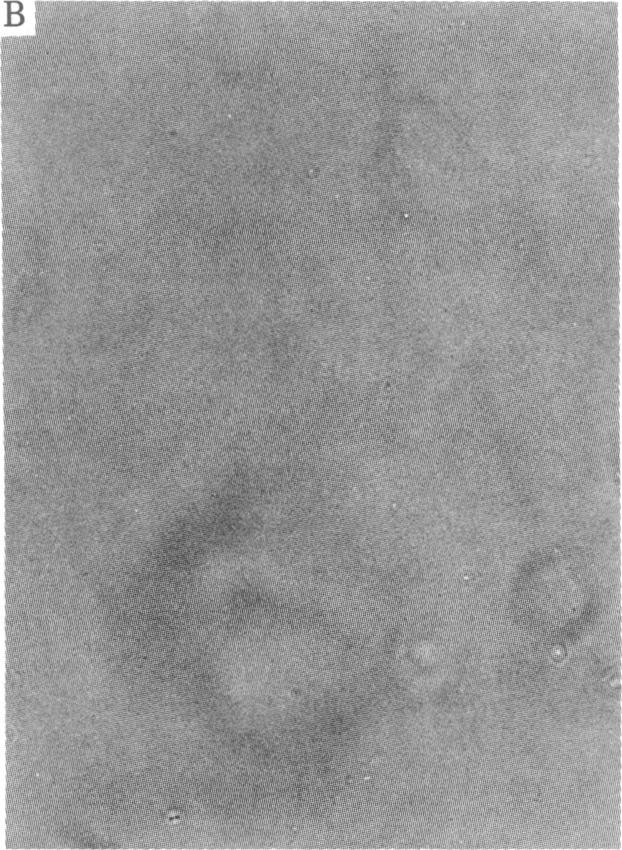
Human embryonic skin fibroblasts attach and spread on surfaces on which a fucosyltransferase purified from human milk has been immobilized. The adhesion-enhancing effect of the transferase involves specific interactions of the enzyme surface with the cell surface carbohydrate acceptors, as suggested by the following findings. About 80% of human embryonic skin fibroblasts attach and spread in 1 hr on fucosyltransferase surfaces; in contrast, bovine serum albumin, fetuin, asialofetuin, and asialotransferrin surfaces fail to enhance adhesion. The adhesion-mediating activity of the transferase is destroyed by alkylation of the sulfhydryl groups or by heating. The adhesion on fucosyltransferase surfaces is inhibited by glycoprotein, glycolipid, and oligosaccharide acceptors containing the sugar sequence galactosyl-(beta 1 leads to 4)-N-acetylglucosamine, in agreement with the substrate specificity of the enzyme. The results suggest that glycosyltransferases are able to stimulate cell adhesion in a manner similar to that proposed for lectins.
人胚胎皮肤成纤维细胞能附着并铺展在已固定了从人乳中纯化出来的岩藻糖基转移酶的表面。转移酶的黏附增强作用涉及酶表面与细胞表面碳水化合物受体的特异性相互作用,以下发现表明了这一点。约80%的人胚胎皮肤成纤维细胞在1小时内就能附着并铺展在岩藻糖基转移酶表面;相比之下,牛血清白蛋白、胎球蛋白、去唾液酸胎球蛋白和去唾液酸转铁蛋白表面则无法增强黏附。转移酶的黏附介导活性会因巯基的烷基化或加热而被破坏。与该酶的底物特异性一致,岩藻糖基转移酶表面的黏附会被含有半乳糖基-(β1→4)-N-乙酰葡糖胺糖序列的糖蛋白、糖脂和寡糖受体所抑制。结果表明,糖基转移酶能够以类似于凝集素的方式刺激细胞黏附。