Snellen J E, Savage D C
J Bacteriol. 1978 Jun;134(3):1099-107. doi: 10.1128/jb.134.3.1099-1107.1978.
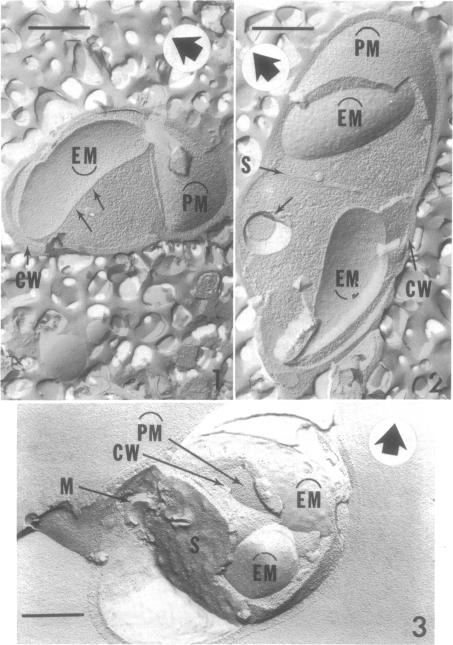
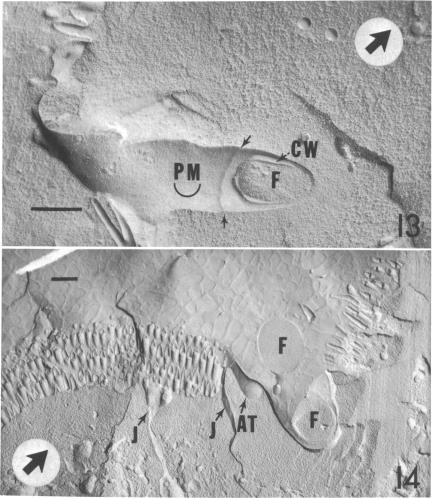
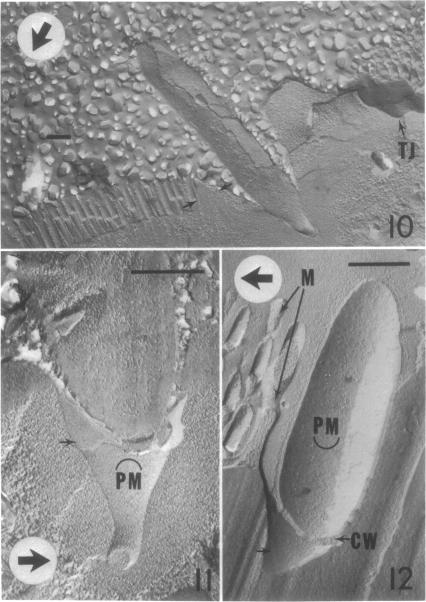
A freeze-fracture study has provided new information about the filamentous, segmented microorganism known to live in the murine small bowel. The intracellular bodies produced by this microbe appear to arise by a modified sporogenesis so that they are enclosed in an envelopment membrane at least prior to release by the filament mother cell. At least some of the intracellular bodies divide while still within the mother cell, suggesting a reproductive role for these structures. The host epithelial membrane remains intact at the site of attachment, but does appear to have a reduced concentration of intramembrane particles. Changes in the host cytoplasm adjacent to the attachment site are documented and interpreted to be a sol-gel transformation which may stabilize the attachment socket.
一项冷冻断裂研究提供了关于已知生活在小鼠小肠中的丝状、分节微生物的新信息。这种微生物产生的细胞内小体似乎通过一种改良的孢子形成过程产生,因此至少在丝状母细胞释放它们之前,它们被包裹在一层包膜中。至少一些细胞内小体在仍处于母细胞内时就会分裂,这表明这些结构具有繁殖作用。宿主上皮膜在附着部位保持完整,但膜内颗粒的浓度似乎确实有所降低。记录了附着部位附近宿主细胞质的变化,并将其解释为一种溶胶-凝胶转变,这可能会稳定附着窝。