Sauer F D, Erfle J D, Mahadevan S
Biochem J. 1980 Jul 15;190(1):177-82. doi: 10.1042/bj1900177.
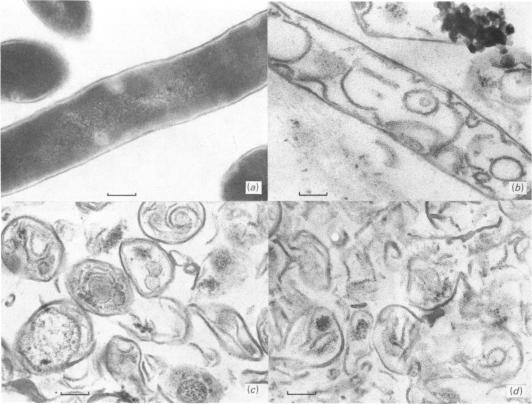
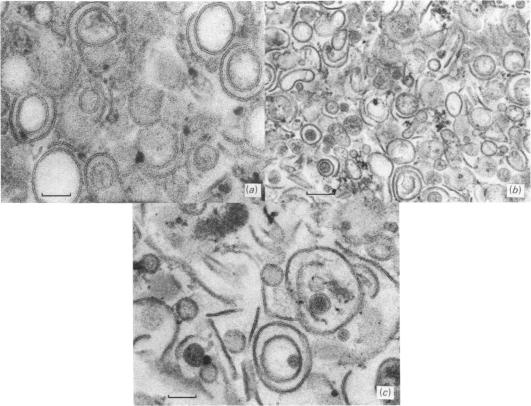
Intact membrane vesicles are required to synthesize methane from CO2 and H2 by disrupted preparations of Methanobacterium thermoautotrophicum cells. When membrane vesicles were removed by high-speed centrifugation at 226 600 g, the remaining supernatant fraction no longer synthesized methane. Alternatively, if vesicle structure was disrupted by passage through a Ribi cell fractionator at very high pressures (345 MPa), the bacterial cell extract, with all the particulate fraction in it, did not synthesize methane. Methyl-coenzyme M, a new coenzyme first described by McBride & Wolfe [(1971) Biochemistry 10, 2317--2324], was shown to stimulate methane production from CO2 and H2, as previously reported, but the methyl group of the coenzyme did not appear to be a precursor of methane in this reaction. No methyl-coenzyme M reductase activity was detected in the cytoplasmic fraction of M. thermoautotrophicum cells.
完整的膜囊泡是嗜热自养甲烷杆菌细胞破碎制剂利用二氧化碳和氢气合成甲烷所必需的。当通过226 600 g的高速离心去除膜囊泡时,剩余的上清液部分不再合成甲烷。或者,如果通过在非常高的压力(345 MPa)下通过Ribi细胞分级器破坏囊泡结构,含有所有颗粒部分的细菌细胞提取物也不会合成甲烷。如先前报道,甲基辅酶M是麦克布赖德和沃尔夫首次描述的一种新辅酶[(1971年)《生物化学》10,2317 - 2324],它能刺激由二氧化碳和氢气产生甲烷,但辅酶的甲基在该反应中似乎不是甲烷的前体。在嗜热自养甲烷杆菌细胞的细胞质部分未检测到甲基辅酶M还原酶活性。