Kaufman R J, Sharp P A, Latt S A
Mol Cell Biol. 1983 Apr;3(4):699-711. doi: 10.1128/mcb.3.4.699-711.1983.
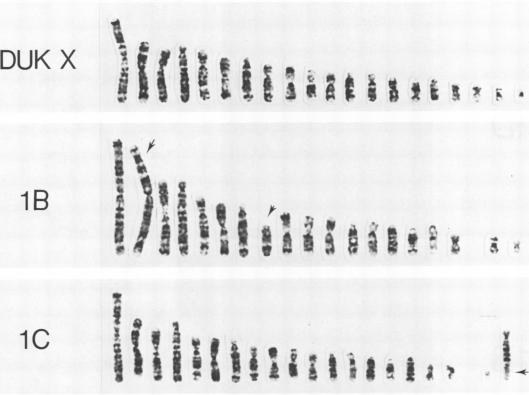
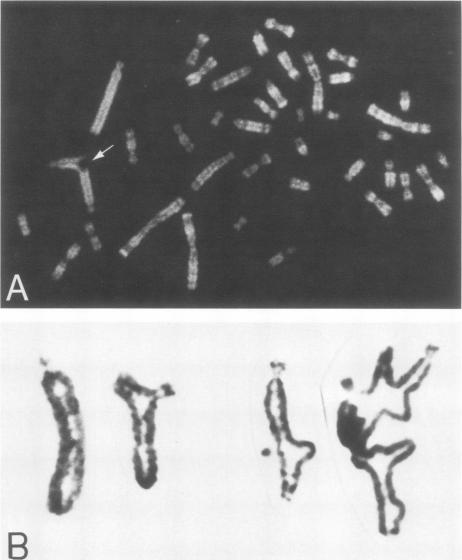
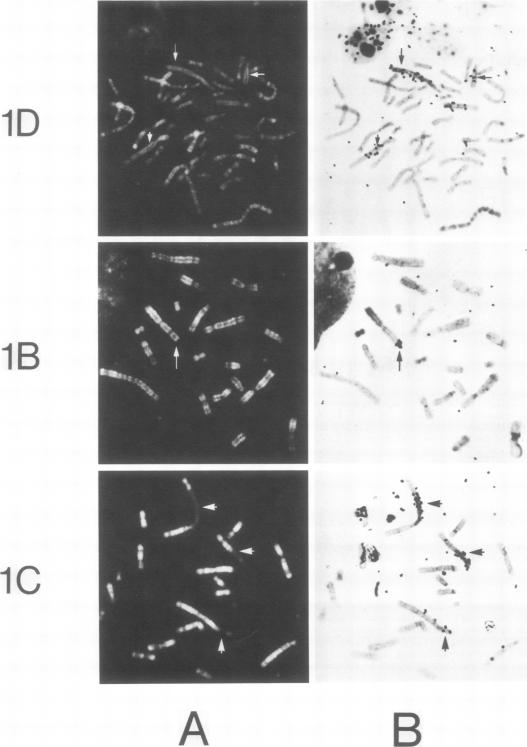
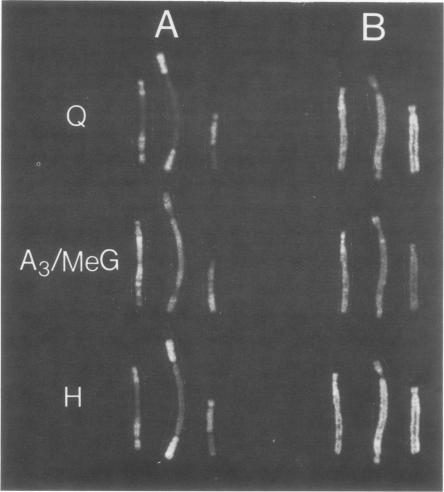
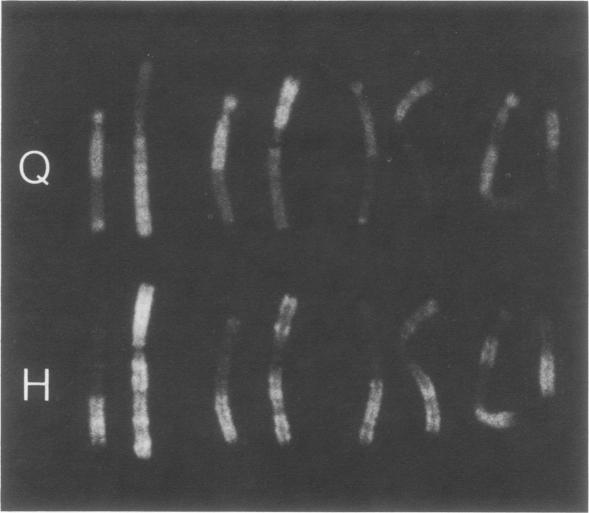
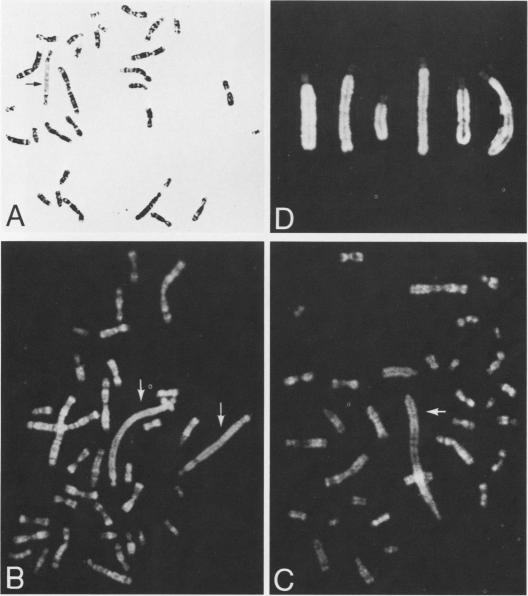
A modular dihydrofolate reductase gene has been introduced into Chinese hamster ovary cells lacking dihydrofolate reductase. Clones capable of growth in the absence of added nucleosides contain one to five copies of the plasmid DNA integrated into the host genome. Upon stepwise selection to increasing methotrexate concentrations, cells are obtained which have amplified the transforming DNA over several hundredfold. A detailed analysis of the chromosomes in three clones indicated the appearance of cytologically distinct chromosomal regions containing the amplified plasmid DNA which differ in surrounding sequence composition, structure, and location. Two of the clones examined have extensive, homogeneously staining regions. The DNA in these homogeneously staining regions replicates in the early part of the S phase. The amplified plasmid DNA is found associated at or near the ends of chromosomes or on dicentric chromosomes. We propose that integration of DNA may disrupt telomeric structures and facilitate the formation of dicentric chromosomes, which may then undergo bridge breakage-fusion cycles. These phenomena are discussed in relation to DNA transfer experiments and modes of gene amplification and chromosome rearrangement.
一个模块化二氢叶酸还原酶基因已被导入缺乏二氢叶酸还原酶的中国仓鼠卵巢细胞。能够在不添加核苷的情况下生长的克隆含有整合到宿主基因组中的一到五个拷贝的质粒DNA。经过逐步选择以增加甲氨蝶呤浓度,获得了将转化DNA扩增了数百倍的细胞。对三个克隆中的染色体进行的详细分析表明,出现了细胞学上不同的染色体区域,其中包含扩增的质粒DNA,其周围序列组成、结构和位置不同。所检查的两个克隆有广泛的、均匀染色区域。这些均匀染色区域中的DNA在S期早期复制。扩增的质粒DNA被发现在染色体末端或附近或双着丝粒染色体上。我们提出,DNA的整合可能会破坏端粒结构并促进双着丝粒染色体的形成,然后双着丝粒染色体可能会经历桥断裂-融合循环。结合DNA转移实验以及基因扩增和染色体重排模式对这些现象进行了讨论。