Durack D T, Ackerman S J, Loegering D A, Gleich G J
Proc Natl Acad Sci U S A. 1981 Aug;78(8):5165-9. doi: 10.1073/pnas.78.8.5165.
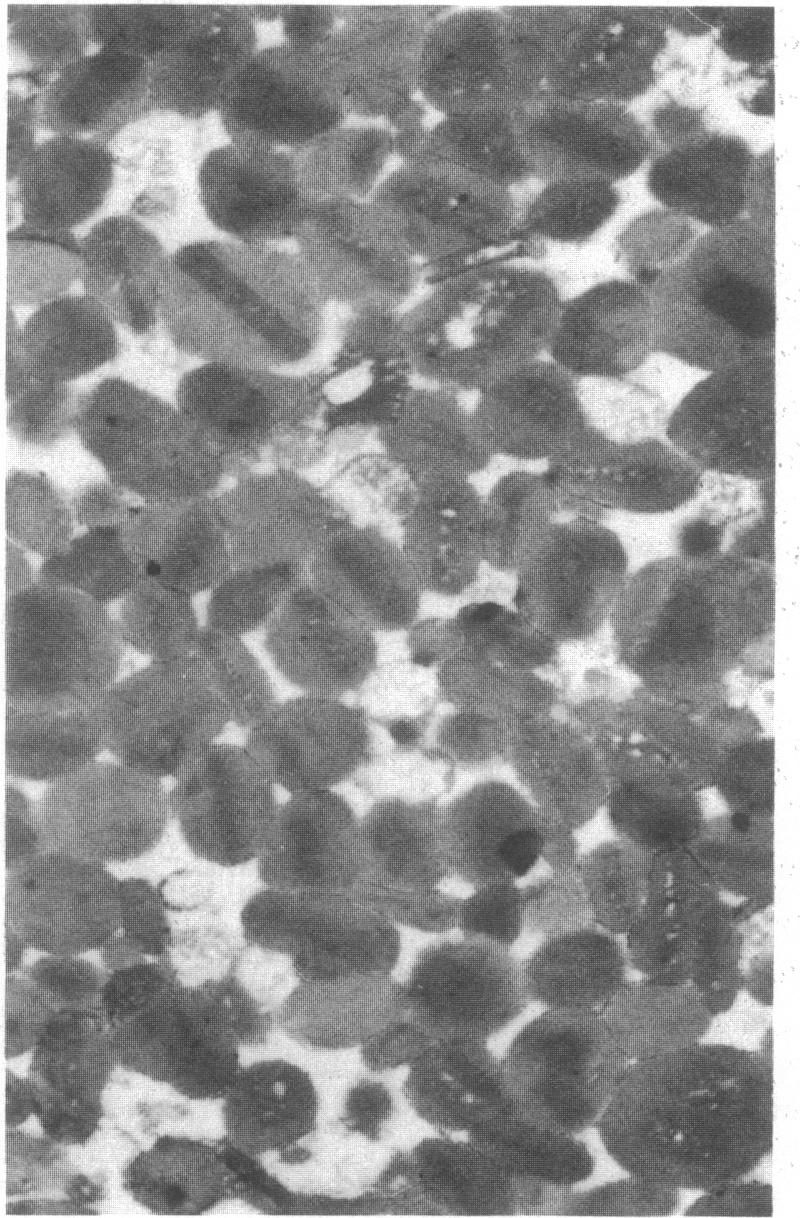
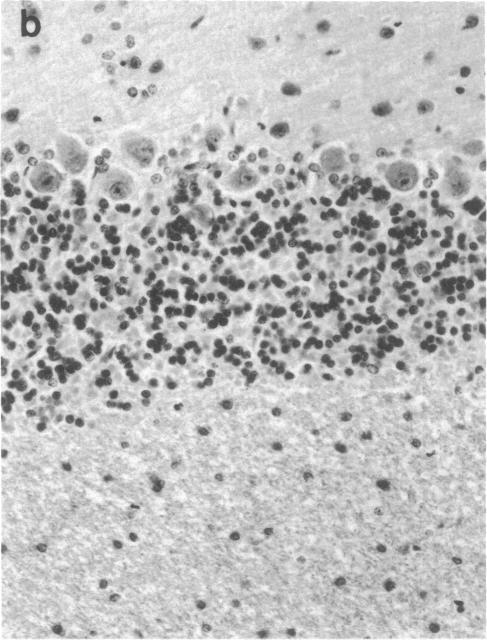
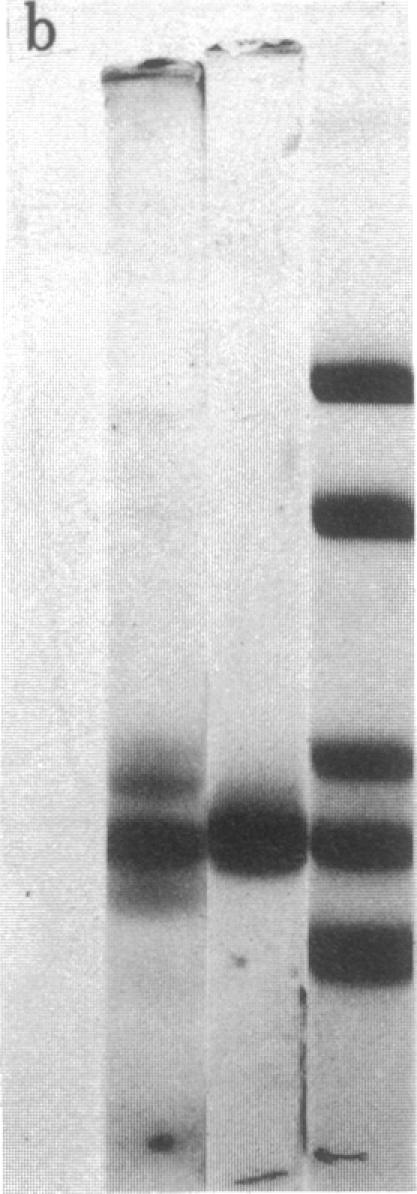
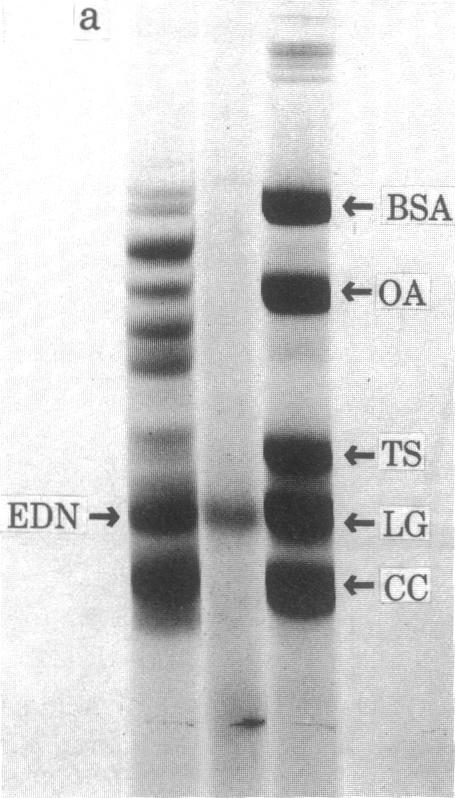
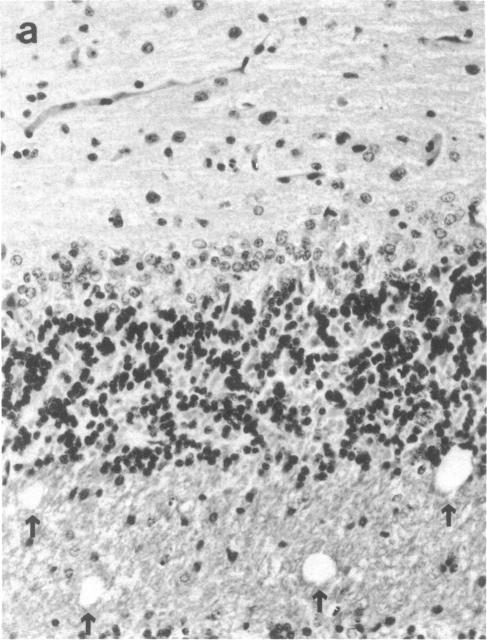
Human and animal eosinophils contain a powerful neurotoxin that causes selective neuronal and axonal damage to white matter of cerebellum and spinal cord of experimental animals when injected intrathecally. This reaction is termed the "Gordon phenomenon." We purified the eosinophil-derived neurotoxin from eosinophil-rich leukocyte suspensions or eosinophil granules from four patients with various hypereosinophilic syndromes. A single protein with an average molecular weight of 18,400 was isolated by sequential chromatography on Sephadex G-50 columns and analyzed by sodium dodecyl sulfate/polyacrylamide gel electrophoresis of column fractions. The purified eosinophil-derived neurotoxin from the cells of these patients retained the potent neurotoxic activity of the crude eosinophil or eosinophil granule extracts in experimental animals. These animals developed the syndrome of stiffness and ataxia progressing to severe paralysis characteristic of the Gordon phenomenon. Histologic examination of the brains of animals injected with purified eosinophil-derived neurotoxin confirmed the characteristic widespread loss of Purkinje cells and severe spongiform vacuolation in the white matter of cerebellum, brain stem, and spinal cord. We have established the location of eosinophil-derived neurotoxin in the eosinophil granule and have shown that it is distinct from several other eosinophil proteins, the granule major basic protein, and the Charcot-Leyden crystal protein (lysophospholipase).
人和动物的嗜酸性粒细胞含有一种强大的神经毒素,当经鞘内注射时,会对实验动物的小脑和脊髓白质造成选择性神经元和轴突损伤。这种反应被称为“戈登现象”。我们从四名患有各种嗜酸性粒细胞增多综合征的患者的富含嗜酸性粒细胞的白细胞悬液或嗜酸性粒细胞颗粒中纯化了嗜酸性粒细胞衍生的神经毒素。通过在Sephadex G - 50柱上进行连续层析分离出一种平均分子量为18400的单一蛋白质,并通过对柱级分进行十二烷基硫酸钠/聚丙烯酰胺凝胶电泳进行分析。从这些患者细胞中纯化的嗜酸性粒细胞衍生的神经毒素在实验动物中保留了粗制嗜酸性粒细胞或嗜酸性粒细胞颗粒提取物的强大神经毒性活性。这些动物出现了僵硬和共济失调综合征,进而发展为戈登现象所特有的严重瘫痪。对注射了纯化的嗜酸性粒细胞衍生神经毒素的动物大脑进行组织学检查,证实了小脑、脑干和脊髓白质中特征性的浦肯野细胞广泛缺失和严重的海绵状空泡形成。我们已经确定了嗜酸性粒细胞衍生神经毒素在嗜酸性粒细胞颗粒中的位置,并表明它与其他几种嗜酸性粒细胞蛋白、颗粒主要碱性蛋白和夏科 - 莱登结晶蛋白(溶血磷脂酶)不同。