
恰加斯心脏病的心尖部动脉瘤
Apical aneurysm of Chagas's heart disease.
作者信息
Oliveira J S, Mello De Oliveira J A, Frederigue U, Lima Filho E C
出版信息
Br Heart J. 1981 Oct;46(4):432-7. doi: 10.1136/hrt.46.4.432.
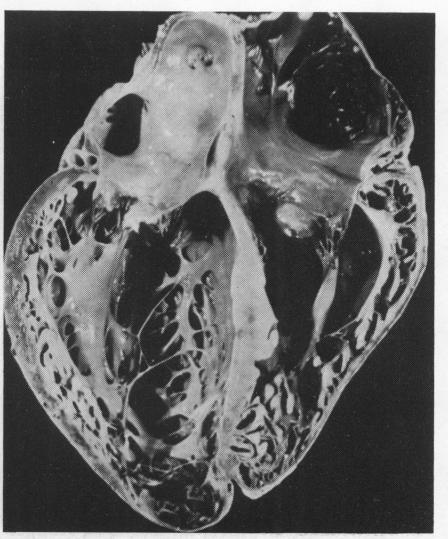
A retrospective study of Chagas's heart disease was carried out by a review of necropsy reports with special reference to the lesion known as the apical aneurysm. It was concluded that this lesion was more frequent in men, was unrelated to age, and was unrelated to heart weight. Patients dying of the cardiac consequences of Chagas's cardiomyopathy were more likely to have an apical aneurysm than those whose death was unrelated to the disease but the mode of death (sudden, or with heart failure) was unconnected with its presence. Transillumination from within the ventricle at necropsy was not only useful in demonstrating the aneurysm but also showed areas of myocardial thinning elsewhere. Thrombosis within the lesion was frequent. The aetiology of the apical aneurysm is discussed and it is concluded that while ischaemia, inflammation, thrombosis, and mechanical factors may produce and localise this lesion, the underlying cause is the basic pathogenetic process-parasympathetic nerve cell destruction.
通过回顾尸检报告,对恰加斯心脏病进行了一项回顾性研究,特别关注了被称为心尖动脉瘤的病变。研究得出结论,该病变在男性中更为常见,与年龄无关,也与心脏重量无关。死于恰加斯心肌病心脏后果的患者比那些死亡与该疾病无关的患者更有可能患有心尖动脉瘤,但死亡方式(猝死或心力衰竭)与心尖动脉瘤的存在无关。尸检时从心室内进行透照不仅有助于显示动脉瘤,还能显示其他部位的心肌变薄区域。病变内血栓形成很常见。文中讨论了心尖动脉瘤的病因,得出的结论是,虽然缺血、炎症、血栓形成和机械因素可能导致并定位该病变,但根本原因是基本的发病过程——副交感神经细胞破坏。




 Zotero 插件