Condon P I, Serjeant G R
Br J Ophthalmol. 1980 Jun;64(6):404-11. doi: 10.1136/bjo.64.6.404.
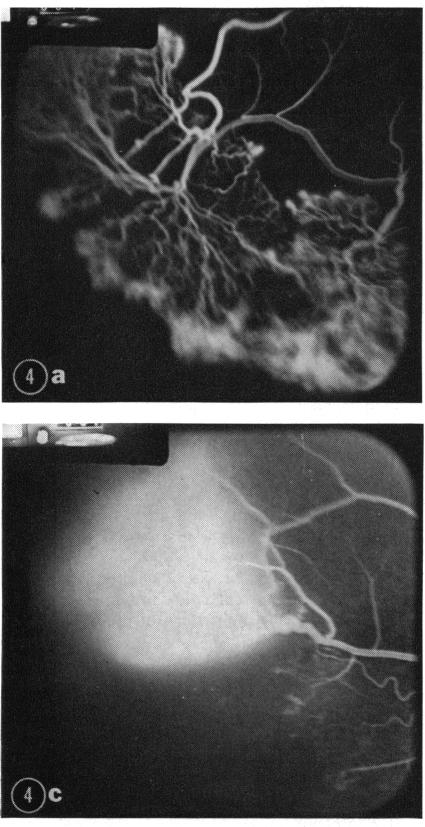
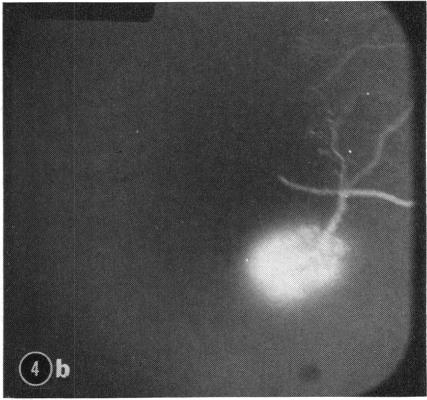
The development of ocular lesions in 313 patients with sickle cell disease followed up for periods of 1--8 years is described. Proliferative sickle retinopathy (PSR) was present on initial examination in 68 (12%) of 567 eyes and developed in a further 46 (8%) eyes during the study period. Spontaneous regression (autoinfarction) was present on initial examination in 33 (49%) eyes with PSR initially and developed in a further 45 (39%) eyes during the study. Development of PSR was more common in sickle cell-haemoglobin C (SC) disease, and autoinfarction appeared to occur more commonly in homozygous sickle cell (SS) disease. The two processes were delicately balanced, and some PSR lesions lasted less than a year before undergoing autoinfarction. Although the high prevalence of autoinfarction diminishes the clinical sequelae of PSR, blindness related to PSR occurred in 14/119 (12%) eyes. Autoinfarction closes the feeding vessels of PSR lesions more elegantly than, and without the complications associated with, photocoagulation. A greater understanding of factors involved in the progression and regression of PSR is relevant to defining the role of photocoagulation in this condition.
本文描述了313例镰状细胞病患者在1 - 8年随访期间眼部病变的发展情况。在最初检查时,567只眼中有68只(12%)存在增殖性镰状视网膜病变(PSR),在研究期间,又有46只眼(8%)出现了PSR。最初有PSR的33只眼(49%)在初次检查时就出现了自发消退(自动梗死),在研究期间,又有45只眼(39%)出现了自动梗死。PSR在镰状细胞 - 血红蛋白C(SC)病中更为常见,而自动梗死似乎在纯合子镰状细胞(SS)病中更为常见。这两个过程微妙地平衡着,一些PSR病变在发生自动梗死前持续不到一年。尽管自动梗死的高发生率降低了PSR的临床后遗症,但与PSR相关的失明仍发生在14/119只眼(12%)中。自动梗死比光凝更有效地封闭了PSR病变的供血血管,且没有光凝相关的并发症。更深入了解PSR进展和消退所涉及的因素,对于确定光凝在这种情况下的作用具有重要意义。