Dekel S, Papaioannou T, Rushworth G, Coates R
Br Med J. 1980 May 31;280(6227):1297-9. doi: 10.1136/bmj.280.6227.1297.
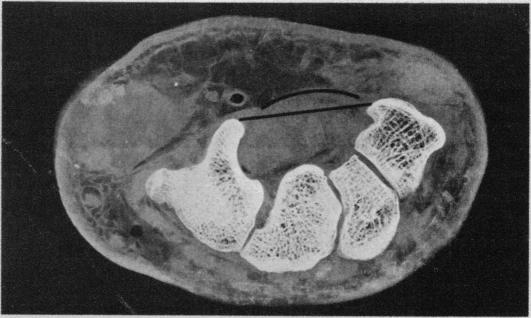
Computed tomography was used to measure the cross-sectional area of the carpal canals in normal controls of both sexes and in women with idiopathic carpal tunnel syndrome. The women controls had significantly smaller carpal canals than the men controls both proximally and distally. In the patients both the proximal and distal cross-sectional areas were significantly reduced compared with the women controls. The measurements showed that carpal canal stenosis is associated with idiopathic carpal tunnel syndrome, narrowing of the canal is bilateral in patients who have unilateral symptoms, and narrowing is greater in the proximal carpal canal. There was no correlation between age and the size of the canal. The difference in the size of the carpal canal between normal men and women might explain the tendency of women to develop carpal tunnel syndrome. The lack of correlation between age and the size of the canal suggests that stenosis of the carpal canal is inherited rather than acquired. Symptoms arise only later in life, when degenerated changes in the content or the walls of the carpal canal compete with the median nerve for space and its function becomes impaired by compression.
计算机断层扫描用于测量正常男女对照组以及患有特发性腕管综合征女性的腕管横截面积。女性对照组的腕管在近端和远端均明显小于男性对照组。与女性对照组相比,患者的近端和远端横截面积均显著减小。测量结果表明,腕管狭窄与特发性腕管综合征有关,有单侧症状的患者其腕管狭窄是双侧的,且近端腕管狭窄更严重。年龄与腕管大小之间无相关性。正常男性和女性腕管大小的差异可能解释了女性易患腕管综合征的倾向。年龄与腕管大小缺乏相关性表明,腕管狭窄是遗传性的而非后天获得性的。症状仅在生命后期出现,此时腕管内容物或管壁的退行性变化与正中神经争夺空间,其功能因受压而受损。