Agre P, Smith B L, Baumgarten R, Preston G M, Pressman E, Wilson P, Illum N, Anstee D J, Lande M B, Zeidel M L
Department of Medicine, Johns Hopkins University School of Medicine, Baltimore, Maryland 21205-2185.
J Clin Invest. 1994 Sep;94(3):1050-8. doi: 10.1172/JCI117419.
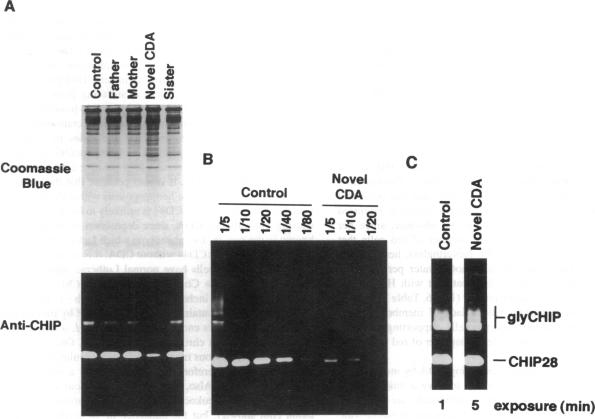
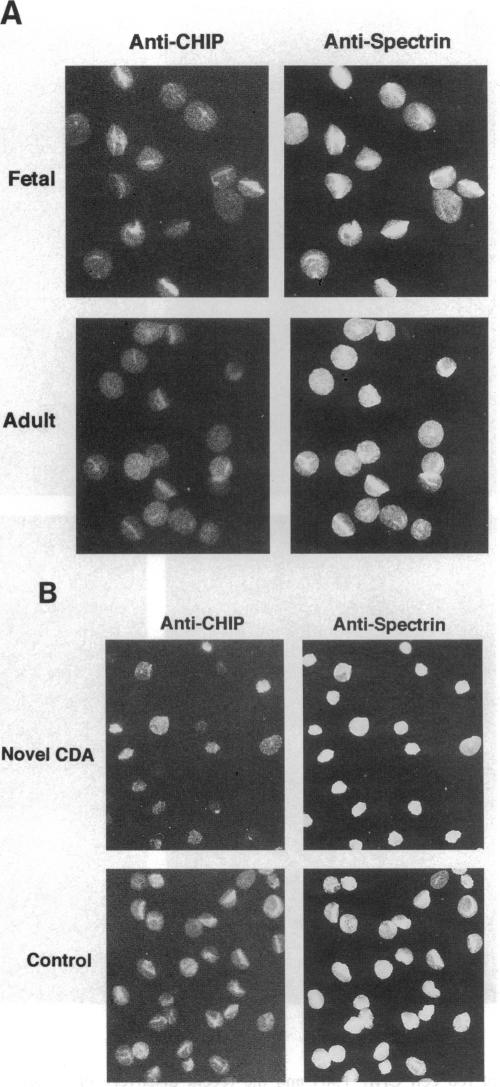
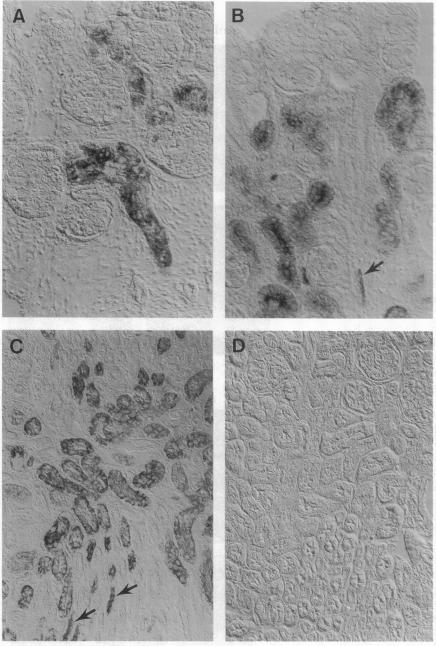
Channel-forming integral protein (CHIP) is the archetypal member of the Aquaporin family of water channels. Delayed CHIP expression was shown recently in perinatal rat (Smith, B. L., R. Baumgarten, S. Nielsen, D. Raben, M. L. Zeidel, and P. Agre. 1993. J. Clin. Invest. 92:2035-2041); here we delineate the human patterns. Compared with adult, second and third trimester human fetal red cells had lower CHIP/spectrin ratios (0.72 +/- 0.12, 0.94 +/- 0.22 vs 1.18 +/- 0.11) and reduced osmotic water permeability (0.029, 0.026 vs 0.037 cm/s); CHIP was already present in human renal tubules by the second trimester. A patient with a novel form of congenital dyserythropoietic anemia (CDA) with persistent embryonic and fetal globins and absent red cell CD44 protein was studied because of reduced CHIP-associated Colton antigens. Novel CDA red cells contained < 10% of the normal level of CHIP and had remarkably low osmotic water permeability (< 0.01 cm/s), but no mutation was identified in Aquaporin-1, the gene encoding CHIP. These studies demonstrate: (a) unlike rat, human CHIP expression occurs early in fetal development; (b) red cell water channels are greatly reduced in a rare phenotype; and (c) disrupted expression of red cell CHIP and CD44 suggests an approach to the molecular defect in a novel form of CDA.
通道形成整合蛋白(CHIP)是水通道水通道蛋白家族的原型成员。最近在围产期大鼠中发现了CHIP表达延迟(史密斯,B.L.,R.鲍姆加滕,S.尼尔森,D.拉本,M.L.蔡德尔,和P.阿格雷。1993年。《临床研究杂志》92:2035 - 2041);在此我们描述人类的模式。与成人相比,孕中期和孕晚期的人类胎儿红细胞具有较低的CHIP/血影蛋白比率(分别为0.72±0.12、0.94±0.22和1.18±0.11)以及降低的渗透水通透性(分别为0.029、0.026和0.037厘米/秒);到孕中期时CHIP已存在于人类肾小管中。由于与CHIP相关的科尔顿抗原减少,对一名患有新型先天性红细胞生成异常性贫血(CDA)且持续存在胚胎和胎儿球蛋白且红细胞CD44蛋白缺失的患者进行了研究。新型CDA红细胞中CHIP的含量低于正常水平的10%,并且具有极低的渗透水通透性(<0.01厘米/秒),但在编码CHIP的水通道蛋白-1基因中未发现突变。这些研究表明:(a)与大鼠不同,人类CHIP在胎儿发育早期就有表达;(b)在一种罕见的表型中红细胞水通道大大减少;(c)红细胞CHIP和CD44的表达紊乱提示了一种研究新型CDA分子缺陷的方法。