Knoerzer D B, Karr R W, Schwartz B D, Mengle-Gaw L J
Department of Immunology, G.D. Searle and Co., St Louis, Missouri 63198, USA.
J Clin Invest. 1995 Aug;96(2):987-93. doi: 10.1172/JCI118146.
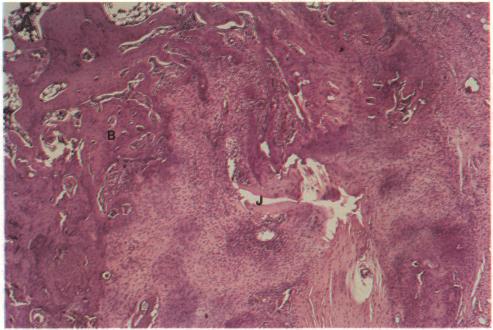
Antigen-specific T cell activation requires two independent signalling events, one mediated through T cell receptor engagement by the antigen-presenting cell-expressed peptide/class II major histocompatibility complex, and the second through the cognate interactions of costimulatory molecules expressed on the T cell and antigen-presenting cell. There is evidence from in vitro and in vivo experimental systems suggesting that the CD28/B7 costimulatory pathway is crucial for induction of maximal T cell proliferation and T helper-B cell collaboration for IgG production. This pathway can be blocked by CTLA-4-Ig, a soluble form of CTLA-4 which binds with high avidity to the CD28 ligands, B7-1 and B7-2. Here, we show that CTLA-4-Ig treatment prevents clinical and histological manifestations of disease in a collagen-induced arthritis model of rheumatoid arthritis in the diabetes resistant BB/Wor rat, when therapy is initiated before immunization with bovine type II collagen (BIIC). Anti-BIIC antibody titers are reduced in CTLA-4-Ig-treated rats compared to diseased control animals. Histologically, joints from CTLA-4-Ig-treated animals show no histological abnormalities, in contrast to control antibody-treated animals, which show complete erosion of the articular cartilage and bone. Despite the efficacy of CTLA-4-Ig in preventing clinical and histological signs of arthritis and reducing antibody responses to BIIC, delayed type hypersensitivity responses to collagen 18 d or more after CTLA-4-Ig treatment ends are similar in CTLA-4-Ig-treated and untreated rats, suggesting that the prolonged disease suppression observed does not result from induction of T cell anergy.
抗原特异性T细胞活化需要两个独立的信号事件,一个是通过抗原呈递细胞表达的肽/II类主要组织相容性复合体与T细胞受体结合介导的,另一个是通过T细胞和抗原呈递细胞上表达的共刺激分子的同源相互作用介导的。体外和体内实验系统的证据表明,CD28/B7共刺激途径对于诱导最大程度的T细胞增殖以及T辅助细胞与B细胞协作产生IgG至关重要。该途径可被CTLA-4-Ig阻断,CTLA-4-Ig是CTLA-4的可溶性形式,它能与CD28配体B7-1和B7-2高亲和力结合。在此,我们表明,在糖尿病抗性BB/Wor大鼠的类风湿性关节炎胶原诱导关节炎模型中,当在牛II型胶原(BIIC)免疫前开始治疗时,CTLA-4-Ig治疗可预防疾病的临床和组织学表现。与患病对照动物相比,CTLA-4-Ig治疗的大鼠中抗BIIC抗体滴度降低。组织学上,与对照抗体治疗的动物不同,CTLA-4-Ig治疗的动物关节未显示组织学异常,对照抗体治疗的动物关节软骨和骨出现完全侵蚀。尽管CTLA-4-Ig在预防关节炎的临床和组织学体征以及降低对BIIC的抗体反应方面有效,但在CTLA-4-Ig治疗结束后18天或更长时间对胶原的迟发型超敏反应在CTLA-4-Ig治疗和未治疗的大鼠中相似,这表明观察到的疾病长期抑制并非由T细胞无能诱导所致。