Lombardi T, Lock C, Samson J, Odell E W
Department of Oral Medicine and Pathology, Guy's Hospital, London.
J Clin Pathol. 1995 Aug;48(8):759-62. doi: 10.1136/jcp.48.8.759.
To compare the expression of S100 protein, alpha-smooth muscle actin (alpha-SMA) and keratin 19 in odontogenic myxomas and non-odontogenic myxoid lesions.
Formalin fixed, paraffin wax embedded tissue from seven odontogenic myxomas, three soft tissue myxomas, six hyperplastic myxoid dental follicles, two intramuscular myxomas, 12 cardiac myxomas, and seven normal dental follicles were examined immunocytochemically for S100 protein, alpha-SMA and cytokeratin 19 using the Streptavidin-biotin method.
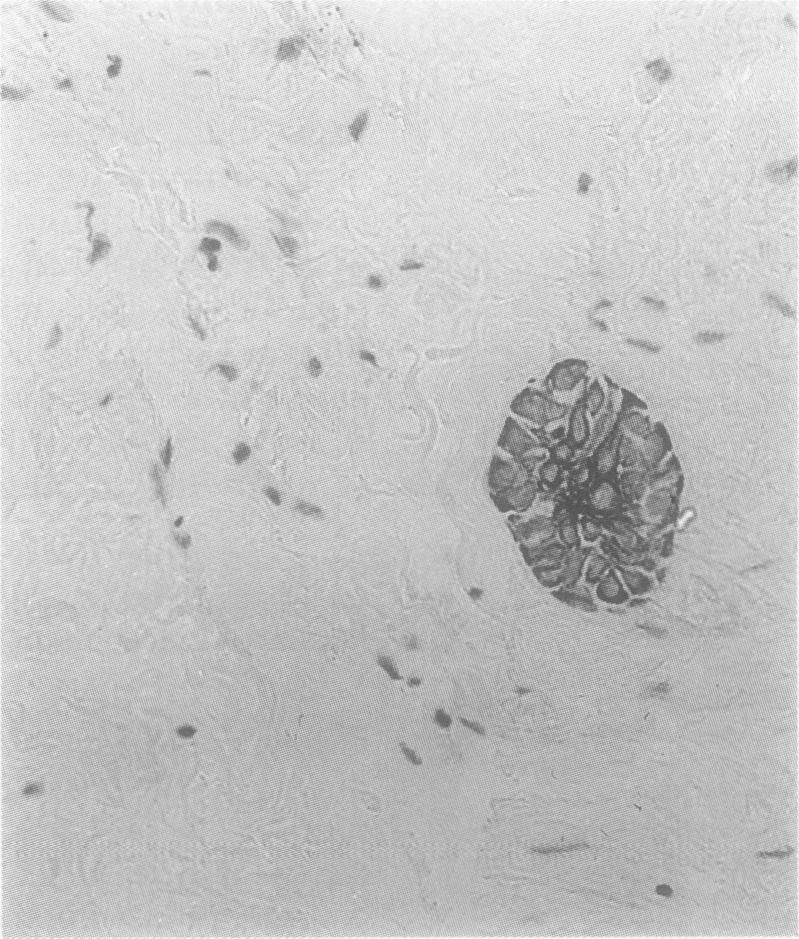
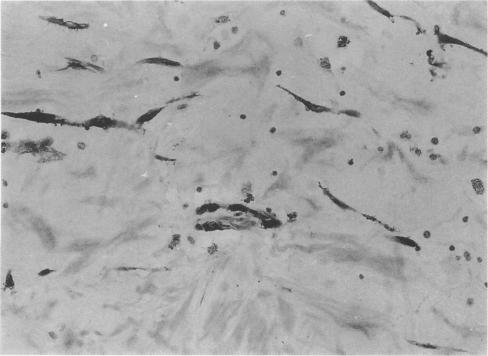
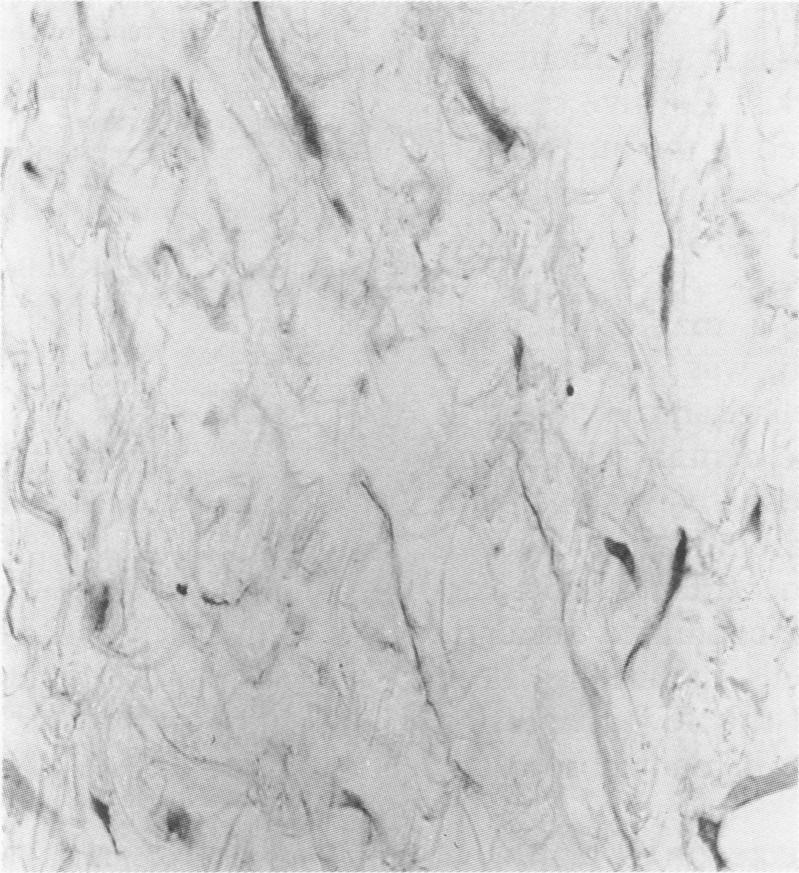
A minority of odontogenic myxomas (three of seven) were positive for S100 and the staining was of moderate intensity and in all myxofibroblasts. Soft tissue myxomas, normal dental follicles, intramuscular myxomas, and most enlarged myxoid follicles were negative. In the cardiac myxomas the cells forming cords and islands were positive in approximately half (seven of 12), but the dispersed stellate myxoblasts were positive in only two cases. A population of cells in all the odontogenic myxomas and hyperplastic dental follicles contained alpha-SMA, but such cells were sparse in cardiac myxomas and present in only four cases. Cytokeratin 19 was present in odontogenic epithelium of odontogenic myxoma and follicles.
A minority of odontogenic myxomas, but not other oral myxoid lesions, may express S100 protein and this could cause difficulty distinguishing myxoma from myxoid nerve sheath tumours. Sparse myofibroblastic cells occurred in all types of myxoma tested. The epithelium sometimes found within jaw myxomas expresses cytokeratin 19 and this is consistent with an odontogenic origin.
比较S100蛋白、α-平滑肌肌动蛋白(α-SMA)和角蛋白19在牙源性黏液瘤和非牙源性黏液样病变中的表达情况。
采用链霉亲和素-生物素法,对7例牙源性黏液瘤、3例软组织黏液瘤、6例增生性黏液样牙滤泡、2例肌内黏液瘤、12例心脏黏液瘤以及7例正常牙滤泡的福尔马林固定、石蜡包埋组织进行免疫细胞化学检测,以检测S100蛋白、α-SMA和细胞角蛋白19。
少数牙源性黏液瘤(7例中的3例)S100呈阳性,染色强度为中度,且所有黏液成纤维细胞均呈阳性。软组织黏液瘤、正常牙滤泡、肌内黏液瘤以及大多数增大的黏液样滤泡均为阴性。在心脏黏液瘤中,形成条索和岛状的细胞约半数(12例中的7例)呈阳性,但散在的星状黏液母细胞仅2例呈阳性。所有牙源性黏液瘤和增生性牙滤泡中的一群细胞含有α-SMA,但在心脏黏液瘤中此类细胞稀少,仅4例存在。细胞角蛋白19存在于牙源性黏液瘤和滤泡的牙源性上皮中。
少数牙源性黏液瘤而非其他口腔黏液样病变可能表达S100蛋白,这可能会导致将黏液瘤与黏液样神经鞘瘤区分开来存在困难。在所有检测类型的黏液瘤中均出现了稀少的肌成纤维细胞。颌骨黏液瘤中有时发现的上皮表达细胞角蛋白19,这与牙源性起源一致。