Lee B S, Chen J, Angelidis C, Jurivich D A, Morimoto R I
Department of Biochemistry, Molecular Biology and Cell Biology, Northwestern University, Evanston, IL 60208, USA.
Proc Natl Acad Sci U S A. 1995 Aug 1;92(16):7207-11. doi: 10.1073/pnas.92.16.7207.
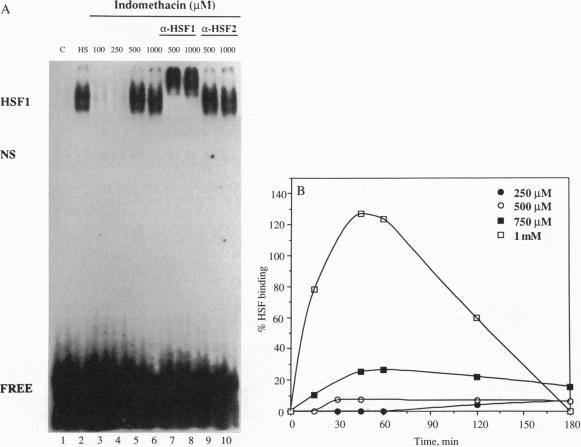
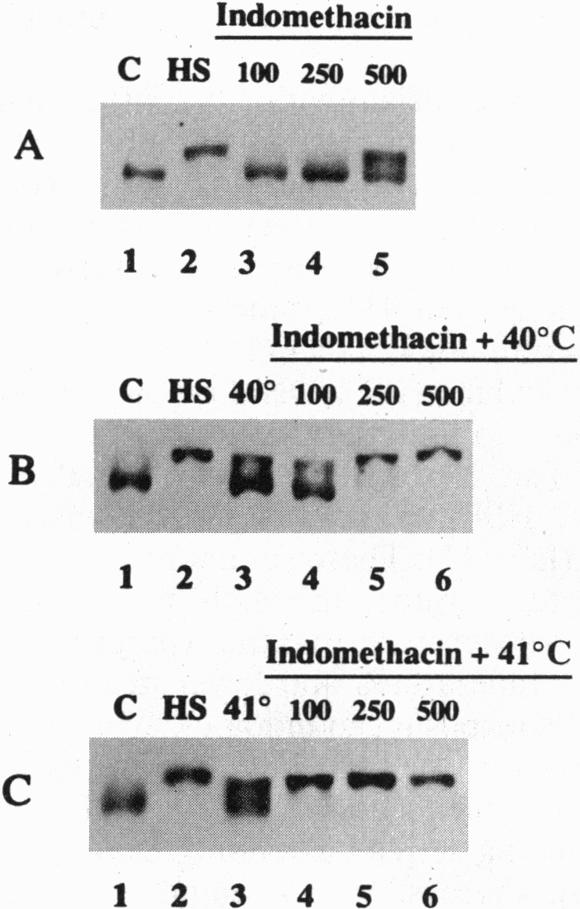
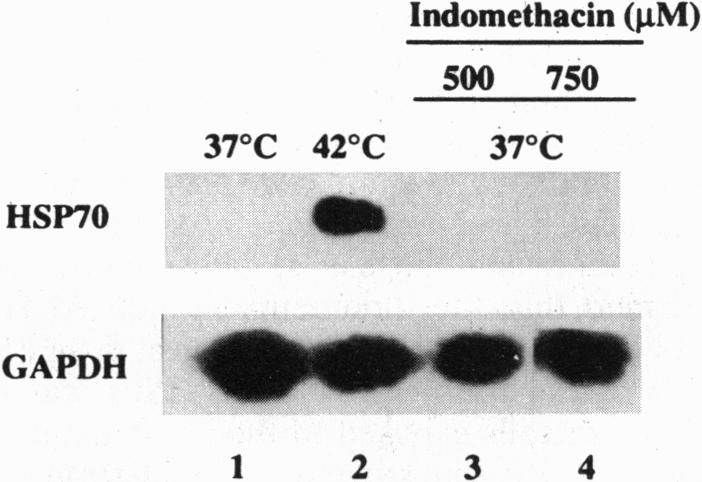
The activation of heat shock genes by diverse forms of environmental and physiological stress has been implicated in a number of human diseases, including ischemic damage, reperfusion injury, infection, neurodegeneration, and inflammation. The enhanced levels of heat shock proteins and molecular chaperones have broad cytoprotective effects against acute lethal exposures to stress. Here, we show that the potent antiinflammatory drug indomethacin activates the DNA-binding activity of human heat shock transcription factor 1 (HSF1). Perhaps relevant to its pharmacological use, indomethacin pretreatment lowers the temperature threshold of HSF1 activation, such that a complete heat shock response can be attained at temperatures that are by themselves insufficient. The synergistic effect of indomethacin and elevated temperature is biologically relevant and results in the protection of cells against exposure to cytotoxic conditions.