Quddus J, Johnson K J, Gavalchin J, Amento E P, Chrisp C E, Yung R L, Richardson B C
Department of Internal Medicine, University of Michigan, Ann Arbor 48109.
J Clin Invest. 1993 Jul;92(1):38-53. doi: 10.1172/JCI116576.
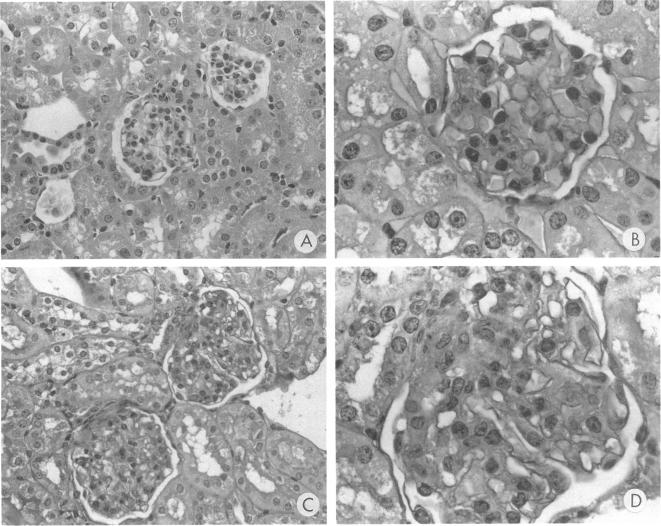
Human antigen-specific CD4+ T cells become autoreactive after treatment with various DNA methylation inhibitors, including 5-azacytidine, procainamide, and hydralazine. This suggests a mechanism that could contribute to the development of some forms of autoimmunity. In this report we have asked whether T cells treated with DNA methylation inhibitors can induce autoimmunity. Murine CD4+ T cells were treated with 5-azacytidine or procainamide and were shown to respond to syngeneic antigen-presenting cells, similar to CD4+ human T cell clones treated with these drugs. Functional characterization demonstrated that cells treated with either drug spontaneously lysed syngeneic macrophages and secreted IL-4, IL-6, and IFN-gamma. Adoptive transfer of 5-azacytidine- or procainamide-treated cells into unirradiated syngeneic recipients induced an immune complex glomerulonephritis and IgG anti-DNA and antihistone antibodies. These experiments demonstrate that T cells treated with either of two distinct DNA methyltransferase inhibitors are sufficient to induce a lupus-like disease. It is possible that the lysis of macrophages, together with the release of cytokines promoting B cell differentiation, contributes to the autoantibody production and immune complex deposition. These results suggest that environmental agents that inhibit DNA methylation could interact with T cells in vivo to produce a lupus-like illness, a mechanism that could have relevance to drug-induced and idiopathic lupus.
人类抗原特异性CD4+ T细胞在用包括5-氮杂胞苷、普鲁卡因胺和肼屈嗪在内的各种DNA甲基化抑制剂处理后会变得自身反应性增强。这提示了一种可能导致某些自身免疫形式发展的机制。在本报告中,我们探讨了用DNA甲基化抑制剂处理的T细胞是否能诱导自身免疫。用5-氮杂胞苷或普鲁卡因胺处理小鼠CD4+ T细胞,结果显示它们对同基因抗原呈递细胞有反应,类似于用这些药物处理的人类CD4+ T细胞克隆。功能特性表明,用这两种药物处理的细胞会自发裂解同基因巨噬细胞并分泌白细胞介素-4、白细胞介素-6和干扰素-γ。将用5-氮杂胞苷或普鲁卡因胺处理的细胞过继转移到未受照射的同基因受体中,会诱导免疫复合物性肾小球肾炎以及IgG抗DNA和抗组蛋白抗体。这些实验表明,用两种不同的DNA甲基转移酶抑制剂之一处理的T细胞足以诱导出狼疮样疾病。巨噬细胞的裂解,连同促进B细胞分化的细胞因子的释放,可能促成了自身抗体的产生和免疫复合物的沉积。这些结果提示,抑制DNA甲基化的环境因子可能在体内与T细胞相互作用,从而产生狼疮样疾病,这一机制可能与药物诱导的和特发性狼疮有关。