Bronte V, Tsung K, Rao J B, Chen P W, Wang M, Rosenberg S A, Restifo N P
Surgery Branch, National Cancer Institute, National Institutes of Health, Bethesda, MD 20892, USA.
J Immunol. 1995 May 15;154(10):5282-92.
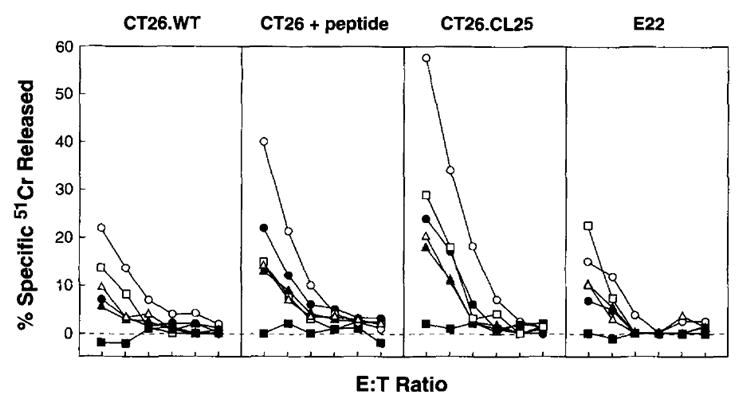
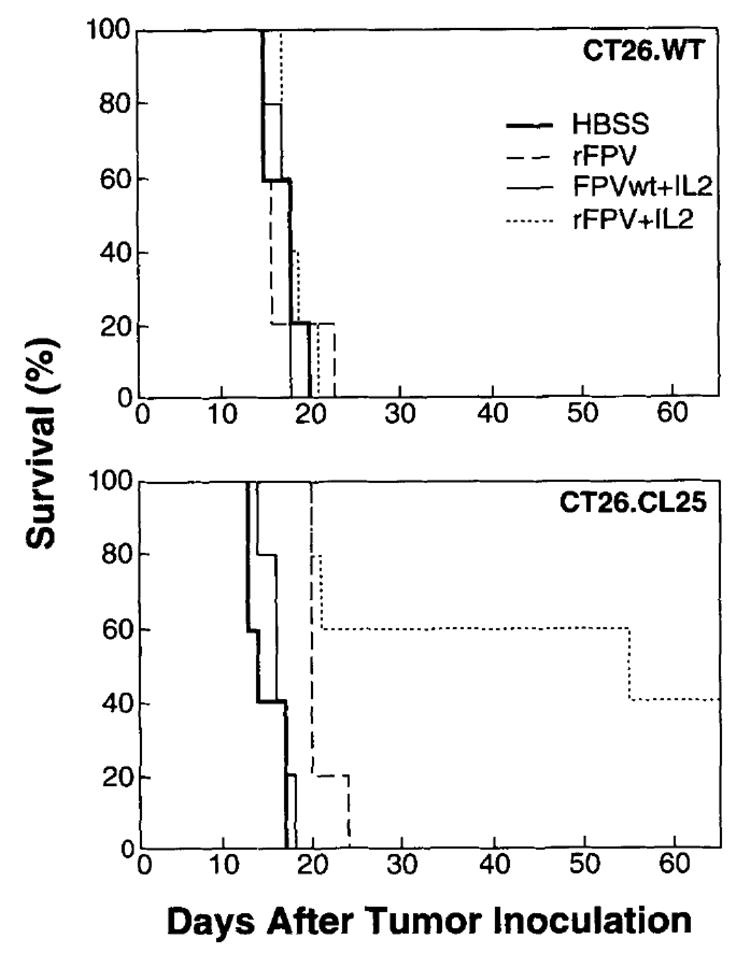
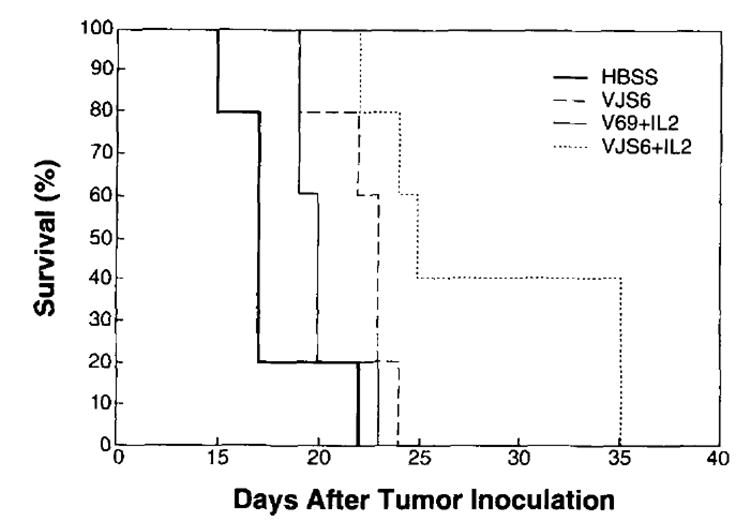
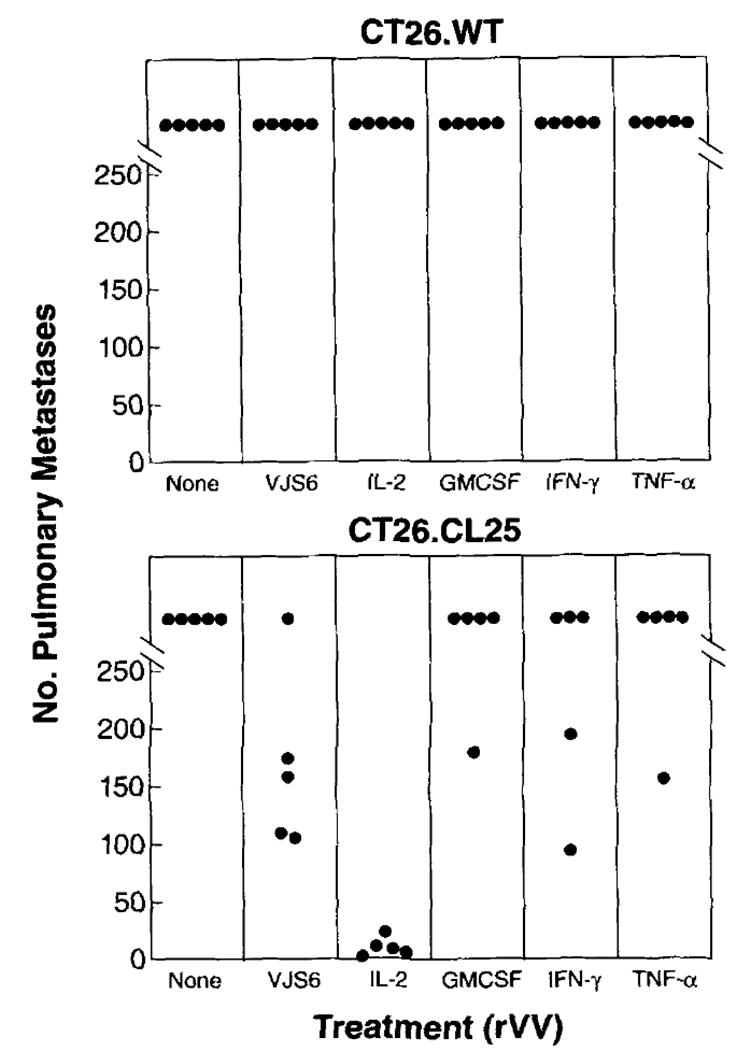
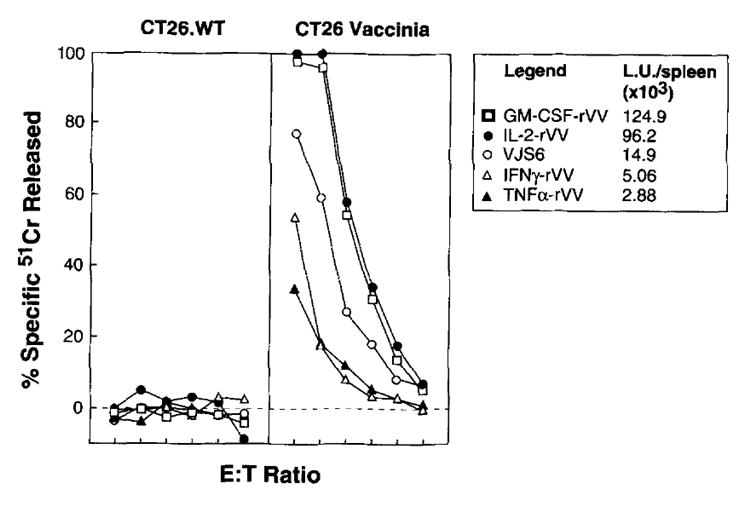
Neoplastic cells are generally poor immunogens. Transfection of the murine tumor CT-26 with beta-galactosidase (beta-gal), a protein from Escherichia coli, did not alter its growth rate in vivo, or its lethality, and did not elicit a measurable anti-beta-gal immune response. Immunization with beta-gal-expressing recombinant vaccinia viruses (rVV) elicited specific anti-beta-gal cytolytic T lymphocytes, but rVV-beta-gal was only marginally therapeutic when given to tumor-bearing mice. With the aim of expanding the immune response against beta-gal, used here as a model tumor Ag, we gave mice exogenous IL-2 starting 12 h after the poxvirus. The therapeutic effectiveness of the combination of poxvirus and IL-2 was far greater than either of these treatments alone. When the cDNA for IL-2 was inserted into the viral genome of the rVV construct to make a double recombinant (drVV), antitumor activity was further augmented. One mechanism of action may be the enhanced activation or expansion of cytotoxic T cells, because a marked increase in primary cytotoxic responses against vaccinia determinants was observed. Interestingly, other cytokines (mGM-CSF, mTNF-alpha, and mIFN-gamma) inserted into the rVV genome did not modify the efficacy of the rVV constructs. The increase in specific CTL responses against beta-gal by drVV expressing the tumor-associated Ags (TAA) and IL-2 was more pronounced in mice bearing the lacZ-transduced tumor than in those bearing the parental cell line, suggesting that the TAA presented by growing tumor cells can either pre-activate or otherwise amplify the immune response induced by the rVV. Unfortunately, in several long-term surviving mice, tumor recurred that no longer expressed beta-gal. These results indicate that treatment of disseminated tumors by using recombinant viruses expressing TAA can be enhanced by IL-2 provided exogenously, or encoded within the recombinant virus.
肿瘤细胞通常是弱免疫原。用来自大肠杆菌的蛋白质β-半乳糖苷酶(β-gal)转染鼠肿瘤CT-26,并未改变其体内生长速率或致死性,也未引发可检测到的抗β-gal免疫反应。用表达β-gal的重组痘苗病毒(rVV)免疫可引发特异性抗β-gal细胞毒性T淋巴细胞,但将rVV-β-gal给予荷瘤小鼠时,其治疗效果甚微。为了扩大针对β-gal(此处用作模型肿瘤抗原)的免疫反应,我们在痘病毒接种12小时后开始给小鼠外源性白细胞介素-2(IL-2)。痘病毒和IL-2联合使用的治疗效果远大于单独使用这两种治疗方法中的任何一种。当将IL-2的cDNA插入rVV构建体的病毒基因组中制成双重组体(drVV)时,抗肿瘤活性进一步增强。一种作用机制可能是细胞毒性T细胞的活化或扩增增强,因为观察到针对痘苗病毒决定簇的初次细胞毒性反应显著增加。有趣的是,插入rVV基因组的其他细胞因子(mGM-CSF、mTNF-α和mIFN-γ)并未改变rVV构建体的疗效。在携带lacZ转导肿瘤的小鼠中,表达肿瘤相关抗原(TAA)和IL-2的drVV对β-gal的特异性CTL反应增加比携带亲本细胞系的小鼠更明显,这表明生长的肿瘤细胞呈现的TAA可以预激活或以其他方式放大rVV诱导的免疫反应。不幸的是,在几只长期存活的小鼠中,肿瘤复发且不再表达β-gal。这些结果表明,通过外源性提供IL-2或在重组病毒中编码IL-2,可以增强使用表达TAA的重组病毒治疗播散性肿瘤的效果。