Blake D J, Schofield J N, Zuellig R A, Górecki D C, Phelps S R, Barnard E A, Edwards Y H, Davies K E
Institute of Molecular Medicine, John Radcliffe Hospital, Headington, Oxford, United Kingdom.
Proc Natl Acad Sci U S A. 1995 Apr 25;92(9):3697-701. doi: 10.1073/pnas.92.9.3697.
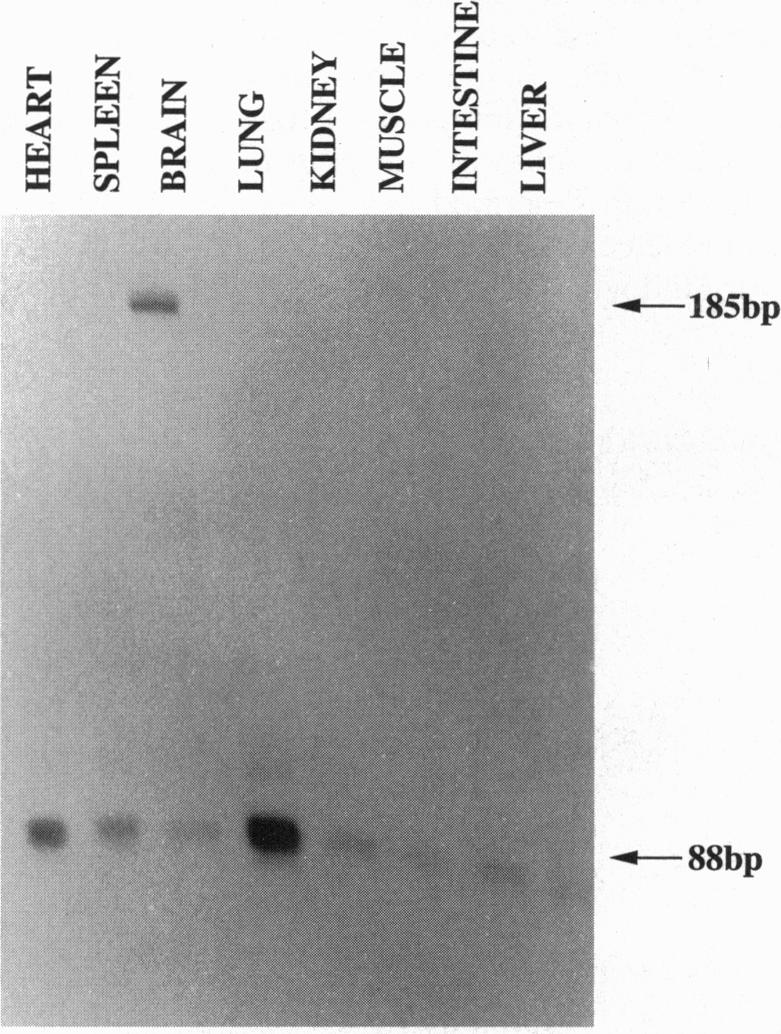
The utrophin gene is closely related to the dystrophin gene in both sequence and genomic structure. The Duchenne muscular dystrophy (DMD) locus encodes three 14-kb dystrophin transcripts in addition to several smaller isoforms, one of which, Dp116, is specific to peripheral nerve. We describe here the corresponding 5.5-kb mRNA from the utrophin locus. This transcript, designated G-utrophin, is of particular interest because it is specifically expressed in the adult mouse brain and appears to be the predominant utrophin transcript in this tissue. G-utrophin is expressed in brain sites generally different from the regions expressing beta-dystroglycan. During mouse embryogenesis G-utrophin is also seen in the developing sensory ganglia. Our data confirm the close evolutionary relationships between the DMD and utrophin loci; however, the functions for the corresponding proteins probably differ.
肌养蛋白基因在序列和基因组结构上都与抗肌萎缩蛋白基因密切相关。除了几种较小的异构体之外,杜氏肌营养不良症(DMD)基因座还编码三种14 kb的抗肌萎缩蛋白转录本,其中一种Dp116在外周神经中具有特异性。我们在此描述来自肌养蛋白基因座的相应5.5 kb mRNA。这种转录本被命名为G-肌养蛋白,特别引人关注,因为它在成年小鼠大脑中特异性表达,并且似乎是该组织中主要的肌养蛋白转录本。G-肌养蛋白在通常与表达β-肌营养不良聚糖的区域不同的脑区表达。在小鼠胚胎发生过程中,G-肌养蛋白也出现在发育中的感觉神经节中。我们的数据证实了DMD和肌养蛋白基因座之间密切的进化关系;然而,相应蛋白质的功能可能有所不同。