Li K N, Rouse D I, German T L
Department of Plant Pathology, University of Wisconsin, Madison 53706.
Appl Environ Microbiol. 1994 Dec;60(12):4324-31. doi: 10.1128/aem.60.12.4324-4331.1994.
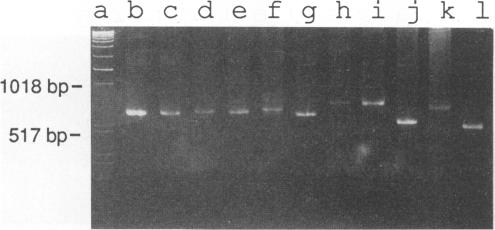
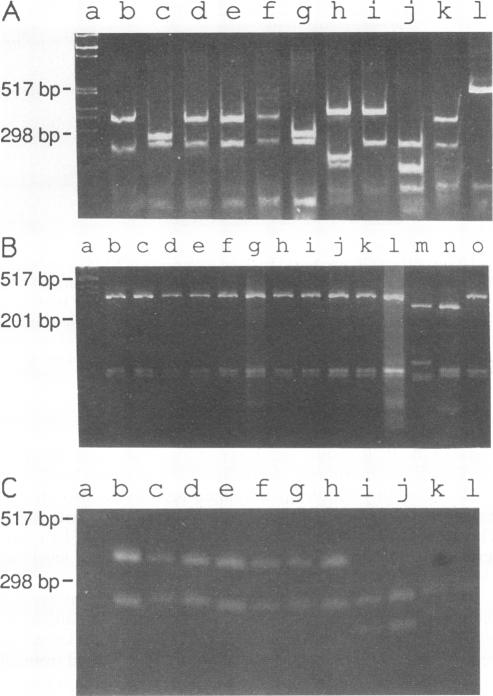
A pair of conserved PCR primers, designated NMS1 and NMS2, that amplify a region in the mitochondrial small rRNA gene region were designed for fungi belonging to the class Ascomycetes. These primers were tested with members of eight fungal genera (Aspergillus, Fusarium, Magnaporthe, Mycospharella, Neurospora, Saccharomyces, Sclerotinia, Verticillium) and 10 Verticillium species (Verticillium albo-atrum, Verticillium chlamydosporium, Verticillium cinnebarium, Verticillium dahliae, Verticillium fungicola, Verticillium lecanii, Verticillium lateritium, Verticillium nigrescens, Verticillium psaliotae, and Verticillium tricorpus). The primers were also tested with 35 isolates of V. dahliae obtained from diverse geographic areas and diverse hosts. The results of a restriction fragment length polymorphism analysis of the region amplified by the primers differentiated the genera examined and the results of a DNA sequence analysis of the amplified region differentiated the Verticillium species. Two Fusarium species were also differentiated by the results of the restriction fragment length polymorphism analysis. On the basis of the nucleotide sequences of the amplified regions, we obtained a pair of PCR primers that could be used to differentiate V. dahliae from the other fungal isolates tested, including V. albo-atrum, a closely related plant-pathogenic species. The V. dahliae-specific PCR primer may aid in more rapid and specific detection of the pathogen directly in plant and/or soil samples. PCR primers NMS1 and NMS2 may be used as potential mitochondrial markers for studying fungal cytoplasmic inheritance of ascomycetes and for identifying DNA probes that are informative at or below the genus level.
针对子囊菌纲真菌,设计了一对保守的聚合酶链反应(PCR)引物,命名为NMS1和NMS2,用于扩增线粒体小核糖体RNA基因区域的一段序列。用8个真菌属(曲霉属、镰刀菌属、稻瘟病菌属、球腔菌属、脉孢菌属、酿酒酵母属、核盘菌属、黄萎病菌属)的成员以及10种黄萎病菌(黑白轮枝菌、厚垣轮枝菌、肉桂色轮枝菌、大丽轮枝菌、菌生轮枝菌、蜡蚧轮枝菌、砖红轮枝菌、变黑轮枝菌、蘑菇轮枝菌和三孢轮枝菌)对这些引物进行了测试。还用从不同地理区域和不同寄主获得的35株大丽轮枝菌分离株对引物进行了测试。对引物扩增区域进行的限制性片段长度多态性分析结果区分了所检测的属,对扩增区域进行的DNA序列分析结果区分了黄萎病菌的种。两种镰刀菌也通过限制性片段长度多态性分析结果得以区分。根据扩增区域的核苷酸序列,我们获得了一对PCR引物,可用于区分大丽轮枝菌与其他所测试的真菌分离株,包括密切相关的植物病原菌黑白轮枝菌。大丽轮枝菌特异性PCR引物可能有助于更快速、特异地直接在植物和/或土壤样品中检测该病原菌。PCR引物NMS1和NMS2可作为潜在的线粒体标记,用于研究子囊菌纲真菌细胞质遗传以及鉴定属及属以下水平有信息价值的DNA探针。