Xie M, Low M G
Department of Physiology and Cellular Biophysics, College of Physicians and Surgeons of Columbia University, New York, NY 10032.
Biochem J. 1995 Jan 15;305 ( Pt 2)(Pt 2):529-37. doi: 10.1042/bj3050529.
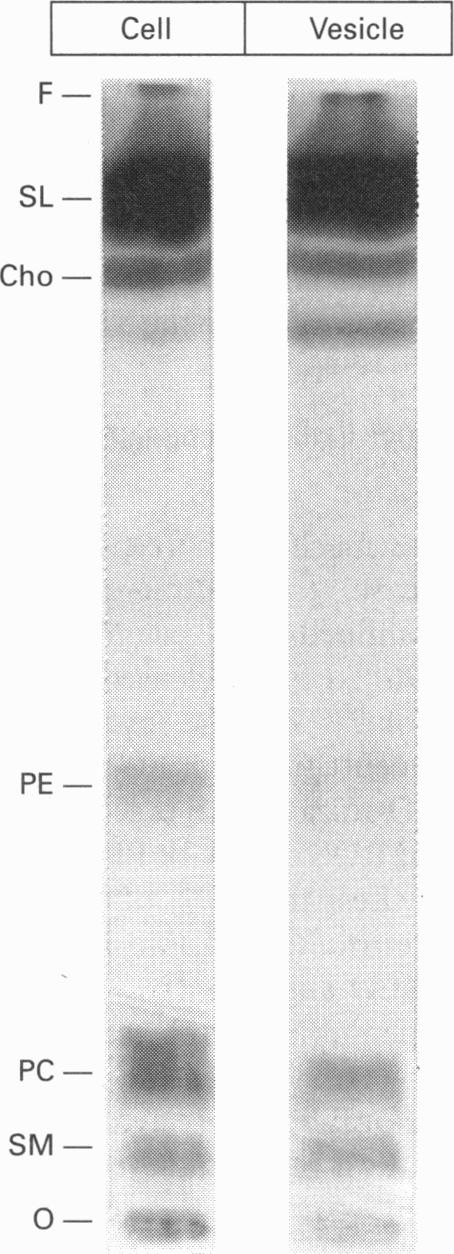
Streptolysin-O (SLO), a cholesterol-binding agent, was used for studies on the release of glycosylphosphatidylinositol (GPI)-anchored alkaline phosphatase (AP) from ROS cells. Treatment of cells with SLO resulted in a time- and concentration-dependent release of AP into the extracellular medium. This release was potentiated by Ca2+ and bovine serum, but not by GPI-specific phospholipase D (GPI-PLD) purified from bovine serum. The released AP distributed to the detergent phase after Triton X-114 phase separation. This result suggested that the released AP contained an intact GPI anchor, and thus both proteolysis and anchor degradation by anchor-specific hydrolases, including GPI-PLD, as the potential mechanisms for SLO-mediated AP release were ruled out. The released AP sedimented at 100,000 g. A substantial amount of lipids was detected in the 100,000 g pellet. Cholesterol and sphingomyelin were enriched in SLO-released material, compared with intact cells. These results were consistent with vesiculation as the mechanism for SLO induction of AP release. Two other cholesterol-binding agents, saponin and digitonin, were also able to release AP, possibly by a similar vesiculation mechanism, whereas others, including nystatin, filipin and beta-escin, failed to elicit any AP release. Eight GPI-anchored proteins were identified in ROS cells, and all were substantially enriched in the vesicles released by SLO. Taken together, these results do not provide any support for the hypothesis that the clustering of GPI-anchored proteins in the plasma membrane is responsible for their resistance to GPI-PLD cleavage.
链球菌溶血素O(SLO)是一种胆固醇结合剂,用于研究从ROS细胞中释放糖基磷脂酰肌醇(GPI)锚定的碱性磷酸酶(AP)。用SLO处理细胞导致AP呈时间和浓度依赖性释放到细胞外培养基中。Ca2+和牛血清可增强这种释放,但从牛血清中纯化的GPI特异性磷脂酶D(GPI-PLD)则不能。经Triton X-114相分离后,释放的AP分布到去污剂相中。这一结果表明,释放的AP含有完整的GPI锚,因此排除了蛋白水解和包括GPI-PLD在内的锚特异性水解酶对锚的降解作为SLO介导的AP释放的潜在机制。释放的AP在100,000 g下沉淀。在100,000 g沉淀中检测到大量脂质。与完整细胞相比,胆固醇和鞘磷脂在SLO释放的物质中富集。这些结果与囊泡形成作为SLO诱导AP释放的机制一致。另外两种胆固醇结合剂,皂角苷和洋地黄皂苷,也可能通过类似的囊泡形成机制释放AP,而其他物质,包括制霉菌素、菲律宾菌素和β-七叶皂苷,则未能引起任何AP释放。在ROS细胞中鉴定出8种GPI锚定蛋白,所有这些蛋白在SLO释放的囊泡中均大量富集。综上所述,这些结果不支持细胞膜中GPI锚定蛋白的聚集导致其对GPI-PLD切割具有抗性这一假说。