Department of Biological Sciences, Texas Tech University, Lubbock, TX, 79409, USA.
Department of Cell Biology and Biochemistry, Texas Tech University Health Science Center, Lubbock, TX, 79430, USA.
Sci Rep. 2018 Apr 24;8(1):6458. doi: 10.1038/s41598-018-24955-2.
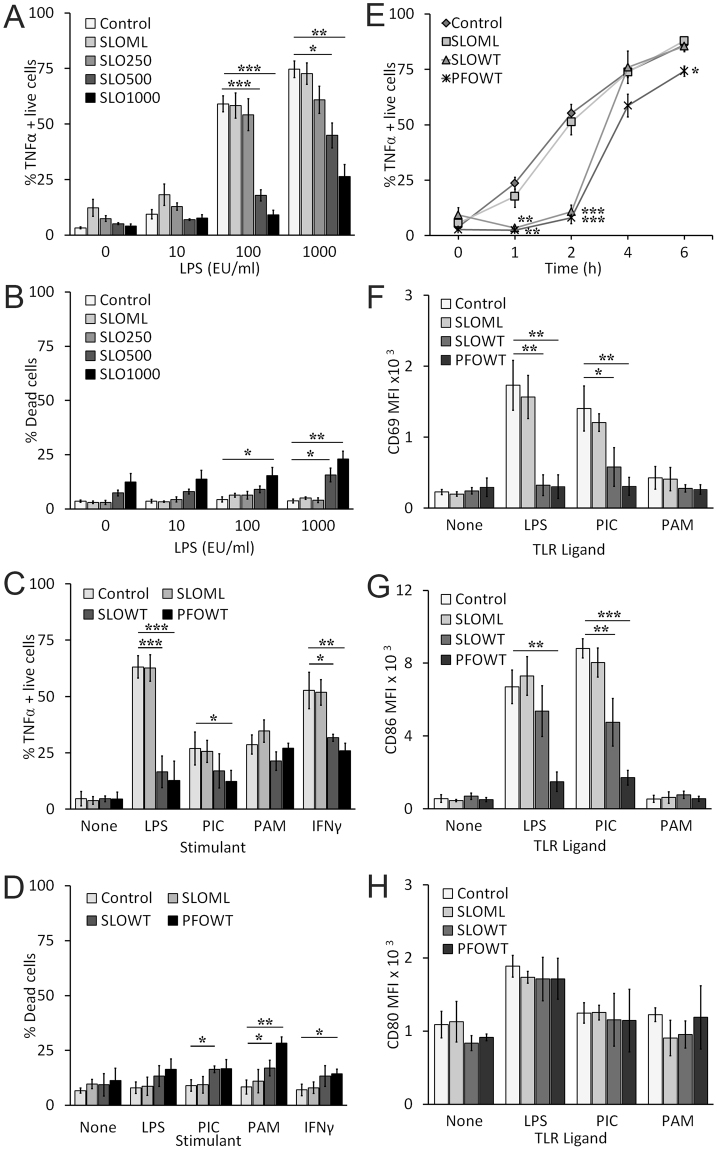
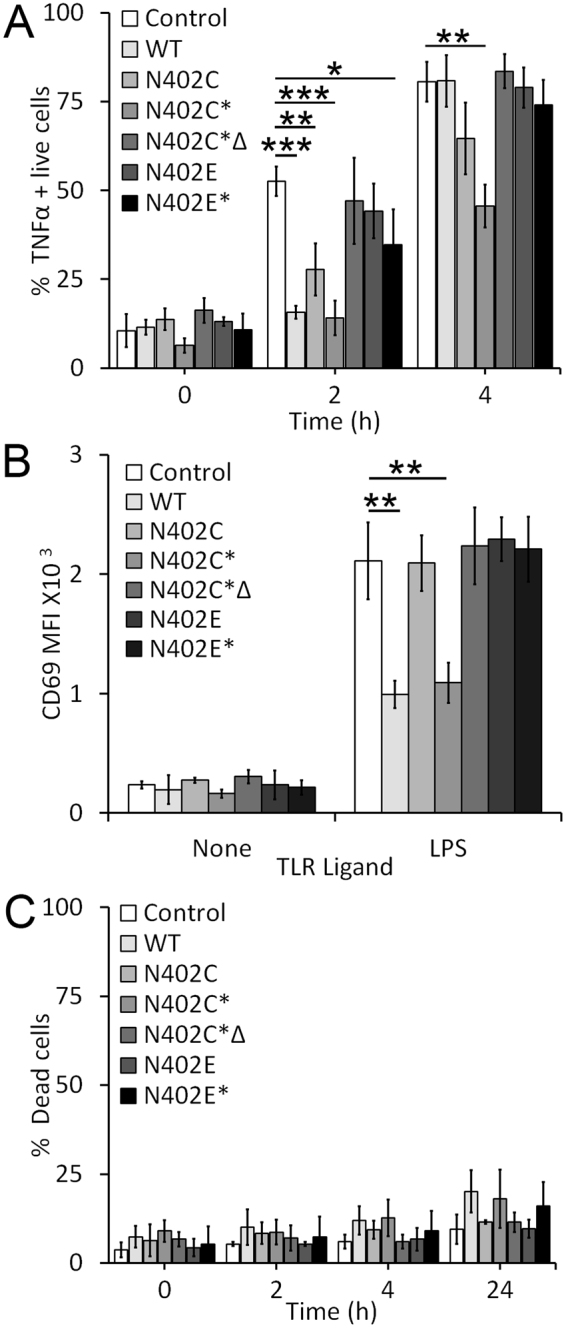
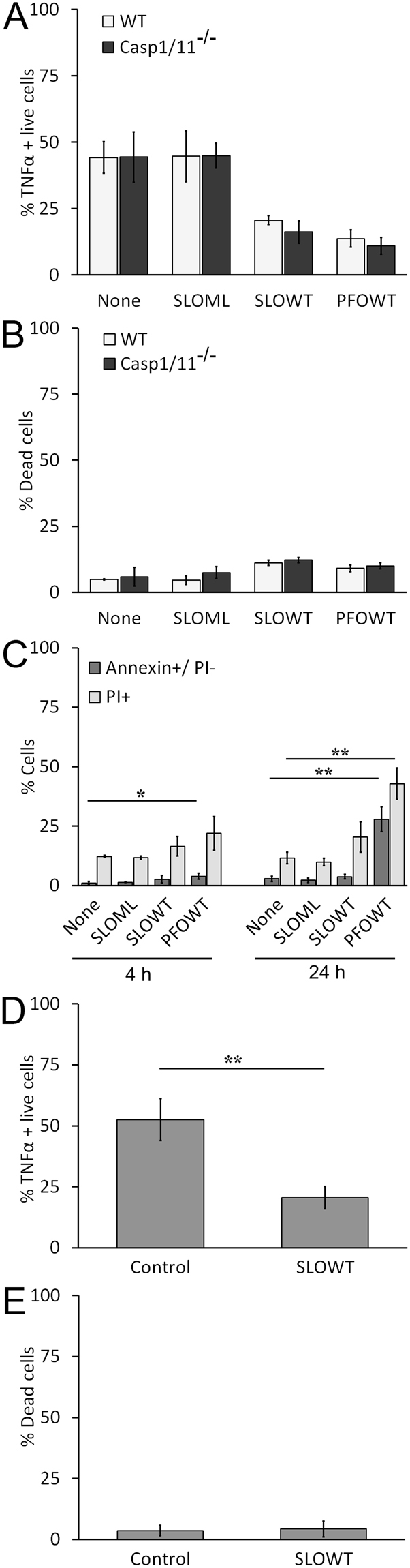
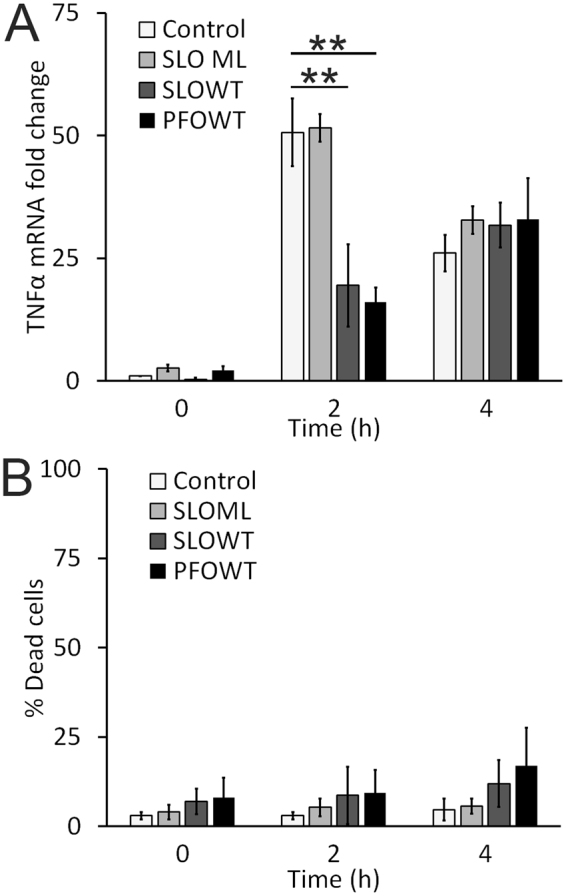
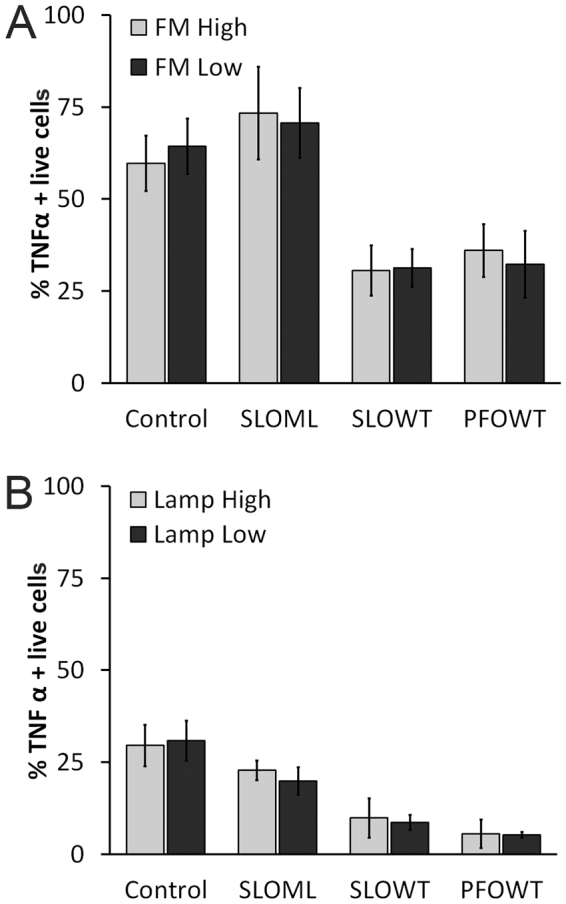
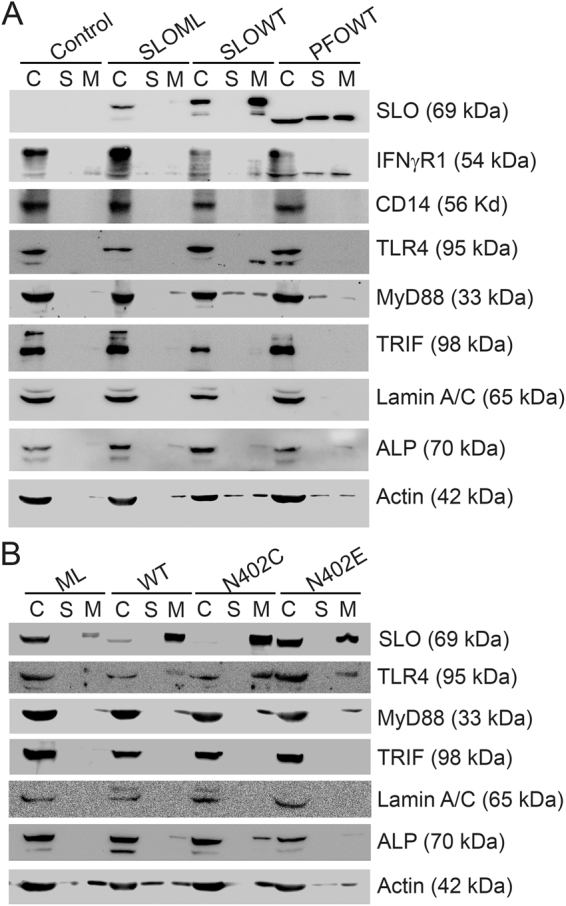
Necrotizing soft tissue infections are lethal polymicrobial infections. Two key microbes that cause necrotizing soft tissue infections are Streptococcus pyogenes and Clostridium perfringens. These pathogens evade innate immunity using multiple virulence factors, including cholesterol-dependent cytolysins (CDCs). CDCs are resisted by mammalian cells through the sequestration and shedding of pores during intrinsic membrane repair. One hypothesis is that vesicle shedding promotes immune evasion by concomitantly eliminating key signaling proteins present in cholesterol-rich microdomains. To test this hypothesis, murine macrophages were challenged with sublytic CDC doses. CDCs suppressed LPS or IFNγ-stimulated TNFα production and CD69 and CD86 surface expression. This suppression was cell intrinsic. Two membrane repair pathways, patch repair and intrinsic repair, might mediate TNFα suppression. However, patch repair did not correlate with TNFα suppression. Intrinsic repair partially contributed to macrophage dysfunction because TLR4 and the IFNγR were partially shed following CDC challenge. Intrinsic repair was not sufficient for suppression, because pore formation was also required. These findings suggest that even when CDCs fail to kill cells, they may impair innate immune signaling responses dependent on cholesterol-rich microdomains. This is one potential mechanism to explain the lethality of S. pyogenes and C. perfringens during necrotizing soft tissue infections.
坏死性软组织感染是致命的多微生物感染。导致坏死性软组织感染的两种关键微生物是化脓性链球菌和产气荚膜梭菌。这些病原体通过多种毒力因子逃避先天免疫,包括胆固醇依赖性细胞溶素(CDCs)。哺乳动物细胞通过内在膜修复过程中隔离和脱落孔来抵抗 CDC。一种假设是,囊泡脱落通过同时消除富含胆固醇的微域中存在的关键信号蛋白来促进免疫逃避。为了验证这一假设,用亚致死剂量的 CDC 挑战小鼠巨噬细胞。CDCs 抑制 LPS 或 IFNγ 刺激的 TNFα 产生和 CD69 和 CD86 表面表达。这种抑制是细胞内在的。两种膜修复途径,斑块修复和内在修复,可能介导 TNFα 的抑制。然而,斑块修复与 TNFα 的抑制并不相关。内在修复部分导致巨噬细胞功能障碍,因为 TLR4 和 IFNγR 在 CDC 挑战后部分脱落。内在修复不足以抑制,因为还需要形成孔。这些发现表明,即使 CDC 未能杀死细胞,它们也可能损害依赖富含胆固醇的微域的先天免疫信号反应。这是解释化脓性链球菌和产气荚膜梭菌在坏死性软组织感染中的致命性的一个潜在机制。