Raich N, Clegg C H, Grofti J, Roméo P H, Stamatoyannopoulos G
INSERM U91, Hôpital Henri Mondor, Créteil, France.
EMBO J. 1995 Feb 15;14(4):801-9. doi: 10.1002/j.1460-2075.1995.tb07058.x.
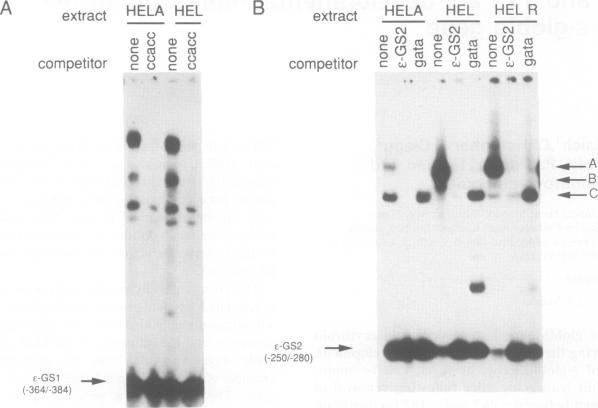
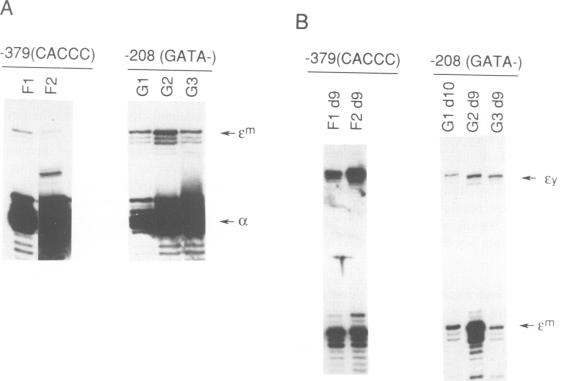
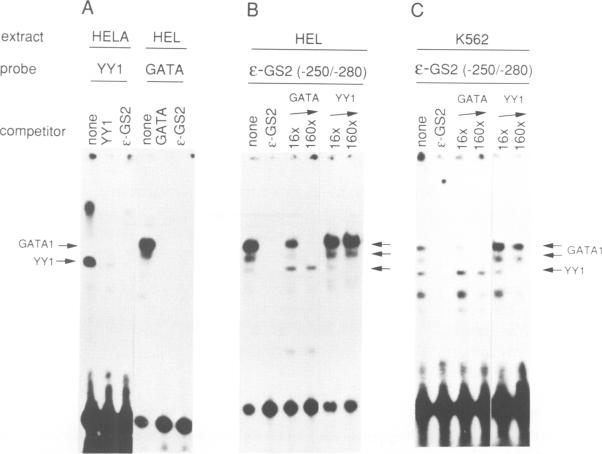
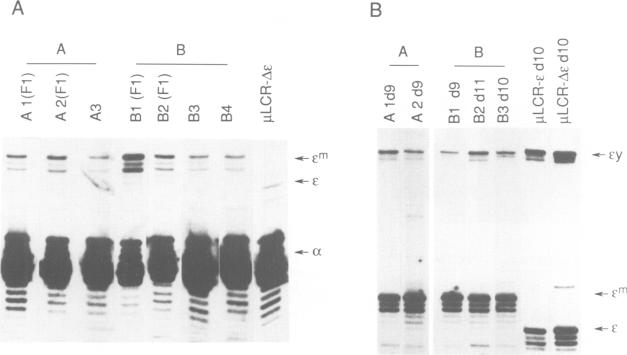
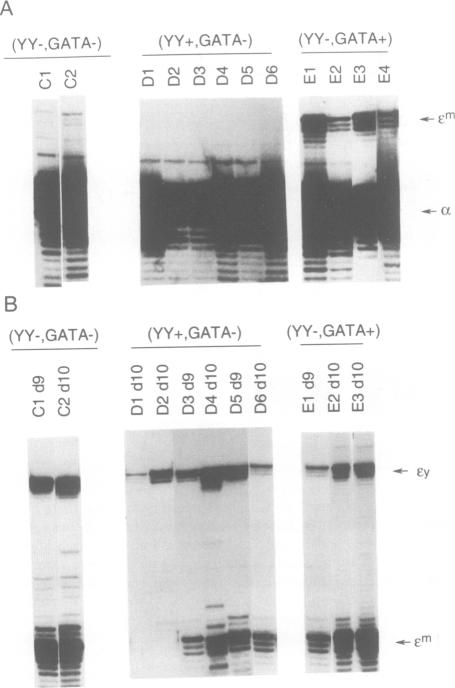
The human epsilon-globin gene is transcribed in erythroid cells only during the embryonic stages of development. Expression of epsilon-globin gene, however, can be maintained in adult transgenic mice following removal of DNA positioned between -467 and -182 bp upstream of the epsilon-globin cap site. We have identified three protein binding regions within this silencer; a CCACC motif around -379, two overlapping motifs for YY1 and GATA around -269 and a GATA motif around -208 and we have analyzed their function during development by studying several mutants in transgenic mice. Mutation of the -208 GATA motif allows high epsilon-globin transgene expression in the adult suggesting that, in addition to its positive effects on transcription, GATA-1 also plays a negative role in the regulation of globin gene expression during development. Repression of epsilon gene expression in the adult also requires a functional YY1 binding site at position -269. Finally, mutation of the -379 CCACC site results in a small but detectable level of epsilon expression in adult erythroid cells. Thus, multiple proteins, including GATA-1, participate in the formation of the epsilon gene repressor complex that may disrupt the interaction between the proximal epsilon-promoter and the locus control region (LCR) in definitive erythroid cells.
人类ε-珠蛋白基因仅在胚胎发育阶段的红细胞中进行转录。然而,在去除位于ε-珠蛋白帽位点上游-467至-182 bp之间的DNA后,成年转基因小鼠中可维持ε-珠蛋白基因的表达。我们在这个沉默子中鉴定出三个蛋白质结合区域:-379附近的CCACC基序、-269附近两个重叠的YY1和GATA基序以及-208附近的一个GATA基序,并且通过研究转基因小鼠中的几个突变体,分析了它们在发育过程中的功能。-208 GATA基序的突变使得成年小鼠中ε-珠蛋白转基因能够高表达,这表明,除了对转录有积极作用外,GATA-1在发育过程中对珠蛋白基因表达的调控中也发挥着负面作用。成年小鼠中ε基因表达的抑制还需要-269位置有一个功能性的YY1结合位点。最后,-379 CCACC位点的突变导致成年红细胞中出现少量但可检测到的ε表达水平。因此,包括GATA-1在内的多种蛋白质参与了ε基因阻遏复合物的形成,该复合物可能会破坏成熟红细胞中近端ε-启动子与基因座控制区(LCR)之间的相互作用。