Fernandes P B, Panos C
Infect Immun. 1976 Nov;14(5):1228-40. doi: 10.1128/iai.14.5.1228-1240.1976.
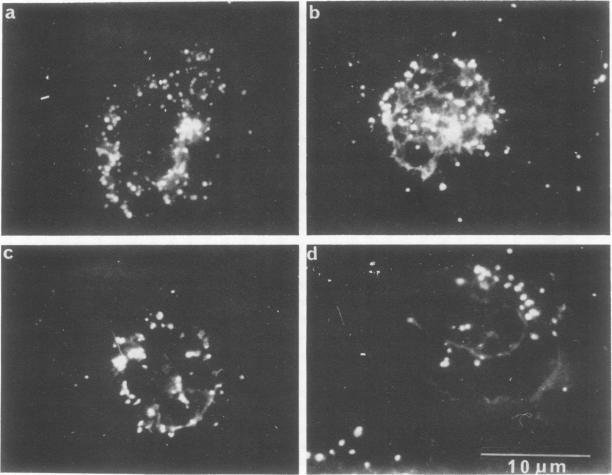
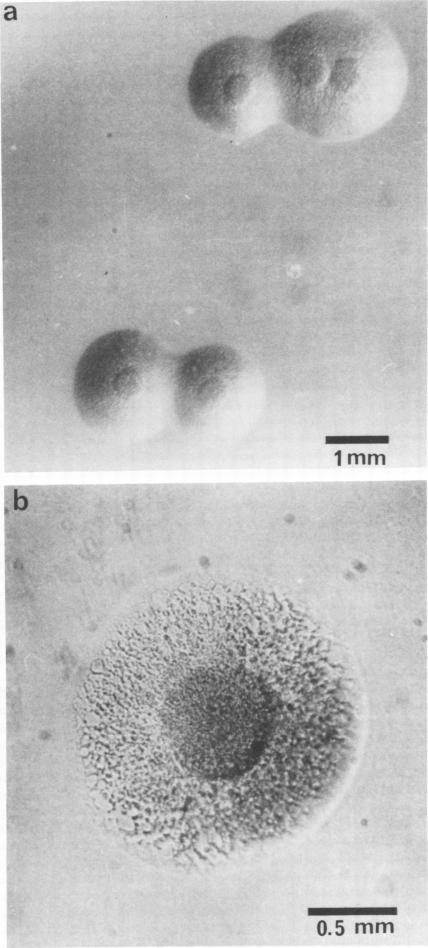
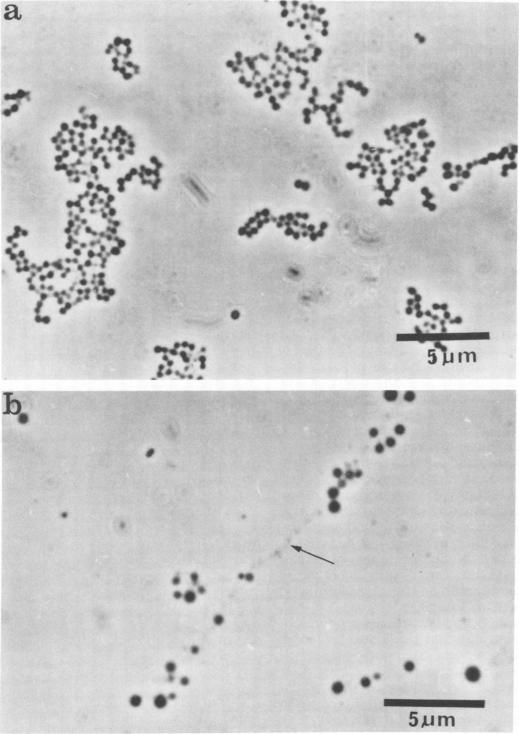
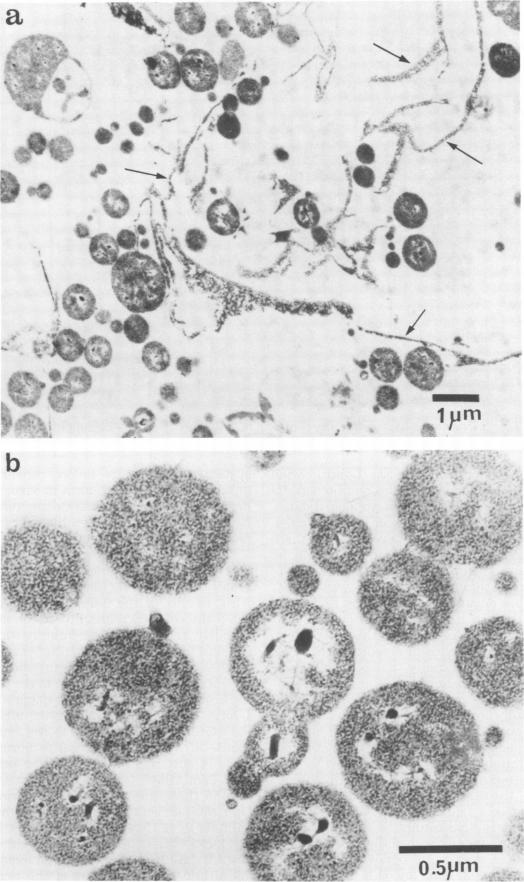
Evidence obtained using nonimmunosuppressed and newborn mice suggests that the immune response of the host plays a role in the rapid removal of a physiologically isotonic L-form of Streptococcus pyogenes, since its inability to persist in vivo was not due to osmotic lysis. With mice immunosuppressed with methylprednisolone sodium succinate, viability and detection of this L-form by fluorescent antibody was prolonged for at least 2 weeks, the approximate duration of immunosuppression in these mice. However, heat-killed L-form cells only persisted for 3 days in such mice. Therefore, persistence of a viable L-form in these treated mice was not simply due to the lack of removal of L-forms by a compromised host. At no time was there any indication of illness in nonimmunosuppressed or immunosuppressed mice after L-form injection, and all internal organs, when examined macroscopically, remained normal. Thus, overt pathogenesis was not a characteristic of this L-form in a suitable host even when its immune response had been compromised. The microscopic morphology of the L-form after isolation from immunosuppressed mice changed drastically. It was typically micrococcal in appearance and exemplified the cellular variability achievable by this organism in vivo. Also, streptolysin S production was increased markedly by passage of the L-form in immunosuppressed mice. However, M protein, as a cellular component, was not detected serologically, nor was any reformation of a rigid cell wall apparent by electron microscopy after isolation of this streptococcal L-form from such mice.
使用未免疫抑制的新生小鼠获得的证据表明,宿主的免疫反应在化脓性链球菌生理等渗L型的快速清除中起作用,因为其无法在体内持续存在并非由于渗透裂解。用琥珀酸钠甲泼尼龙免疫抑制的小鼠,这种L型的活力和通过荧光抗体检测的时间延长了至少2周,这大约是这些小鼠免疫抑制的持续时间。然而,热灭活的L型细胞在这类小鼠中仅持续3天。因此,在这些经处理的小鼠中存活的L型持续存在并非仅仅是由于受损宿主缺乏对L型的清除。在注射L型后,未免疫抑制或免疫抑制的小鼠在任何时候都没有疾病迹象,并且所有内部器官在肉眼检查时都保持正常。因此,即使其免疫反应受到损害,在合适的宿主中这种L型也没有明显的致病特征。从免疫抑制小鼠中分离出的L型的微观形态发生了巨大变化。其外观通常呈微球菌状,体现了该生物体在体内可实现的细胞变异性。此外,L型在免疫抑制小鼠中传代后,链球菌溶血素S的产生显著增加。然而,作为细胞成分的M蛋白在血清学上未被检测到,并且从这类小鼠中分离出这种链球菌L型后,通过电子显微镜也未观察到刚性细胞壁有任何重新形成的迹象。