Chen W, Gigliotti F, Harmsen A G
Trudeau Institute, Inc., Saranac Lake, New York 12983.
Infect Immun. 1993 Dec;61(12):5406-9. doi: 10.1128/iai.61.12.5406-5409.1993.
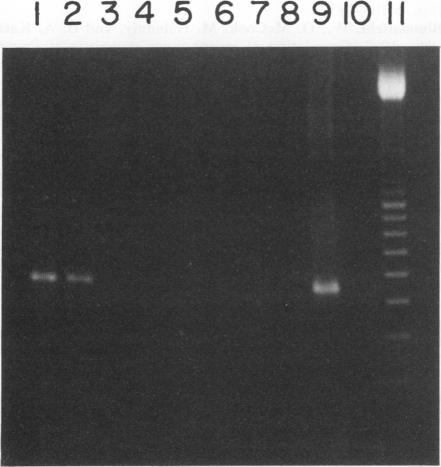
Severe combined immunodeficiency (SCID) mice resolve naturally acquired Pneumocystis carinii pneumonia after reconstitution with immunocompetent spleen cells and can therefore be used as a model to study latent P. carinii infection. Neither P. carinii nor amplified P. carinii DNA was detected in the lungs of SCID mice killed 21 days after spleen cell reconstitution. Furthermore, SCID mice that recovered from P. carinii infection failed to reactivate the infection after they were either depleted of CD4+ cells for up to 84 days or depleted of CD4+ cells and treated with corticosteroid for 35 days. These results indicate that an immune response to P. carinii can completely clear the organism from the host. This supports the hypothesis that P. carinii pneumonia that develops in immunocompromised patients may be a new infection resulting from exposure to an exogenous source of P. carinii and not necessarily from reactivation of latent infection.
严重联合免疫缺陷(SCID)小鼠在用具有免疫活性的脾细胞重建后可自然消除自然获得的卡氏肺孢子虫肺炎,因此可作为研究卡氏肺孢子虫潜伏感染的模型。在脾细胞重建后21天处死的SCID小鼠肺中,未检测到卡氏肺孢子虫或扩增的卡氏肺孢子虫DNA。此外,从卡氏肺孢子虫感染中恢复的SCID小鼠,在CD4 +细胞耗竭长达84天或CD4 +细胞耗竭并用皮质类固醇治疗35天后,未能重新激活感染。这些结果表明,对卡氏肺孢子虫的免疫反应可将该病原体从宿主体内完全清除。这支持了以下假设:免疫功能低下患者发生的卡氏肺孢子虫肺炎可能是由于接触卡氏肺孢子虫外源来源而导致的新感染,不一定是潜伏感染的重新激活。