van Velthuysen M L, Mayen A E, van Rooijen N, Fleuren G J, de Heer E, Bruijn J A
Department of Pathology, University of Leiden, The Netherlands.
Infect Immun. 1994 Aug;62(8):3230-5. doi: 10.1128/iai.62.8.3230-3235.1994.
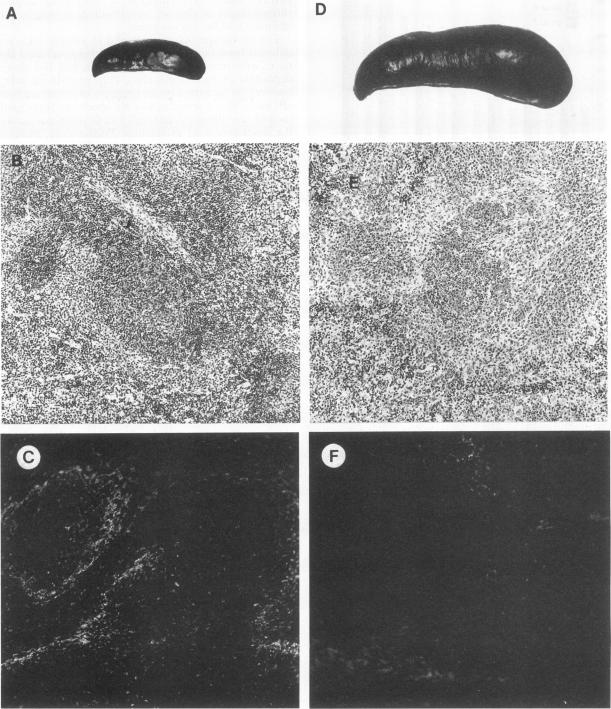
In a previous study, susceptibility for Trypanosoma brucei-related glomerulopathy in mice was shown to be dependent on non-major histocompatibility complex genes. Glomerular disease in this model could not be explained by the production of autoantibodies alone. In order to analyze which part of the defense system, in addition to the B-cell compartment, is involved in the development of this infection-related glomerular disease, groups of athymic (BALB/c rnu/rnu), splenectomized, or macrophage-depleted BALB/c mice were inoculated with T. brucei parasites. Polyclonal B-cell activation, invariably observed in infected BALB/c mice, was absent in BALB/c rnu/rnu mice. Glomerular disease in athymic mice, however, as defined by albuminuria and deposition of immune complexes, was not different from that seen in euthymic infected BALB/c mice. Splenectomy prior to inoculation of parasites led to a decreased incidence of albuminuria in 40% of the animals, whereas splenectomy 21 days after inoculation reduced albuminuria significantly, suggesting a role for spleen cells in the induction of glomerular disease. After macrophage depletion with liposome-encapsulated dichlorodimethylene-diphosphonate, infected BALB/c mice developed significantly higher albuminuria levels for a period up to 2 weeks after depletion. Therefore, it was concluded that the development of T. brucei-related glomerular disease is independent of thymus-matured T cells, while the involvement of macrophages in the development of proteinuria is inhibitory rather than disease inducing. Spleen cells other than thymus-dependent T cells, B cells, and macrophages should be investigated for their role in the pathogenesis of this glomerulopathy.
在先前的一项研究中,已表明小鼠对布氏锥虫相关肾小球病的易感性取决于非主要组织相容性复合体基因。该模型中的肾小球疾病不能仅用自身抗体的产生来解释。为了分析除B细胞区室外,防御系统的哪一部分参与了这种感染相关肾小球疾病的发展,将无胸腺(BALB/c rnu/rnu)、脾切除或巨噬细胞耗竭的BALB/c小鼠组接种布氏锥虫寄生虫。在感染的BALB/c小鼠中总是观察到的多克隆B细胞活化,在BALB/c rnu/rnu小鼠中不存在。然而,无胸腺小鼠的肾小球疾病,以蛋白尿和免疫复合物沉积来定义,与正常胸腺的感染BALB/c小鼠中所见的并无不同。在接种寄生虫前进行脾切除术导致40%的动物蛋白尿发生率降低,而在接种后21天进行脾切除术则显著降低了蛋白尿,这表明脾细胞在肾小球疾病的诱导中起作用。在用脂质体包裹的二氯二甲基二膦酸盐使巨噬细胞耗竭后,感染的BALB/c小鼠在耗竭后长达2周的时间内出现明显更高的蛋白尿水平。因此,得出的结论是,布氏锥虫相关肾小球疾病的发展独立于胸腺成熟的T细胞,而巨噬细胞在蛋白尿发展中的作用是抑制性的而非致病的。应研究除胸腺依赖性T细胞、B细胞和巨噬细胞外的脾细胞在这种肾小球病发病机制中的作用。