Jazwinski S M, Edelman G M
Proc Natl Acad Sci U S A. 1976 Nov;73(11):3933-6. doi: 10.1073/pnas.73.11.3933.
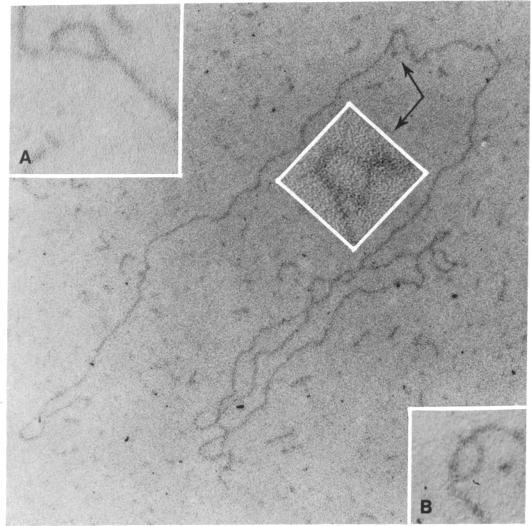
Extracts of the cytoplasm of disrupted spheroplasts of Saccharomyces cerevisiae (bakers' yeast) stimulated DNA synthesis in a cell-free system consisting of nuclei from spleen cells of the frog Xenopus laevis, The stimulation required Mg++8 ATP, and the deoxynucleoside triphosphates, was saturated by an excess of nuclei or extract, and had kinetics resembling those obtained previously with extracts from mammalian and avian cells. After addition of the yeast extract, replication "eyes" were formed in the DNA from the nucleochromatin of the frog, suggesting that the extract stimulated the initiation of DNA replication. The activity was susceptible to heat, was nondialyzable, and was abrogated by tryptic digestion. Temperature-sensitive mutants of the cell division cycle (cdcmutants 4,7,8, and 28) grown at permissive temperature (23 degrees) yielded extracts that were capable of stimulating DNA replication. When the cells were incubated for one generation at the nonpermissive temperature (36 degrees), their extracts showed very low or no activity. All of these mutants are deficient in events of the dependent pathway leading to initiation of DNA synthesis in the yeast cell cycle. A ts mutant, cdc10, deficient in the separate pathway for cytokinesis, showed little or no loss of activity at the nonpermissive temperature. These data indicate that the "initiation" activity, as assayed in vitro, is subject to control in the yeast cell cycle, and its appearance may be one of the terminal events in the pathway leading to DNA synthesis. The finding that extracts from yeast cells can stimulate DNA synthesis in nucleochromatin from frog cells, and the fact that the cdc mutants 4,7,8, and 28 describe a dependent pathway terminating in development of "initiation" activity, are in accord with the hypothesis that the function of proteins in the dependent pathways of the cell cycle is conserved during evolution.
啤酒酵母(面包酵母)原生质球破裂后的细胞质提取物,能在由非洲爪蟾脾细胞核组成的无细胞体系中刺激DNA合成。这种刺激作用需要Mg++、ATP和脱氧核苷三磷酸,过量的细胞核或提取物可使其饱和,其动力学与先前从哺乳动物和鸟类细胞提取物中获得的相似。加入酵母提取物后,蛙类核染色质的DNA中形成了复制“眼”,这表明提取物刺激了DNA复制的起始。该活性对热敏感,不可透析,且经胰蛋白酶消化后被消除。在允许温度(23摄氏度)下生长的细胞分裂周期温度敏感突变体(cdc突变体4、7、8和28)产生的提取物能够刺激DNA复制。当细胞在非允许温度(36摄氏度)下培养一代时,其提取物的活性很低或没有活性。所有这些突变体在酵母细胞周期中导致DNA合成起始的依赖途径事件中存在缺陷。一个在胞质分裂独立途径中存在缺陷的ts突变体cdc10,在非允许温度下活性几乎没有丧失或没有丧失。这些数据表明,体外测定的“起始”活性在酵母细胞周期中受到调控,其出现可能是导致DNA合成途径中的终末事件之一。酵母细胞提取物能刺激蛙类细胞核染色质中的DNA合成这一发现,以及cdc突变体4、7、8和28描述了一条以“起始”活性发展为终点的依赖途径这一事实,与细胞周期依赖途径中蛋白质功能在进化过程中保守的假说一致。