Zwacka R M, Reuter A, Pfaff E, Moll J, Gorgas K, Karasawa M, Weiher H
Kernforschungszentrum Karlsruhe, Institut für Genetik, Karlsruhe, Germany.
EMBO J. 1994 Nov 1;13(21):5129-34. doi: 10.1002/j.1460-2075.1994.tb06842.x.
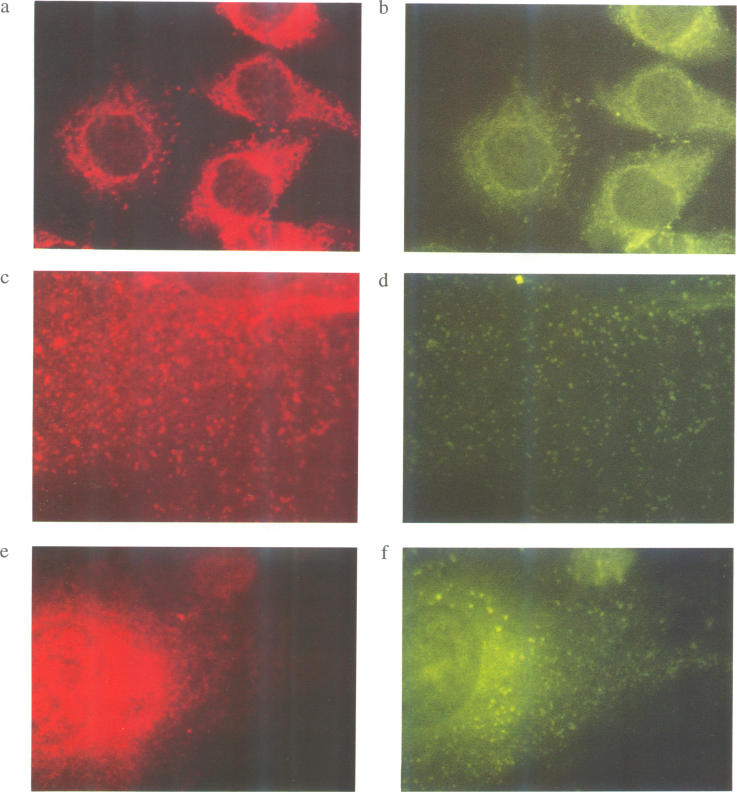
The mutant mouse strain Mpv17 carries a retroviral insert in its genome which inactivates the Mpv17 gene. At a young age these mice develop glomerulosclerosis and nephrotic syndrome which resembles human disease. We show here that the Mpv17 gene product is highly conserved and encodes a peroxisomal protein. Loss of the Mpv17 protein does not impair peroxisome biogenesis but instead leads to a reduced ability to produce reactive oxygen species (ROS). In turn, overproduction of the Mpv17 gene in transfected cells results in dramatically enhanced levels of intracellular ROS indicating a direct involvement of Mpv17 in ROS production. These data reveal a role for the Mpv17 protein in peroxisomal reactive oxygen metabolism and establish a novel link between peroxisomal ROS production and glomerulosclerosis.
突变小鼠品系Mpv17的基因组中携带一个逆转录病毒插入片段,该片段使Mpv17基因失活。这些小鼠在年轻时会发展出肾小球硬化症和肾病综合征,类似于人类疾病。我们在此表明,Mpv17基因产物高度保守,编码一种过氧化物酶体蛋白。Mpv17蛋白的缺失不会损害过氧化物酶体的生物发生,反而会导致产生活性氧(ROS)的能力降低。反过来,在转染细胞中过量表达Mpv17基因会导致细胞内ROS水平显著提高,表明Mpv17直接参与ROS的产生。这些数据揭示了Mpv17蛋白在过氧化物酶体活性氧代谢中的作用,并在过氧化物酶体ROS产生与肾小球硬化之间建立了新的联系。