Yokota N, Bruneau B G, Kuroski de Bold M L, de Bold A J
University of Ottawa Heart Institute, Ottawa Civic Hospital, Ontario, Canada.
J Clin Invest. 1994 Nov;94(5):1938-46. doi: 10.1172/JCI117544.
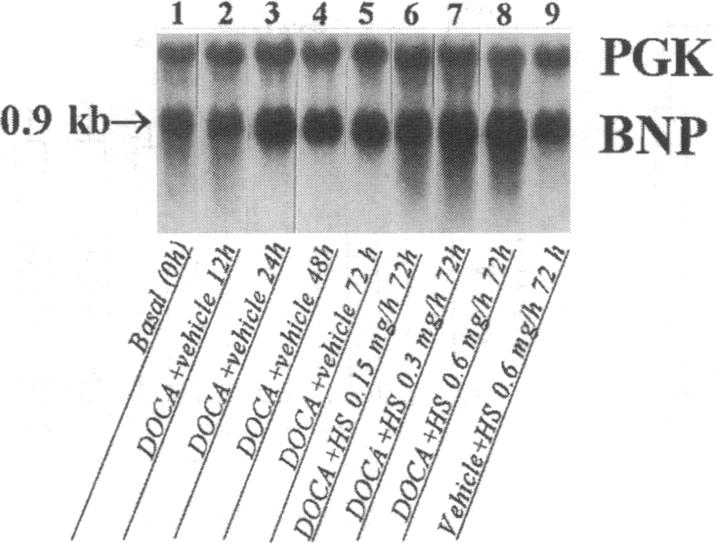
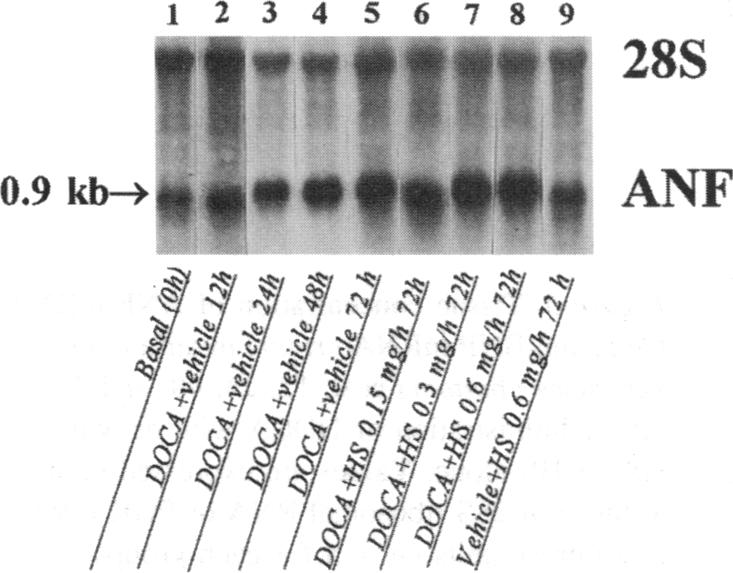
The mechanism underlying the mineralocorticoid escape phenomenon remains unknown. To assess the possible contribution of natriuretic peptides to mineralocorticoid escape, rats were injected with 5 mg deoxycorticosterone acetate for 3 d. Plasma atrial natriuretic factor (ANF) rose to twice basal levels and atrial ANF content decreased significantly by 24 h of treatment. This coincided with renal escape and with a significant increase in urinary cGMP excretion. Plasma ANF remained elevated and atrial ANF content continued to decline by 48 and 72 h while atrial ANF mRNA levels increased significantly only at 72 h. Plasma brain natriuretic peptide did not increase during escape although atrial brain natriuretic peptide mRNA levels increased significantly. Chronically administered HS-142-1 (HS), a specific antagonist of the guanylate cyclase-coupled natriuretic peptide receptors, significantly and dose-dependently impaired the escape phenomenon. The highest dose of HS completely suppressed the increase in urinary cGMP. Despite the continued suppression, partial escape was observed by the end of the observation period. HS alone influenced neither plasma nor tissue or urine parameters. These findings show that despite activation of atrial ANF, blockade of the guanylate cyclase-coupled natriuretic peptide receptors impairs the ability of the kidney to escape the Na+ retaining effect of excess mineralocorticoid in a dose-dependent fashion. Later-acting, unknown mechanisms eventually come into play to mediate the escape phenomenon through a guanylate cyclase-independent pathway. Therefore, ANF of cardiac origin appears to be a major factor initiating mineralocorticoid escape through a guanylate cyclase-dependent pathway.