Barnea A, Nottebohm F
Rockefeller University, Field Research Center for Ecology and Ethology, Millbrook, NY 12545.
Proc Natl Acad Sci U S A. 1994 Nov 8;91(23):11217-21. doi: 10.1073/pnas.91.23.11217.
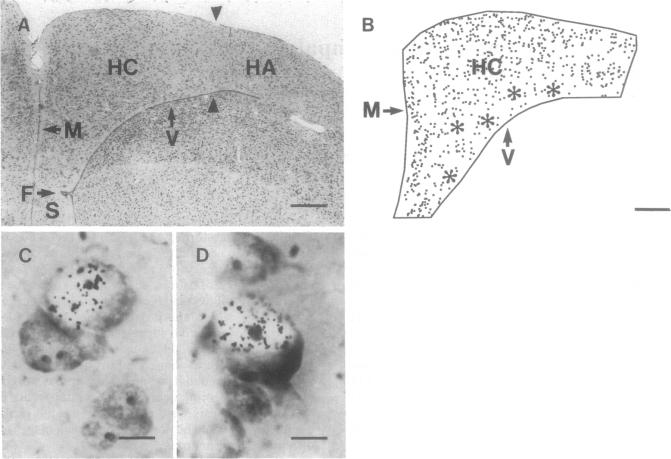
Neurogenesis and neuronal replacement in a population of wild free-ranging animals are described. Our subjects were adult black-capped chickadees (Parus atricapillus). Neuronal birth dates were determined by a single systemic injection of [3H]thymidine, followed by release of the bird and its recapture 6 or more weeks later. Newly formed neurons appeared in the hippocampal complex during all times of year, but with a marked peak in the fall (October). New neurons were also added to the hippocampal complex of captive chickadees, but at levels only half as high as seen in the wild birds. Neurons born at different times of the year lived for a few months and then disappeared. We suggest that the neurons added are part of a process of neuronal replacement and that they are important for the acquisition of new spatial memories, a need that is particularly acute in the fall. Hormonal and experiential factors may determine the rate of neuronal replacement.
本文描述了一群野生自由放养动物中的神经发生和神经元替代现象。我们的研究对象是成年黑头山雀(Parus atricapillus)。通过单次全身注射[3H]胸腺嘧啶核苷来确定神经元的出生日期,随后放飞鸟类,并在6周或更长时间后重新捕获。一年中任何时候,海马复合体中都会出现新形成的神经元,但在秋季(10月)有一个明显的峰值。新神经元也会添加到圈养山雀的海马复合体中,但数量仅为野生鸟类的一半。在一年中不同时间出生的神经元存活几个月后就会消失。我们认为添加的神经元是神经元替代过程的一部分,并且它们对于获取新的空间记忆很重要,而这种需求在秋季尤为迫切。激素和经验因素可能决定神经元替代的速率。