Zuckerman Mind Brain Behavior Institute, Columbia University, New York City, New York, USA.
J Comp Neurol. 2023 Nov;531(16):1669-1688. doi: 10.1002/cne.25533. Epub 2023 Aug 8.
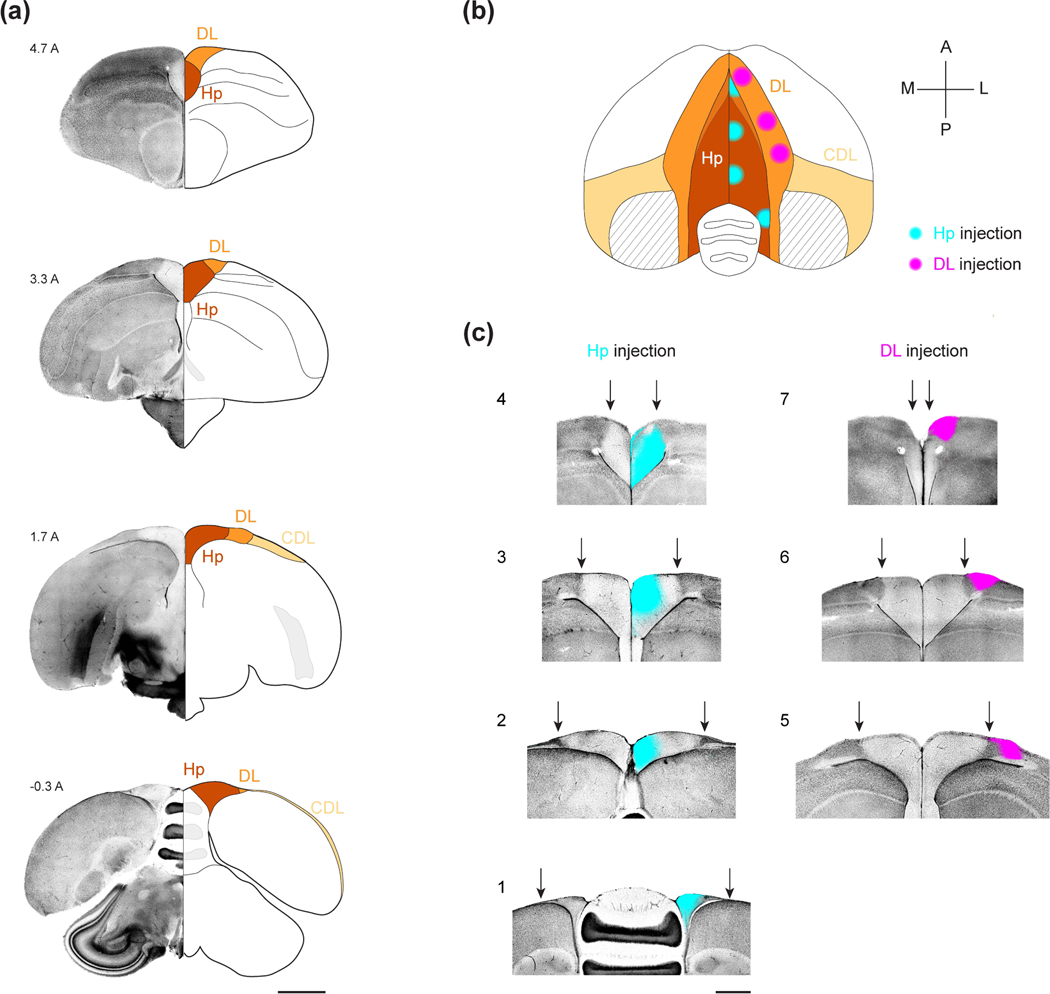
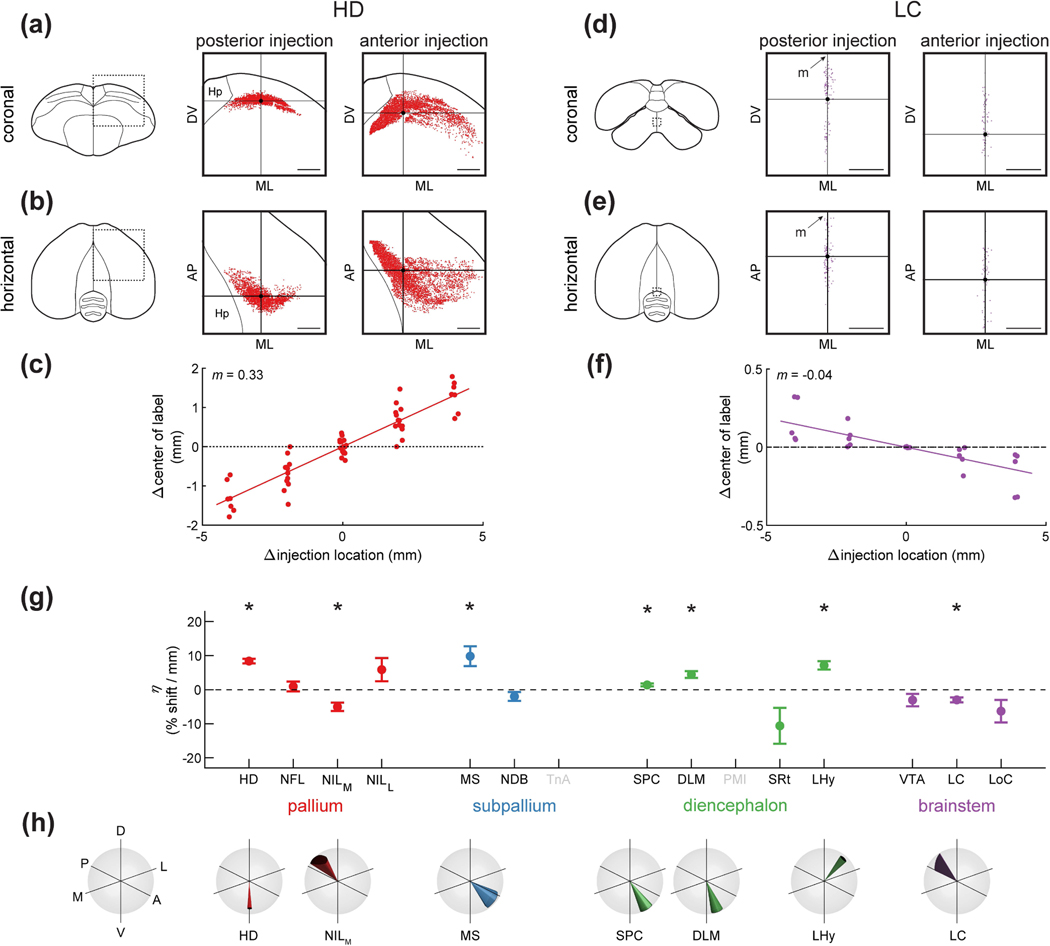
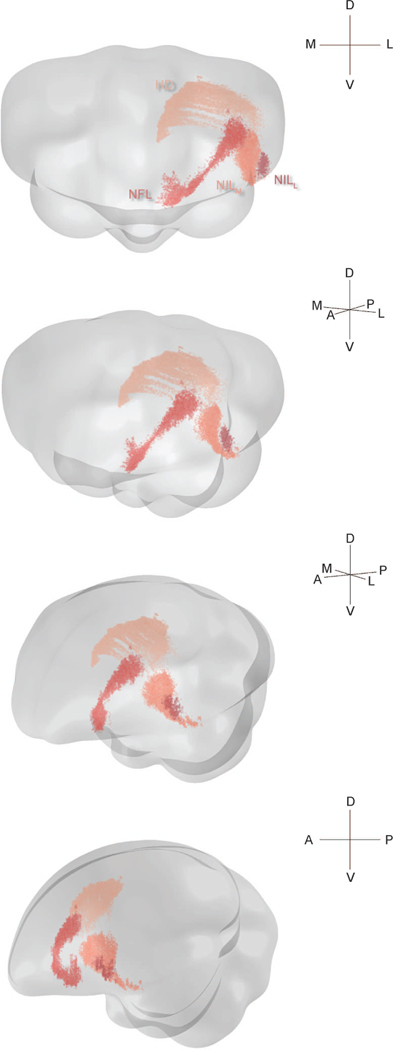
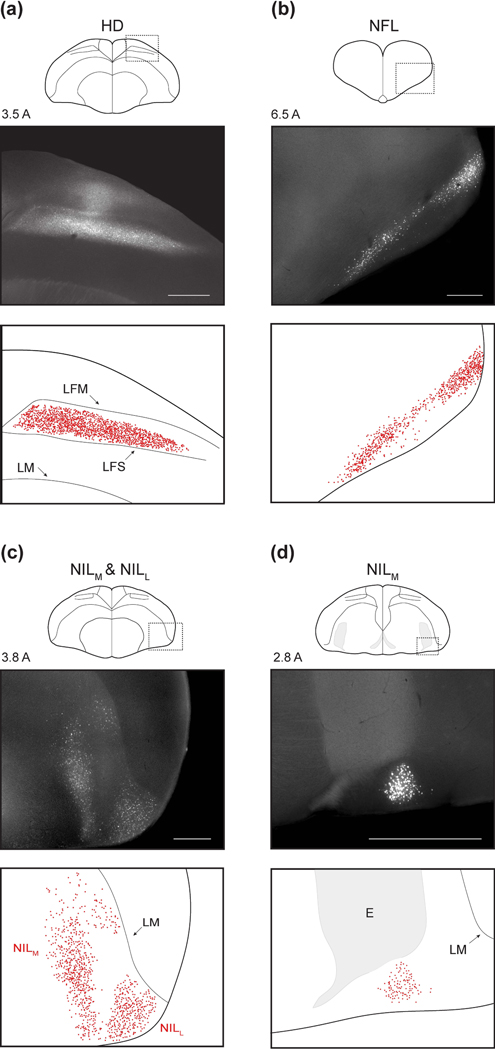
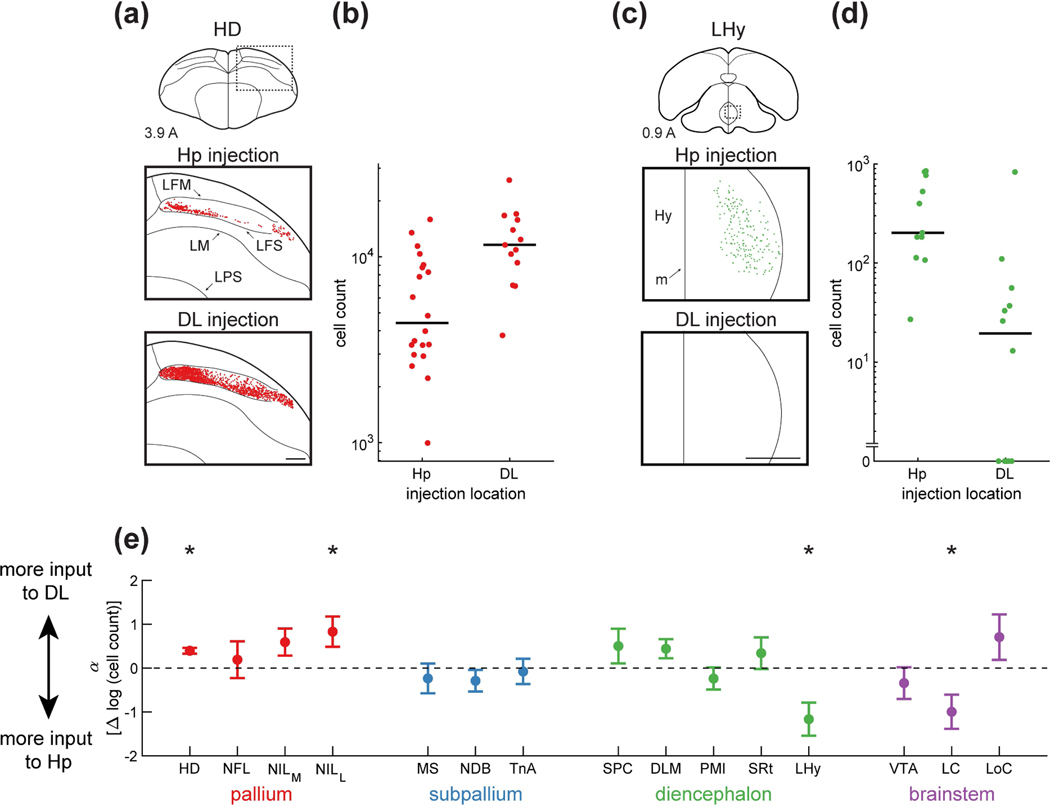
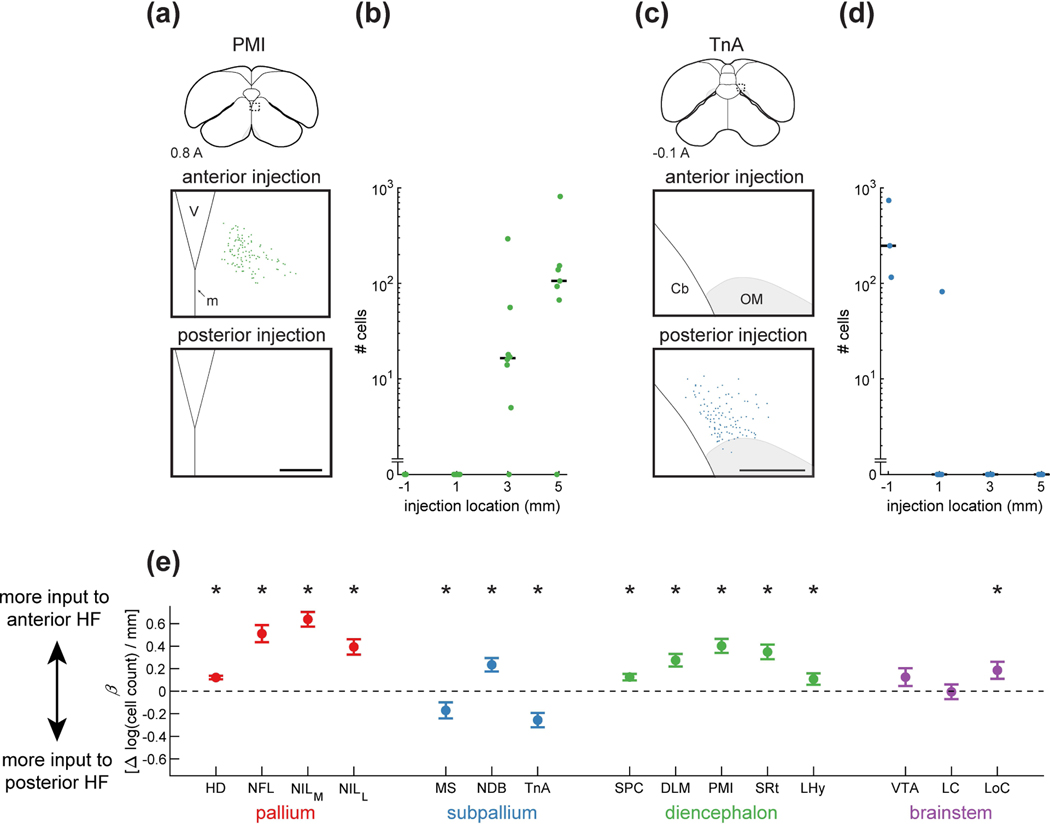
The mammalian hippocampal formation (HF) is organized into domains associated with different functions. These differences are driven in part by the pattern of input along the hippocampal long axis, such as visual input to the septal hippocampus and amygdalar input to the temporal hippocampus. HF is also organized along the transverse axis, with different patterns of neural activity in the hippocampus and the entorhinal cortex. In some birds, a similar organization has been observed along both of these axes. However, it is not known what role inputs play in this organization. We used retrograde tracing to map inputs into HF of a food-caching bird, the black-capped chickadee. We first compared two locations along the transverse axis: the hippocampus and the dorsolateral hippocampal area (DL), which is analogous to the entorhinal cortex. We found that pallial regions predominantly targeted DL, while some subcortical regions like the lateral hypothalamus (LHy) preferentially targeted the hippocampus. We then examined the hippocampal long axis and found that almost all inputs were topographic along this direction. For example, the anterior hippocampus was preferentially innervated by thalamic regions, while the posterior hippocampus received more amygdalar input. Some of the topographies we found bear a resemblance to those described in the mammalian brain, revealing a remarkable anatomical similarity of phylogenetically distant animals. More generally, our work establishes the pattern of inputs to HF in chickadees. Some of these patterns may be unique to chickadees, laying the groundwork for studying the anatomical basis of these birds' exceptional hippocampal memory.
哺乳动物的海马结构(HF)组织成与不同功能相关的域。这些差异部分是由沿着海马长轴的输入模式驱动的,例如视觉输入到隔海马和杏仁核输入到颞海马。HF 也沿着横向轴组织,海马和内嗅皮层的神经活动模式不同。在一些鸟类中,沿着这两个轴也观察到了类似的组织。然而,输入在这种组织中的作用尚不清楚。我们使用逆行示踪法将输入映射到食虫鸟黑顶山雀的 HF 中。我们首先比较了沿横向轴的两个位置:海马和背外侧海马区(DL),它类似于内嗅皮层。我们发现,皮层区域主要靶向 DL,而一些皮质下区域,如外侧下丘脑(LHy),则优先靶向海马。然后,我们检查了海马的长轴,发现几乎所有的输入都是沿着这个方向的地形。例如,前海马优先被丘脑区域支配,而后海马则接收更多的杏仁核输入。我们发现的一些地形与在哺乳动物大脑中描述的地形相似,揭示了在进化上相距甚远的动物之间惊人的解剖相似性。更一般地说,我们的工作确定了山雀 HF 的输入模式。其中一些模式可能是山雀所特有的,为研究这些鸟类非凡的海马记忆的解剖基础奠定了基础。