Reichwald K, Unnithan G C, Davis N T, Agricola H, Feyereisen R
Department of Entomology, University of Arizona, Tucson 85721.
Proc Natl Acad Sci U S A. 1994 Dec 6;91(25):11894-8. doi: 10.1073/pnas.91.25.11894.
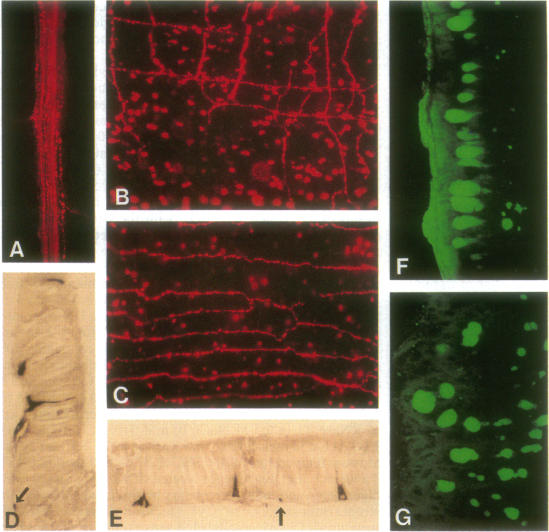
Cockroach allatostatins are neuropeptides that have been isolated from the brain of Diploptera punctata and shown to inhibit juvenile hormone production by the corpora allata. Enzyme-linked immunoassay and immunocytochemistry with antisera to two allatostatins, ASB2 (AYSYVSEYKRLPVYNFGL-NH2) and ASAL (APSGAQRLYGFGL-NH2), revealed that allatostatins were located not only in the insect brain but also in several peripheral tissues including the cockroach midgut and hindgut. Allatostatin-like immunoreactivity was found in nerve fibers of the stomatogastric nervous system as well as in intrinsic endocrine cells of the midgut. Midgut extracts were shown to be biologically active in an allatostatin bioassay and to contain several allatostatin-like peptides, including the octadecapeptide ASB2, which was identified by mass spectrometry following HPLC purification. Reverse transcription of brain mRNA followed by PCR with degenerate oligonucleotides for ASB2 and ASAL yielded a 338-bp fragment of the allatostatin gene that encoded six allatostatins. In situ hybridization with this probe confirmed that an allatostatin gene is expressed in intrinsic endocrine cells of the midgut. Reverse transcription of midgut mRNA followed by PCR and sequencing of the product revealed that the same gene is expressed in the midgut and in the brain. Allatostatins are thus an example of insect "brain-gut peptides" and we suggest that their function may not be restricted to the regulation of juvenile hormone production.
蟑螂咽侧体抑制素是从点刻原臭蚁大脑中分离出来的神经肽,已证明其能抑制咽侧体产生保幼激素。用针对两种咽侧体抑制素ASB2(AYSYVSEYKRLPVYNFGL-NH2)和ASAL(APSGAQRLYGFGL-NH2)的抗血清进行酶联免疫吸附测定和免疫细胞化学分析,结果显示咽侧体抑制素不仅存在于昆虫大脑中,还存在于包括蟑螂中肠和后肠在内的多个外周组织中。在口胃神经系统的神经纤维以及中肠的固有内分泌细胞中发现了咽侧体抑制素样免疫反应性。中肠提取物在咽侧体抑制素生物测定中显示具有生物活性,并且含有几种咽侧体抑制素样肽,包括十八肽ASB2,该肽在高效液相色谱纯化后通过质谱鉴定。对大脑mRNA进行逆转录,然后用针对ASB2和ASAL的简并寡核苷酸进行聚合酶链反应,得到了一个338碱基对的咽侧体抑制素基因片段,该片段编码六种咽侧体抑制素。用该探针进行原位杂交证实,咽侧体抑制素基因在中肠的固有内分泌细胞中表达。对中肠mRNA进行逆转录,然后对产物进行聚合酶链反应和测序,结果显示同一基因在中肠和大脑中均有表达。因此,咽侧体抑制素是昆虫“脑-肠肽”的一个例子,我们认为它们的功能可能不限于调节保幼激素的产生。